
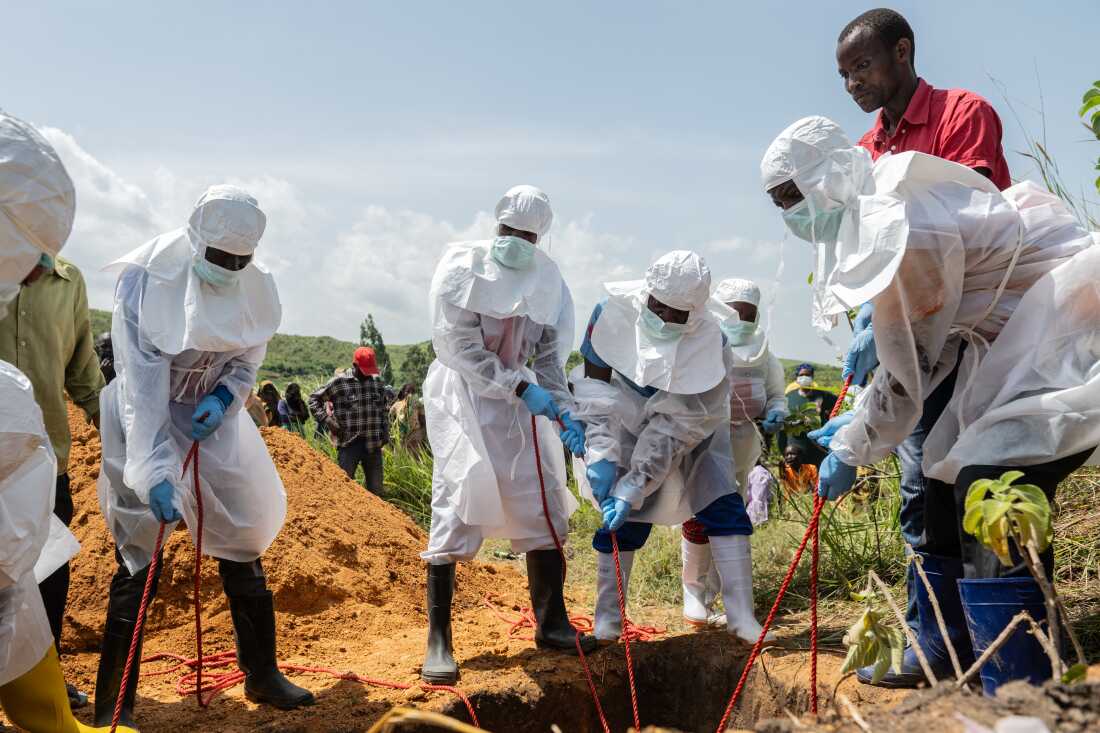
Health workers in the Democratic Republic of Congo are battling to control an Ebola outbreak that has resulted in over 200 deaths. The government reported 867 suspected cases, with 204 confirmed fatalities. The outbreak, initially declared on May 15, has spread across a region larger than Florida, with Uganda also confirming five cases.
Due to the rapid spread, the World Health Organization has labeled the national risk level as ‘very high.’ WHO’s Abdirahman Mahamud stated the potential for swift virus transmission increases complexity. Ebola, a virus causing fever, vomiting, and bleeding, often has a fatal outcome and symptoms may take weeks to appear.
“The virus affects us all,”stated Congo’s Health Minister Roger Kamba, highlighting its indiscriminate nature.
The first case involved a nurse in Bunia, Ituri province, with symptoms beginning on April 24. She was buried in Mongbwalu, a gold-mining town experiencing unexplained deaths, including four health workers in one week. These events fueled panic and rumors of supernatural causes. The Red Cross confirmed the deaths of three volunteers due to handling infected bodies.
Identification delays of the Ebola outbreak arose partly from a rarer virus strain, Bundibugyo, differing from the more common Zaire strain for which a vaccine exists, according to Congo’s National Institute for Biomedical Research.
Challenges in Response Efforts
Health responders and organizations have started establishing treatment centers in eastern Congo. However, cuts in U.S. aid are hindering efforts. Congo, one of the world’s poorest nations, faces a massive endeavor in managing the disease, compounded by poor infrastructure and violence from armed groups such as Codeco and ADF in Ituri.
Communities face cramped and unsanitary conditions, making disease management arduous. Trust issues also persist; some locals doubt the outbreak’s legitimacy, occasionally attacking clinics. Gabriela Arenas of the IFRC underscored varying community responses, from education-seeking to skepticism.
Risk of Cross-Border Spread
Ebola cases have emerged in North Kivu and South Kivu, areas with complex governance due to Rwanda-backed rebels. The virus poses a risk to neighboring countries, with Uganda confirming additional cases after infected individuals traveled across borders. Preventative measures include restricted border crossings and suspended flights. These steps aim to prevent further international spread.