
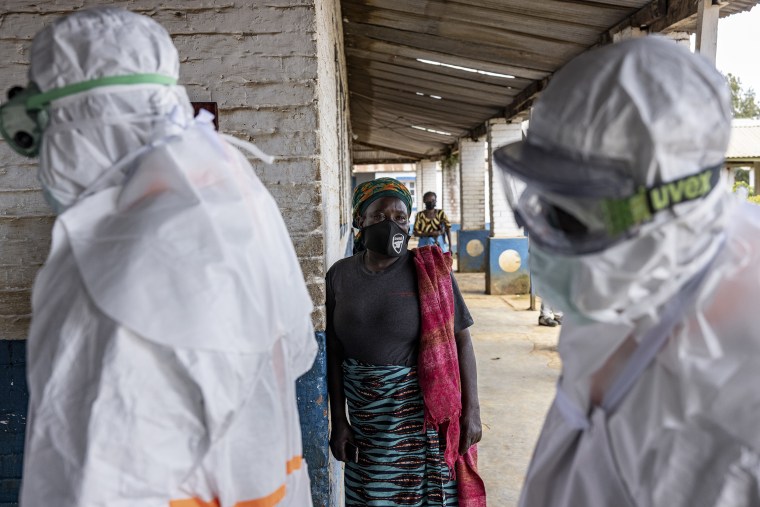
In the Democratic Republic of the Congo, one of the initial cases of Ebola in the current outbreak involved a healthcare worker. Despite showing symptoms, he did not seek hospital care. Instead, his family attempted to treat him at home. The family believed traditional practices or even witchcraft could be the cause,
said Rose Tchwenko, Congo country director for Mercy Corps. The situation was managed by family, religious, and community leaders.
The healthcare worker ultimately died. He received a traditional burial, which probably spread the virus further. His wife also contracted the virus while caring for him. Many false beliefs about Ebola persist,
Tchwenko remarked. Suspicion towards humanitarian or government efforts complicates the response.
In Rwampara, residents set fire to hospital tents after being denied the body of a relative for burial. Corpses can remain infectious for several days. Traditional funeral practices are a driver of Ebola transmission.
Misinformation is a significant hurdle for healthcare workers and aid groups on the ground. As of a recent Friday, the World Health Organization reported 750 cases and 177 deaths. This is Congo’s 17th Ebola outbreak, a disease that severely affects the immune system and organs. Ky Luu from International Medical Corps warns, The outbreak has the potential to be the worst.
Unlike previous outbreaks detected swiftly, the current one went unnoticed for weeks. Standard tests failed to identify the rare Bundibugyo strain, according to Alan Gonzalez from Médecins Sans Frontières. Initially, tests could only detect the Zaire strain.
Testing now happens in Kinshasa, causing delays. Suspected cases are isolated immediately, even before test results are available. No vaccine exists for Bundibugyo, leaving doctors with few tools for containment.
The usual strategy for Zaire strain, involving ring vaccination, isn’t possible here. Luu explains, We lack that tool and must return to basic Ebola control measures.
Teams focus on contact tracing, isolating suspected patients, and infection control.
Gonzalez notes that isolation space is insufficient. In Bunia, they converted a surgical center for this purpose. The U.S. State Department has pledged an initial $23 million to aid efforts. International Medical Corps is deploying rapid response teams and constructing new facilities.
According to Greg Ramm of Save the Children, disinfectants and protective gear shortages are evident. He links the issue to decreased humanitarian aid. We’re involved in fewer health centers and have fewer community health workers,
Ramm stated.
The epicenter of the outbreak lies in a conflict zone, controlled by government or rebel groups. Over 100 armed groups create challenges for access and surveillance,
Luu commented. The dense population and ongoing conflict complicate the response.