
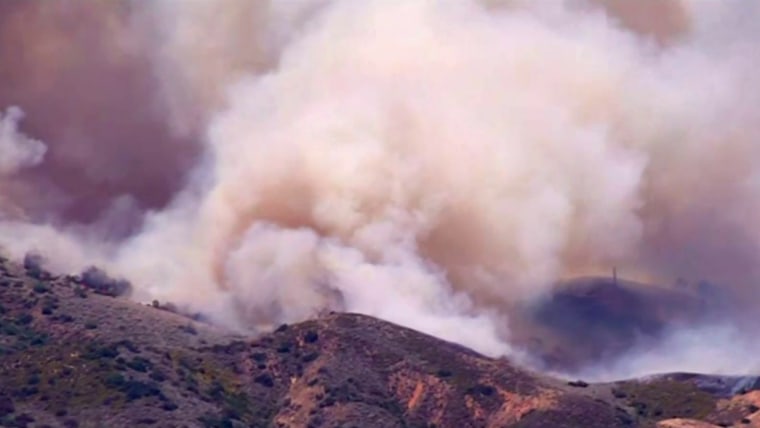
The U.S. Environmental Protection Agency (EPA) reports that most homes cleared by the U.S. Army Corps of Engineers after the Eaton Fire do not pose hazardous lead risks. Despite this, some scientists remain skeptical. The Eaton Fire, which destroyed 9,400 homes in Altadena in January 2025, released smoke with lead, arsenic, and asbestos.
Lead, a dangerous neurotoxin, poses developmental risks to children. The EPA tested soil from 100 randomly selected homes in the affected area. Only five lots exceeded EPA lead screening levels, while seventeen surpassed California’s stricter standards. The median lead concentration was below both state and federal safety levels, providing some reassurance, according to the EPA.
Michael Montgomery, director of the EPA Region 9 Superfund and Emergency Management Division, emphasized resident safety, stating, “That should really give residents confidence that the work that the Army Corps did addressed the fire-related contaminants, particularly lead.” The Army Corps removed ash, debris, and soil to safe levels, according to him.
“We can say with 95% confidence that the homes addressed in Altadena and Pasadena were below both the California and the federal screening level,” Montgomery said.
Contamination fears linger in Altadena. Older homes, predating modern lead restrictions, add to concerns. Although the Army Corps removed debris from about two-thirds of the burned properties, they did not test soil pre- or post-cleanup. This omission leaves residents uncertain about potential contamination.
Other groups, including academic scientists and county health consultants, have conducted independent soil tests. The results vary, sparking worry among residents. Andrew Whelton from Purdue University critiques the EPA’s approach, claiming the methods don’t accurately identify contamination hot spots.
“The results they have are not representative of the Eaton Fire area,” Whelton said. “They were collected in a way that cannot be compared to existing data other organizations are collecting or to what Californians or California businesses have come to expect for property safety.”
The Army Corps’ debris removal process, which removes up to 6 inches of soil, faced scrutiny for its inadequacies. Whistleblowers reported inconsistent, rushed cleanups, potentially leaving contamination behind.
FEMA requested the EPA tests to address local concerns. The EPA’s study sampled soil from 30 spots under the “ash footprint” where debris was removed. Composite soil samples were taken for analysis. Overall, surface lead levels were below concern thresholds for both federal and state guidelines.
Whelton disputes the effectiveness of the EPA’s composite sampling. He argues pooling soil averages out potential contamination peaks, potentially missing hazardous spots. He cautions that the highest detected lead concentration, 705 mg/kg, suggests possible hazardous levels elsewhere on the property.
The EPA’s results confirm five surface samples above federal standards. However, the sampling focused solely on areas where debris was removed, potentially overlooking other contaminated areas.