
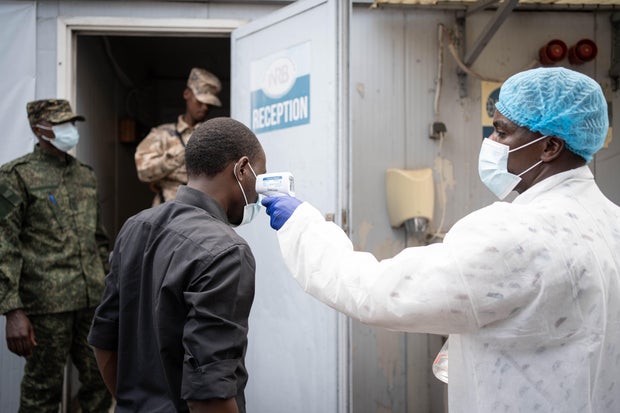
The World Health Organization (WHO) recently assessed the risk levels of the Ebola outbreak in the Democratic Republic of Congo (DRC). While the risk is currently considered high at the national and regional levels, it remains low on a global scale. WHO experts are actively investigating the origins and timeline of the outbreak, which likely began a few months ago in the eastern DRC.
The WHO’s emergency committee determined that the outbreak does not meet the threshold for a global pandemic emergency. Tedros Adhanom Ghebreyesus, the organization’s chief, stated that the epidemic is significant within DRC, with 51 confirmed cases reported in the Ituri and North Kivu provinces. It is believed, however, that the actual scale is larger than these numbers suggest.
In addition to the cases in DRC, there have been reports of two confirmed Ebola cases in Kampala, Uganda, including one fatality. An American national working in the DRC has also tested positive and is receiving treatment in Germany. The individual, Dr. Peter Stafford, was evacuated and is under medical care, as confirmed by the missionary group Serge.
“There are several factors that warrant serious concern about the potential for further spread and further deaths,” said Tedros.
Tedros highlighted the presence of approximately 600 suspected cases and 139 suspected deaths. He warned of expected increases in these numbers due to the duration of the virus’s circulation before detection.
Criteria for Public Health Emergency
On Sunday, Tedros declared the outbreak a public health emergency of international concern. This designation is the second-highest alert under the International Health Regulations. The status has prompted emergency responses globally.
The emergency committee confirmed that while the situation is concerning, it does not fit the criteria for a full pandemic emergency. Lucille Blumberg, chair of the committee, confirmed that the current risk level is being handled within agreed parameters.
Anais Legand, a WHO technical officer, mentioned ongoing efforts to trace the virus’s spread. The focus is on breaking the transmission chain through contact tracing and isolation of cases.
Response to U.S. Criticism
The U.S. Secretary of State, Marco Rubio, criticized the WHO for their delayed response to the outbreak. President Trump had previously initiated the U.S. withdrawal from the WHO, affecting global health funding contributions. Critics expressed concerns about the impacts on health initiatives in low-income countries.
Addressing Rubio’s comments, Tedros clarified the WHO’s role as a supporting entity to national responses, suggesting that misunderstandings of these responsibilities might have fueled the criticism.