
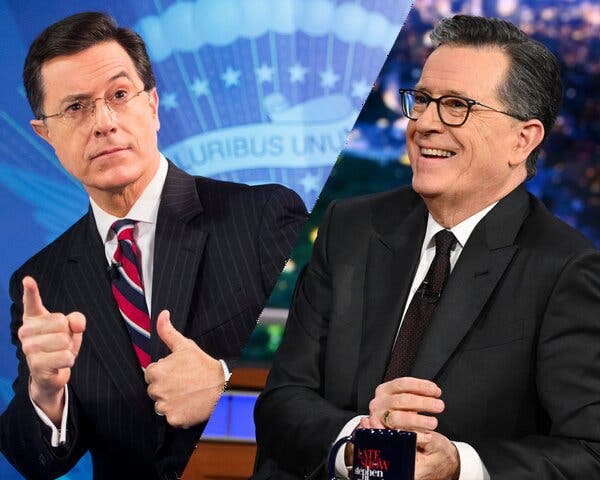
Stephen Colbert’s tenure on CBS’s ‘Late Show’ will conclude on May 21, marking the end of a significant chapter in late-night television. Colbert, a prominent fixture in the late-night landscape for over twenty years, has been a staple for viewers grappling with the intersection of comedy and politics.
The demise of ‘The Late Show’ is not singular in its implications. The traditional late-night format has undergone transformations for decades. With shrinking ratings and escalating production costs, the era of the dominant, unified television culture is behind us. While the ‘Late Show’ draws to a close, television’s late-night segment remains dotted with personalities like Jimmy Kimmel, continuing the legacy begun by David Letterman in 1993.
Colbert’s journey began with ‘The Colbert Report’ on Comedy Central in 2005. Through satire, Colbert skewered the political-media landscape by embodying a pompous pundit persona. His approach captivated audiences, keeping him at the top of the late-night ratings for much of his career.
The decision by CBS to end Colbert’s ‘Late Show’ is speculated to be financially driven. However, its reflection of changes in the political comedy landscape is undeniable. Colbert’s exit draws parallels to the 1969 replacement of the political comedy hit show by the Smothers Brothers with ‘Hee Haw’ on CBS. Such transitions hint at shifts in audience preferences and network strategies.
Colbert’s influence spanned two distinct moments in TV history. Initially, with ‘The Colbert Report’, he parodied politics artfully. Later, during his ‘Late Show’ era, he navigated a time when real-world politics often appeared as self-parody.