
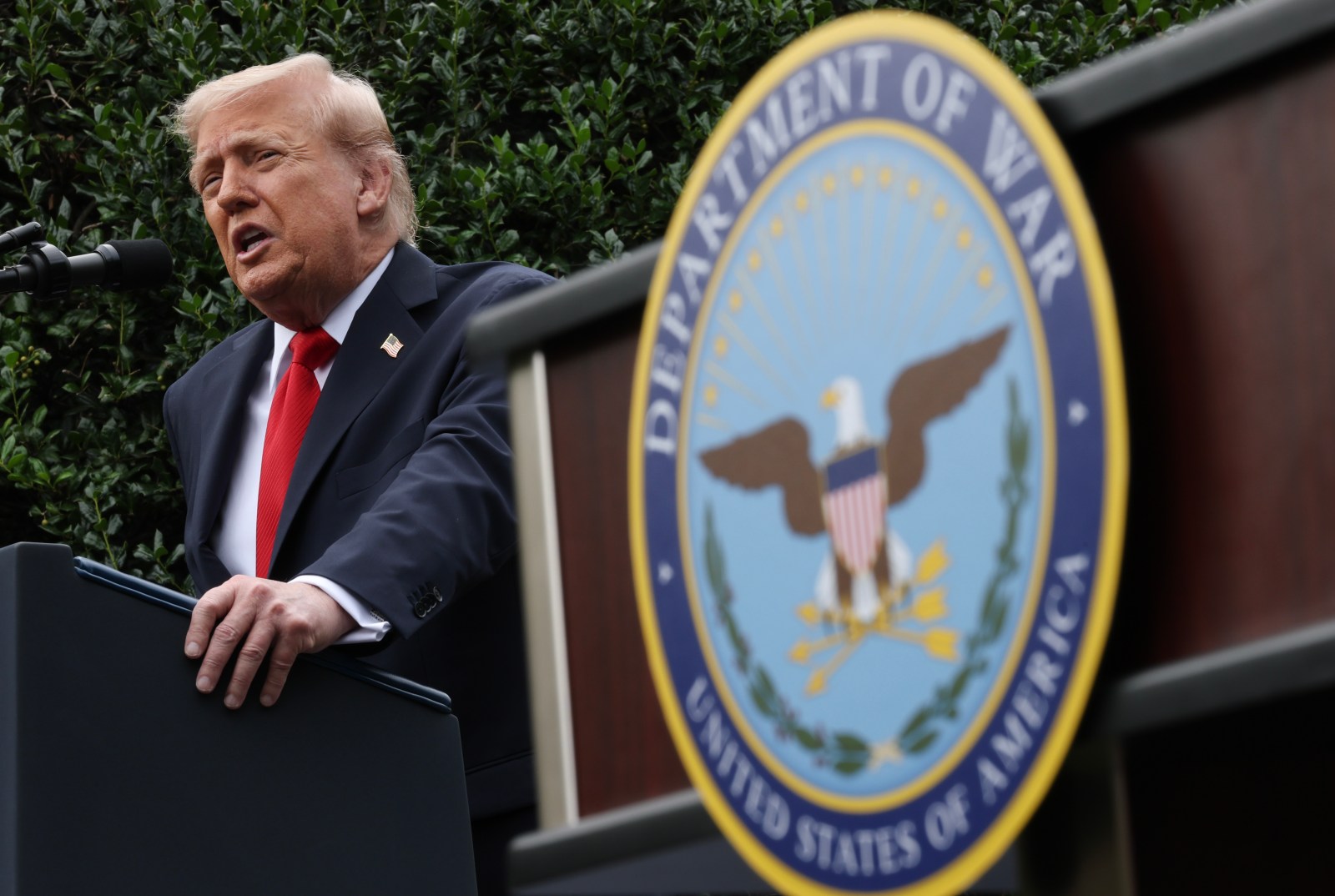
President Donald Trump has urged Senate Republicans to immediately advance a $350 billion military spending plan. He emphasized the urgency before Democrats assume control of Congress in January, accusing them of planning to block and resist what he terms a historic investment in national security.
Trump highlighted his achievements on Truth Social, saying, “I rebuilt our Military in my First Term, and we’re doing it AGAIN, bigger and better than ever before!” He expressed concern that Democrats want to leave troops weakened, while asserting that Americans want their military personnel to be strong and protected.
Trump blames Democrats, although the primary opposition to the spending package has come from within his party.
Since Trump first proposed the budget in June, there has been internal GOP opposition. Newsweek has contacted the White House and Senate Majority Leader John Thune’s office for comments.
Details of the $350 Billion Request
The funding request forms part of a broader $1.5 trillion defense budget for fiscal 2027, with $1.15 trillion expected through standard appropriations and $350 billion via reconciliation. It includes allocations like $47 billion for munitions production and $17 billion for the missile defense system known as the Golden Dome.
Defense Secretary Pete Hegseth has advocated for swift passage, citing the need to bolster an industrial base strained by conflicts, including the war with Iran. A Congressional Research Service report has noted significant shortfalls in strategic munitions inventories.
Progress has been limited. In July, House Republicans unveiled a $60 billion defense package, far below the White House request. The House narrowly passed the $95 billion budget resolution, but the Senate has yet to vote.
The proposed $350 billion dwarfs funding for other areas. For instance, it surpasses the proposed 2027 budgets for the Department of Education and Health and Human Services by more than three times and four times respectively.
Challenges Within the Republican Party
Republicans aim to use budget reconciliation to pass spending without needing Democratic votes. However, internal disagreements have stalled progress.
Senate Appropriations officials like Mitch McConnell and Susan Collins have questioned reliance on reconciliation. Concerns about military funding dependability have arisen from other prominent Republicans like Lisa Murkowski and John Cornyn.
Tensions heightened post-midterms. During leadership elections, some conservatives, including Ron Johnson, pushed back against the package. Despite Tom Cotton’s pledge to pass a budget resolution, some Republicans like Rand Paul labeled the bill tone-deaf and indicated opposition.
Thune has expressed uncertainty about securing enough votes, as Republicans cannot afford to lose more than three senators’ support. Even in the House, absences might thwart the bill.
Comparison to Health and Education Budgets
If enacted, the $350 billion budget would enhance an already significant defense budget. Trump’s overall proposal seeks a 44% increase in military spending, contrasting with a $73 billion cut in domestic expenditures.
Under the plan, Department of Education funding would decrease to $76.5 billion for 2027, down from $79 billion in 2026. The Department of Health and Human Services would see a discretionary funding cut to $111.1 billion, down by 12.5%.
The reconciliation package alone exceeds over half of the $660 billion earmarked for all non-defense agencies. Much of this funding is discretionary, separate from larger, mandatory programs like Medicare and Medicaid.
Despite Trump’s proposed cuts to domestic programs, Congress largely ignored these reductions for the 2026 fiscal year, increasing funding for institutions like the NIH.
Democratic Opposition
Democratic leaders have opposed increases in defense spending and the ongoing conflict in Iran. In July, almost all Senate Democrats voted against advancing the annual defense policy bill.
Democrats have also highlighted the contrast in spending priorities, stressing the historical size of the defense budget against domestic program cuts. Key figures like Rosa DeLauro and Chris Coons have emphasized concerns over budget allocations and their implications.
The proposed reconciliation process aims to circumvent Democratic opposition. Once Democrats assume Congressional control, the opportunity for Republicans to drive through their defense agenda will decrease, explaining the current sense of urgency.
Some Republicans are already exploring alternatives. Possibilities include attaching defense funding to a stopgap measure, though Democratic agreement remains uncertain. Both parties increasingly anticipate that primary funding decisions could roll into 2027.
Newsweek’s report involved input from their AI assistant, Martyn, with editorial oversight by Samantha Beech and Edward T. Cummins.