
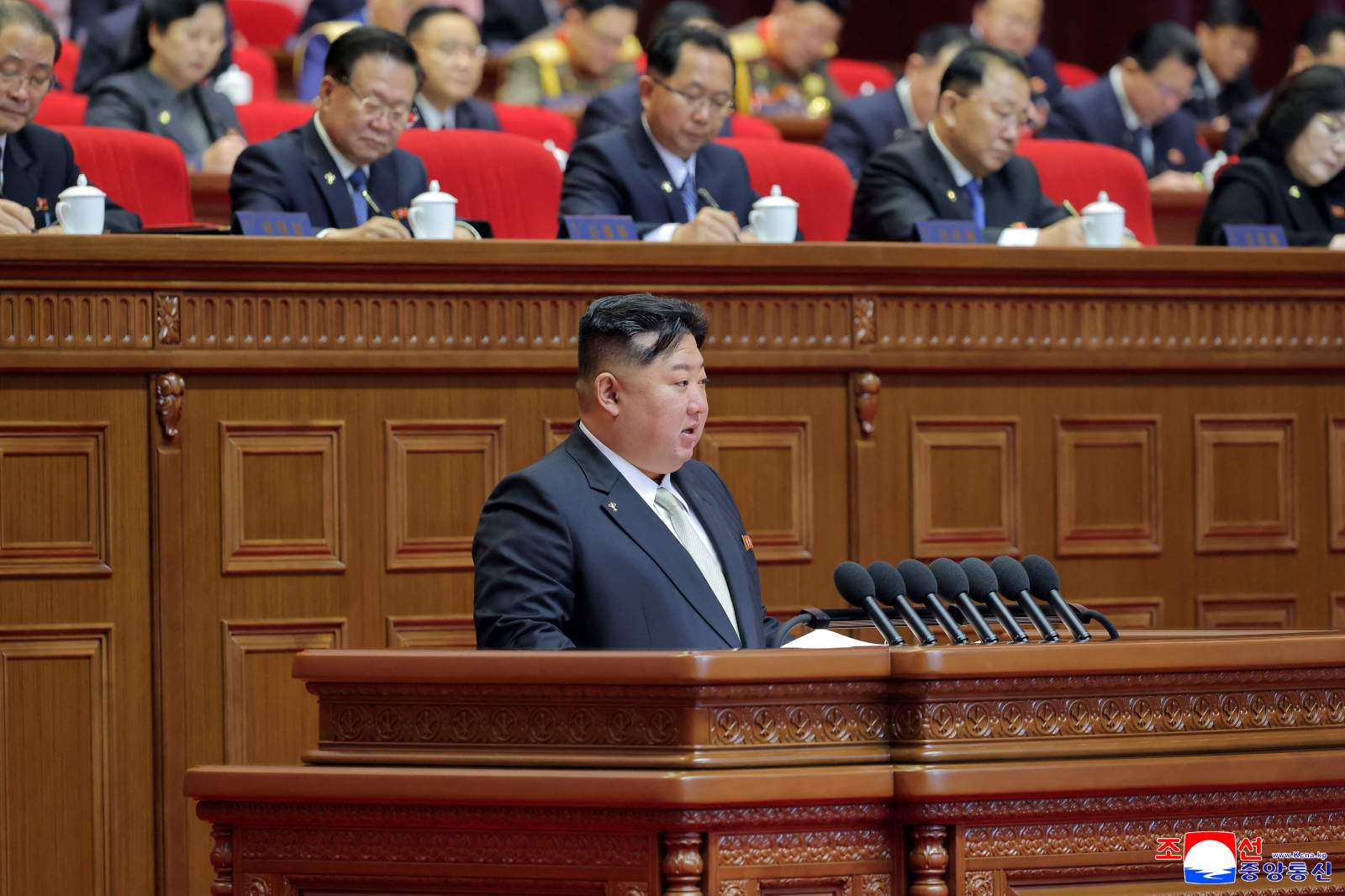
North Korea has revised its constitution, implementing four significant changes that reflect a hardline stance towards South Korea and enhance Kim Jong Un’s control over nuclear forces. This development confirms insights from experts who have observed North Korea’s distancing from South Korea.
Revised Constitutional Stance
This document resurfaced online after two and a half years of absence. The new version emphasizes that North Korea no longer commits to reunification with South Korea, highlighting a marked shift in attitude between the two Koreas.
Redefining Territory
According to the Korea JoongAng Daily, Article 2 now describes North Korea’s territory as land contiguous with China and Russia, alongside South Korean borders, but avoids clear definitions of maritime boundaries. Reports suggest this wording underscores North Korea’s intent to maintain a two-state narrative without explicit hostility.
Edward Howell from the University of Oxford stated that North Korea’s stance positions South Korea as a ‘permanent, principal enemy.’
Omission of Reunification
South Korean President Lee Jae Myung has worked to ease tensions, proposing negotiations for a peace regime. Yet, North Korea shows little interest in such overtures. Kim Jong Un’s recent statements reinforce an absence of any ‘business’ with South Korea.
The revised constitution eliminates terms like ‘peaceful unification’ and ‘national unity,’ confirming Kim Yo Jong’s condemnation of South Korea’s rapprochement efforts as ‘appeasement offensives.’
Enhanced Powers for Kim Jong Un
The constitution strengthens Kim’s authority to dismiss lawmakers and vet parliamentary outcomes. This shift downplays previous leaders Kim Il Sung and Kim Jong Il, aligning with the growing emphasis on Kim Jong Un’s personal cult.
Expanded Nuclear Authority
The amended text also increases Kim’s powers over nuclear forces amid rising regional tensions. It coincides with missile tests, including ballistic and hypersonic systems, expanding North Korea’s capabilities.
Recent tests, including an intermediate-range missile linked to hypersonic technologies, showcase North Korea’s response to South Korean advances in similar technologies.
Rising Tensions and Military Activities
Recent tensions in the region include a landmine incident in the Demilitarized Zone (DMZ), suggesting North Korean involvement according to investigation findings, though Pyongyang has denied this in communications with the UN Security Council.
Pyongyang is reportedly fortifying DMZ defenses and accelerating weapons tests, escalating military activities against South Korea. Analyst Edward Howell views these changes as a way for North Korea to depict South Korea as an aggressor, affecting potential diplomatic engagements with Washington.