
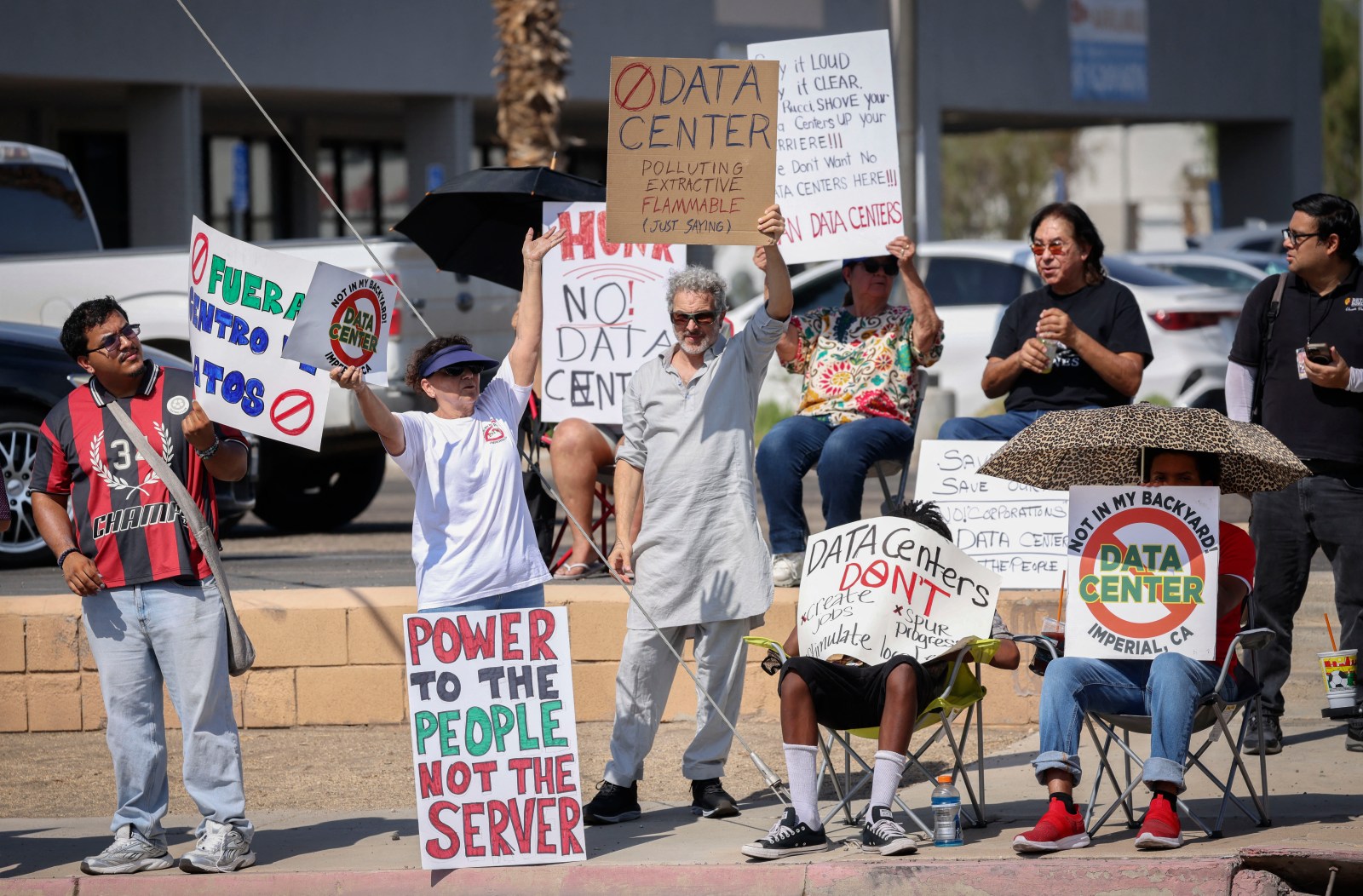
Following a significant shift in power during the recent midterm elections, Democrats gained control of both chambers in Congress. This new political landscape is sparking discussions on how the party might introduce tougher regulations for the expanding data center industry.
Data centers have been a major topic in various races and ballot measures across the United States. Some Democrats campaigned on proposals aiming to restrict their development or to make operators bear more costs related to their facilities. While these sites can generate jobs, boost infrastructure investment, and enhance tax revenue, there are concerns about their impact on electricity bills, water consumption, and noise.
Data Center Concerns Reflect in Election Results
Kathryn Kline Tyndall, associate director at the Bipartisan Policy Center’s Energy Program, discussed the public’s worries over data center developments with Newsweek. A post-election analysis by Newsweek showed that lawmakers strongly in favor of accelerating data center projects were often defeated in their bids for reelection.
In the midterms, data centers were mentioned in 41 ballot measures across 10 states, including California, Florida, Illinois, and New Jersey. The majority of these measures resulted in some form of restriction or ban.
“After last Tuesday, the data center industry must adapt to a new political reality,” said John Ashford, CEO of Hawthorn Group.
To succeed, the industry must collaborate with communities, communicate with new lawmakers, and showcase their essential role in daily life. Ignoring these steps could prove costly.
Potential Legislative Actions
Ed Tarnowski from the R Street Institute shared insights into potential legislative movements within the new Congress. Vermont Senator Bernie Sanders and Representative Alexandria Ocasio-Cortez have previously introduced legislation to halt new AI data center construction. New Jersey Representative Frank Pallone Jr. and other Democrats also supported such a moratorium.
Tarnowski noted that Senate Democrats recently blocked the Ratepayer Protection Act, advocating instead for robust proposals like the GRID Savings Act. These would require data centers using at least 150 megawatts to cover grid costs and prevent new ones using over 20 megawatts from connecting to the grid.
Strategies for Governance and Oversight
Lauren Bridges of the University of Virginia suggests that Democrats may push for reforms in rate structuring for data centers, protecting ratepayers by addressing cost-shifting, and revising tax incentives.
Environmental standards may be strengthened through monitoring, water impact assessments, and increased oversight of emissions. Additionally, greater Democratic oversight could involve public disclosures and independent impact studies.
Tim Profeta from Duke University’s Nicholas Institute anticipates that new Democratic leaders might pause data center developments to balance community, environmental, and economic needs. He noted that recent actions by Democratic governors in Virginia and New Jersey indicate a trend towards accountable and responsible development.
Profeta emphasized the opportunity for infrastructure investment driven by AI. Done correctly, this can promote investment in clean energy and grid technologies, addressing environmental and affordability issues.