
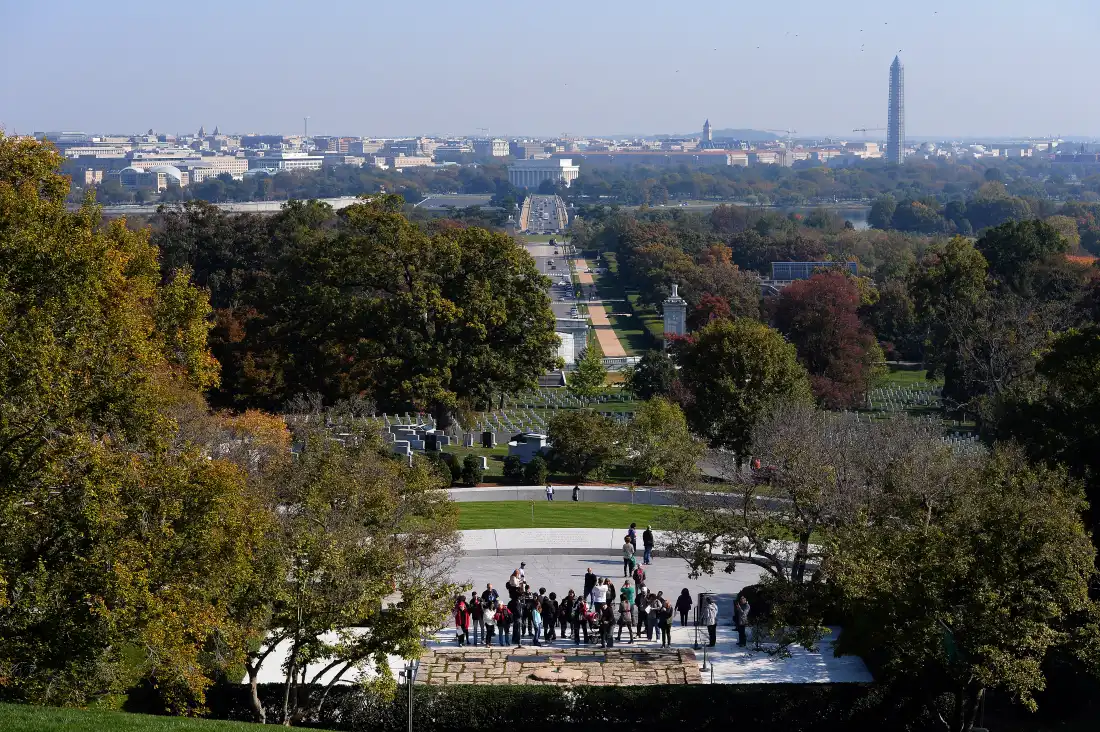
The gravesite of former President John F. Kennedy, located at Arlington National Cemetery, aligns with the Lincoln Memorial’s axis. Kennedy’s descendants are opposed to former President Trump’s 250-foot arch project, stating it would disrupt the view and overshadow the grave. This concern has prompted action from the Kennedy family.
Nine Kennedy family members have launched a legal challenge to oppose the arch, aimed at preserving the integrity of their relatives’ burial sites, including the renowned John F. Kennedy Eternal Flame. Among the plaintiffs are children of Senator Robert F. Kennedy, Ethel Kennedy, and a son of Senator Edward M. Kennedy, all interred at Arlington National Cemetery. Notably absent from the lawsuit is Robert F. Kennedy Jr., the Health and Human Services Secretary, who did not join his siblings in the litigation.
White House spokesperson Davis Ingle expressed disappointment over the Kennedy family’s stance, arguing that the arch honors national heroes. He remains confident the project will withstand legal challenges. The Kennedys’ legal motion, filed shortly before Veterans’ Day, underscores the personal implications of the ongoing dispute.
“A towering arch casting shadows across the graves of our father, mother, and uncles, as well as the graves of so many who have served our country, would also cast a shadow over our democratic principles,” Rory and Maxwell Kennedy stated, highlighting their concern for family legacy and national values.
The opposition to the arch includes other parties, such as Vietnam War veterans, architectural historians, the governments of D.C. and Virginia, and the Arlington County Board. A judge has temporarily blocked the arch’s construction while assessing these challenges, primarily focused on its legality without congressional approval.
Trump’s administration insists the arch is justified by historic authorizations, though Judge Tanya Chutkan expressed skepticism regarding this reasoning. The administration’s position that plaintiffs lack standing has also been contested, with D.C. and Virginia cited as having legitimate concerns.
The Kennedy family’s involvement potentially strengthens the plaintiffs’ case. Constitutional law professor David Super noted that judges might find it challenging to dismiss the Kennedy family’s concerns given their historical significance.
Arlington National Cemetery is at the heart of this debate, with JFK’s gravesite being a significant attraction alongside the Tomb of the Unknown Soldier. The Kennedy family emphasizes its accessibility to the public, a point President Kennedy valued during his visit.
“President Kennedy himself stood where he is now buried, saying, ‘I could stay here forever.’ The view from his gravesite was paramount for his family when choosing this location,” the family wrote in the filing.
The planned arch, positioned in a traffic circle on a bridge linking Arlington House to the National Mall, could obstruct these views. The Trump administration acknowledges potential disruptions but maintains that an alternate location undermines its intent. The Kennedys cite a forensic analysis indicating the arch would overshadow many graves, affecting JFK’s memorial throughout the year and impacting views of the Eternal Flame.
Proponents claim the arch enhances Arlington’s visitor experience, honoring military heritage. However, many veterans and families express vehement opposition, fearing it undermines the cemetery’s solemnity and disrupts daily funeral services.
Recent legal filings assert greater risks, with retired Brig. Gen. Steven Anderson warning about the national security dangers posed by the arch’s construction. Meanwhile, Congress, poised under Democratic leadership, considers using oversight and funding restrictions to counter the project. Experts suggest the Supreme Court will ultimately decide the arch’s fate.