
The Good Daughter begins with a violent event that sets the stage for the series. This incident involves two masked gunmen targeting a defense lawyer’s family in a small Georgia town. They find only his wife and daughters at home. The traumatic event has lasting effects on the daughters’ lives.
The decision to present this trauma from the start allows the series, which premieres on Nov. 12, to explore further complexities over its six dark episodes. The central theme revolves around trauma and its enduring impact on individuals.
Search for meaning amid the misery, and you’ll find it’s trauma all the way down.
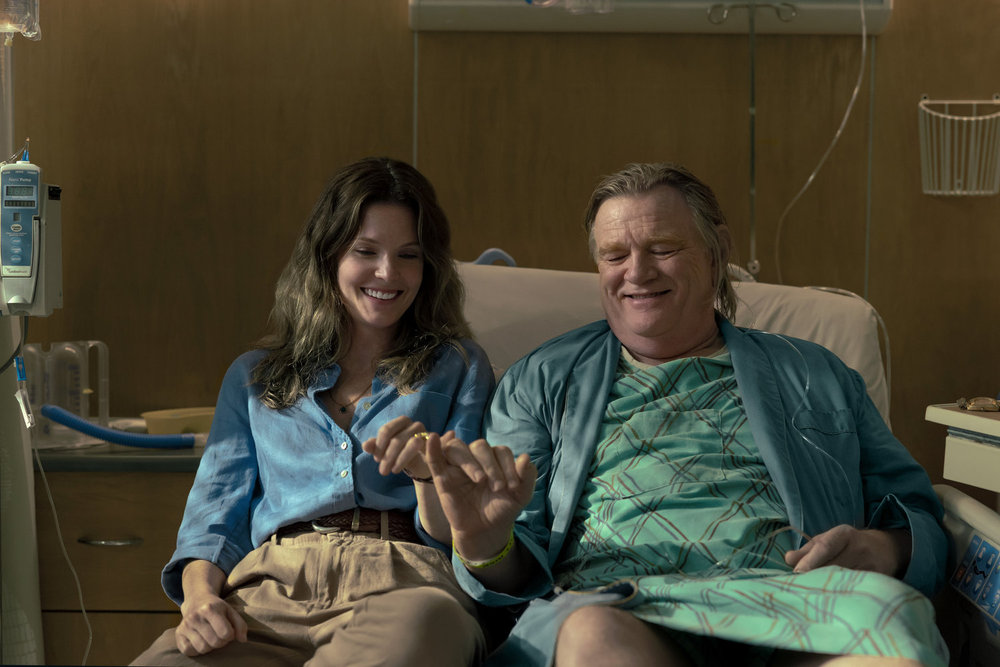
Years later, the younger daughter, Charlie Quinn, portrayed by Meghann Fahy, follows in her father’s footsteps as a lawyer. They face social ostracism in a town blaming Rusty, the father played by Brendan Gleeson, for perceived judicial failures. Rusty, an ailing alcoholic, quotes literature while dealing with personal struggles. Charlie, adjusting to life post-separation from her husband (Michael Dorman), finds herself entangled in a new case after a school shooting incident involving Kelly, a girl with learning challenges. Rusty sees Kelly as an ideal client given her unfortunate circumstances.
Amidst these developments, Charlie’s sister Sam, played by Rose Byrne, is drawn back home. Sam, a patent lawyer living a different life from her family, embodies the contrast created by shared trauma. She is wealthy and urban-oriented, unlike her father and sister. Despite being skilled actors, Byrne, Gleeson, and Fahy face a script relying on coincidences and contrivances, sometimes to a comical extreme. A significant flaw emerges as the series accumulates dreadful events, seemingly to showcase the harsh realities faced by women.
The adaptation by Karin Slaughter, a seasoned suspense novelist, seems to focus on exploring gender-based violence extensively, a common theme within the thriller genre. Critical questions, like why Rusty remains tied to his life-destroying job and town, remain unanswered. The series attempts to tackle issues of narrative control and personal agency but might have benefited from a fresh narrative perspective for its television adaptation.