
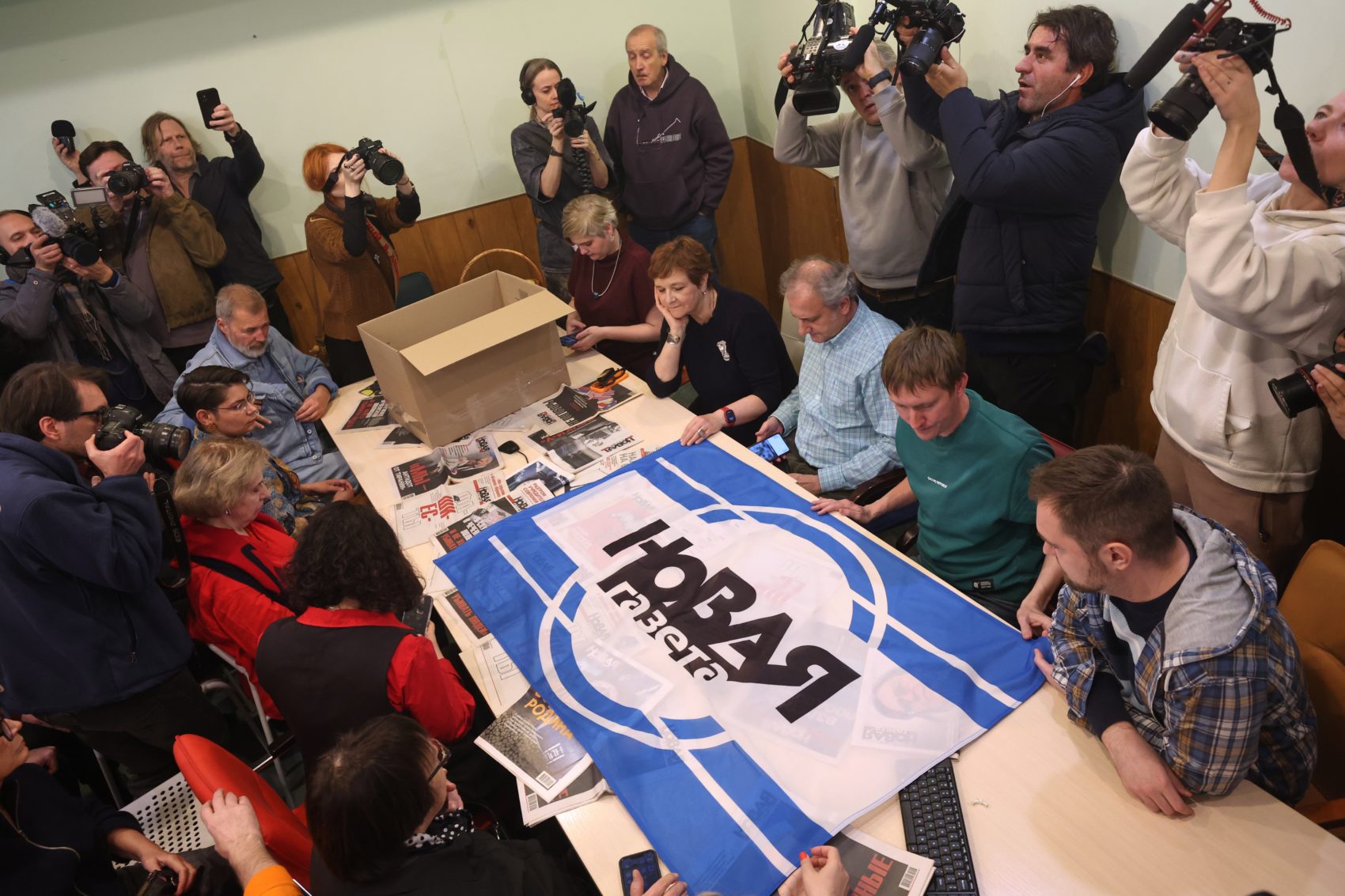
Novaya Gazeta, regarded as one of Russia’s leading independent newspapers, has closed its offices in Moscow. On Monday, the publication, known for its critical stance towards the Kremlin, cited unremitting pressure from Russian authorities as the reason behind this move. This closure signals the end of the last major independent media outlet calling attention to Kremlin policies while operating within Russia.
In a statement released on October 30, the publication explained that pressure from government authorities and security services compelled the shutdown. They expressed concern over the erosion of human rights and freedoms in Russia. “Elections and elected governing bodies have been effectively dismantled,” the statement noted. It further elaborated on how institutions of civil society and individual freedoms have been drastically undermined.
Dmitry Muratov, a Nobel Peace Prize-winning journalist and former editor-in-chief, attended a ceremony marking the closure. He joined other members of the editorial board as they bid farewell to their Moscow office. Founded in 1993, Novaya Gazeta gained acclaim for its dedicated investigative journalism on human rights abuses and corruption in Russia. It suffered the tragic loss of six journalists, including Anna Politkovskaya, who was murdered in 2006 for her reporting on the Chechen War.
On the final day in their offices, reporters and editors gathered to remove images of their fallen colleagues. Tatiana Britskaya, overseeing the newspaper’s investigative division, shared her expectation of the shutdown for over four years, emphasizing the emotional connection staff had with the office.
The Kremlin’s crackdown on dissent has intensified since the conflict in Ukraine began. Dmitry Muratov, who also won the Nobel Peace Prize in 2021, was attacked on a train in 2022, an incident that included an assault with red paint. In 2023, Russian authorities labeled him a “foreign agent,” resulting in increased governmental scrutiny. Novaya Gazeta faced fines, accusations of discrediting Russia’s military, and was also branded as a foreign agent. The newspaper lost access to its online platforms, its printing house was seized, and its media registration was revoked.
In a final act, the Moscow office was ordered to vacate their premises. As staff departed, a new sign replaced the original, reading, “Here lived Novaya Gazeta.” Despite these challenges, Sergei Sokolov, the current editor-in-chief, expressed hope for a future comeback. “We will live,” he said, confident that Novaya Gazeta would re-emerge.
After the forced exit, some members of Novaya Gazeta’s team established a new initiative, Novaya Gazeta Europe. Based outside Russia, the outlet continues to critique Kremlin policies, including their actions in Ukraine.
A free press remains a fundamental component of a functional democracy. Supporting credible journalism and open dialogues is essential.