
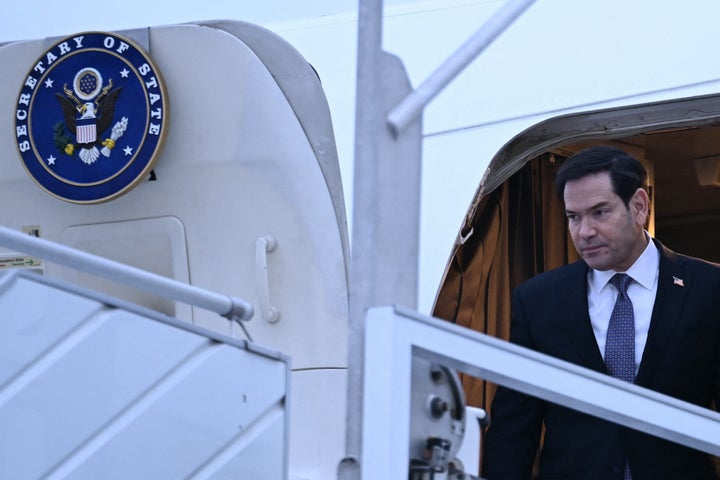
Foreign ministers from the Group of Seven (G7) began two days of discussions in Paris to address several global issues. These talks occur as questions linger about U.S. foreign policy following significant losses by President Donald Trump’s party in recent elections.
U.S. Secretary of State Marco Rubio will face inquiries on potential policy shifts regarding the Russia-Ukraine war, the Iran conflict, energy security, and artificial intelligence. These complex issues are the focus of dialogue among top diplomats from the U.S., Britain, Canada, France, Germany, Italy, and Japan.
Rubio’s First Overseas Trip Post-Elections
This gathering marks Rubio’s first international trip since recent elections led to the Republicans’ congressional losses. The timing coincides with widespread protests in Europe, including in Paris.
Asked about his allies’ concerns post-elections, Rubio expressed confidence that these countries understand American political dynamics, sharing their experiences of government divisions.
Canadian Foreign Minister Anita Anand remarked on the uncertainty of Washington’s future course. “The president holds executive powers,” she noted, highlighting the new leadership in Congress.
Despite congressional changes, there is little indication that Trump’s strategies will change. His appointment of Stephen Miller as chief of staff points to a continued hard-line approach. There is speculation about Rubio’s political future and potential presidential aspirations, though he has denied any plans to leave the administration soon.
Focus on Ukraine and Iran Conflicts
Wars in Ukraine and Iran are main agenda items for the ministers. Trump has suggested collaborating with Europe to resolve Russia’s military actions in Ukraine. U.S. envoys will engage with Ukrainian and Russian officials in the UAE to explore resolutions.
Rubio emphasized the importance of constructing a secure postwar environment for Ukraine and Europe. While acknowledging some progress, he mentioned ongoing dialogues aiming to define clear security structures.
German Foreign Minister Johann Wadephul praised U.S. efforts to encourage negotiations but underscored Europe’s essential role in any peace solution.
Similarly, Anand highlighted the significance of the upcoming UAE talks, noting the time elapsed since prior discussions.
In contrast, mediators propose interim solutions for the Iran conflict, amid escalated fuel costs and regional instability. Rubio remains cautious about diplomatic breakthroughs, highlighting unrealistic Iranian demands but reiterating a preference for diplomacy.
Diverse Participation and Broader Discussions
France extended invitations to Brazil, Egypt, Saudi Arabia, and Ukraine for certain discussions. Additional topics include Africa, China, Cuba, and Haiti, with sessions set for artificial intelligence and Ukraine support.
Upon arriving in Paris, Rubio expressed intentions to push for substantial reforms at the U.N., aligning with previous U.S. stances. Trump’s administration has unsettled G7 allies with its positions on NATO and other international agreements.
The current administration seeks to dismantle the International Criminal Court (ICC), imposing severe sanctions on it and its personnel. This move further illustrates the administration’s divergence from G7 partners, many of whom are ICC members.