
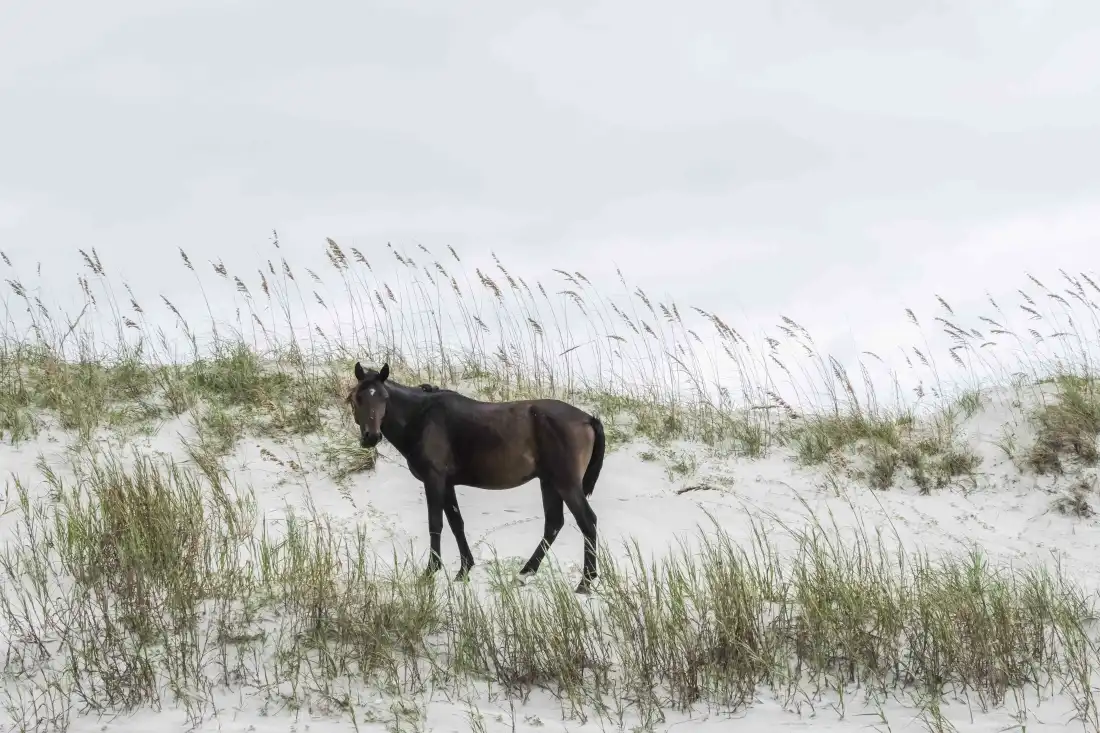
On October 8, 2026, a wild horse grazed on Cumberland Island, Georgia, a place where wild horses, feral hogs, and deer roam freely. Since 1972, the National Park Service has managed this 18-mile barrier island, known for its diverse ecological landscape. The island features salt marshes, maritime forests, and unspoiled beaches accessible only by ferry. A significant portion of the island includes 9,800 acres of wilderness designated by Congress to remain in its natural state.
Cumberland Island holds historical significance with Native-American relics, remnants of Spanish missions, and ruins of antebellum plantations. The island also hosts opulent homes built by Thomas Carnegie, a Gilded Age industrialist, and his wife, Lucy. Descendants of the Carnegies still inhabit or vacation on the island, and a proposed land swap between them and the National Park Service has stirred tensions. The plan allows new construction, a contentious issue among stakeholders with differing views of island preservation.
Park superintendent Melissa Trenchik has been advocating for the proposal, suggesting that consolidating private ownership on the island’s west side would enhance the park’s ability to interpret natural and cultural resources on the Atlantic beachside. This plan aims to restrict development in sensitive areas. Trenchik argued that without intervention, private land development remains a possibility. The proposal includes constructing up to eight new private homes with conservation restrictions, capping them at 35 feet in height.
Critics like Joseph Manning from Defenders of Wildlife, argue against the seemingly generous 15,000-square footage allowed for each home, comparing them to McMansions and citing concerns about privatizing public lands. Manning pointed to similar cases across the U.S. where public lands are perceived to benefit specific interests rather than the broader public.
Barclay McFadden, Thomas Carnegie’s great-great-grandson, views the family history on the island differently. He emphasizes their past stewardship and feels hurt by negative portrayals of his family. McFadden underlines their legacy, reminiscing about the family cemetery on the island, which symbolizes their longstanding connection and commitment to Cumberland’s preservation.
Jamie Ferguson, related but not directly involved in the swap, supports the Carnegie descendants’ historical role in protecting the island. He co-owns the Greyfield Inn, a Carnegie mansion operated as a bed and breakfast, and values the family’s heritage. The land swap could provide visitors with more access to historical sites like The Chimneys, remnants of slave quarters from an earlier cotton plantation.
Naturist Carol Ruckdeschel, living on the island for over 50 years, strongly opposes the plan. She fears it could lead to increased development, harming the wilderness. Actively involved with conservation efforts, she continues to survey the island for environmental impact, opposing the park’s plan to double daily visitation.
For Ruckdeschel, preserving Cumberland as a primitive wilderness outweighs increasing development. She envisions an island where nature reclaims past human footprints. This poignant view underscores the ongoing debate about the future of Cumberland Island, balancing ecological integrity with historical legacy and modern development.