
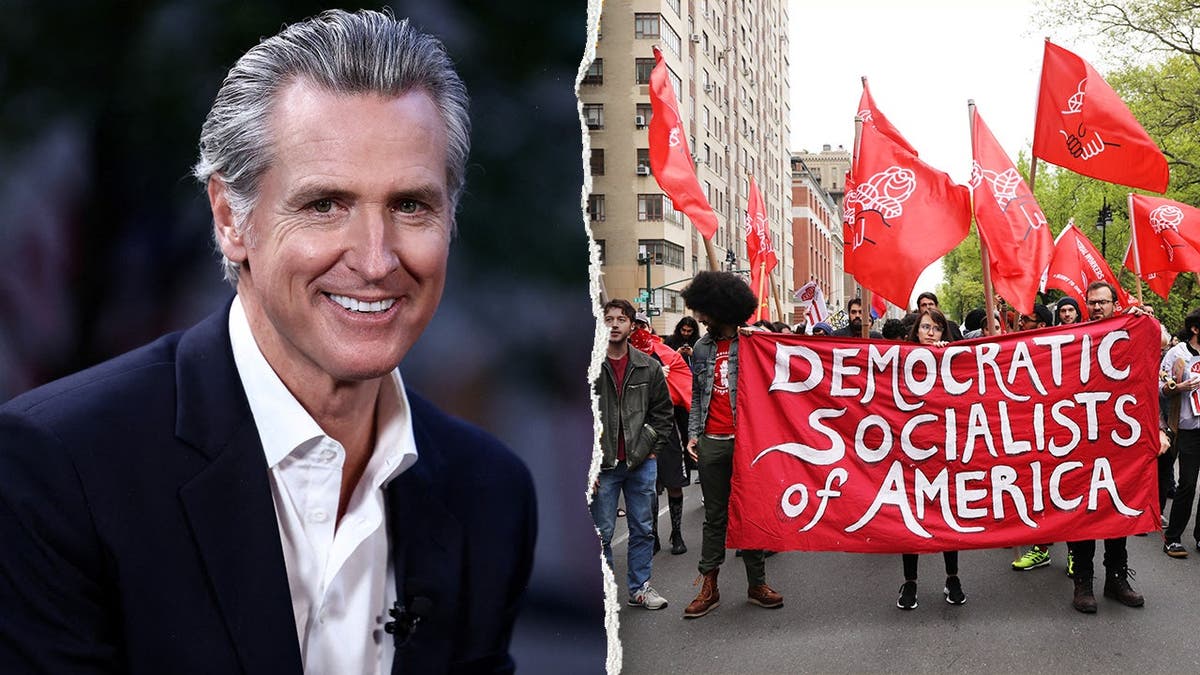
Leading up to the November midterm elections, the Democratic Socialists of America (DSA) threw their support behind California’s Proposition 40. This proposition proposed a one-time 5% tax on billionaires residing in the state. Although current election results suggest it might not pass, the support from the DSA has intensified discussions about the intent of socialism to redistribe wealth and the potential for significant capital flight.
Richard Stern, an economist with Advancing American Freedom (AAF), highlighted that propositions like these aim to transfer wealth from individuals to the state. This stance creates tension with some Democratic figures, including Governor Gavin Newsom, who has publicly opposed the measure.
In their mind, every tax they do is some attempt to get money from people who create wealth and move it to the state. – Richard Stern, Advancing American Freedom
Proposition 40 aimed to tax assets such as businesses and art but excluded pensions and real estate. To prevent an exodus of billionaires, the tax would retroactively apply to those who lived in California on January 1, 2026. The DSA’s Californian chapter provided materials to support arguments in favor of the proposal, emphasizing that wealth in California could fund better education and healthcare through increased taxation.
The proposition aimed to fill a projected $100 billion gap in federal funding for the state’s Medi-Cal program, which supports low-income residents, seniors, and people with disabilities. The policy allocated 90% of new tax revenue for healthcare and the remaining 10% for education and other services.
The DSA portrayed the measure as a progressive tax, affecting only 250 of the state’s wealthiest residents, who own a combined $2 trillion. They argued that a 5% tax would not cause a significant financial loss, as wealth grows annually at a higher rate.
Experts like Stern argue this shows a misunderstanding of wealth. Billionaire wealth often comprises assets and infrastructure, not cash. Stern stated that the policy ignores the complexities of business ownership and the economic consequences of redistributing wealth this way.
Governor Newsom argued that the proposition might make California less competitive and noted wide-ranging opposition, including from labor groups and educators. Instead, he advocated for Proposition 42, which aims to block new state taxes on personal property. Newsom hinted that a similar taxation approach could be considered on a federal scale, as it might offer a different dynamic than state-by-state implementation.
I think the majority of Californians see that distinction even though they absolutely believe that we need a new tax bracket in this country. – Gavin Newsom
Stern, however, contends that the challenges of such policies would extend internationally. He warned that individuals would consider renouncing citizenship and moving abroad if taxes became overly burdensome.
These debates illustrate a tension over wealth distribution, business management, and economic policy in the United States. As discussions around taxes and wealth continue, stakeholders remain divided on the best approach to address economic inequities.
Leo Briceno is a politics reporter for the congressional team at Fox News Digital.