
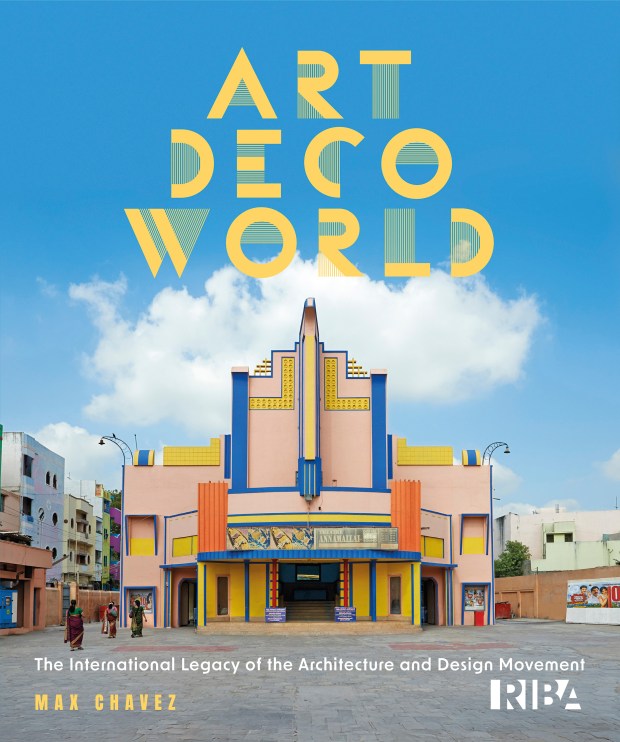
Today, home decor often revolves around mid-century modern designs, influenced by retailers like IKEA. However, a century ago, a more vibrant style emerged: Art Deco. This style spans architecture, interior design, and artwork. Max Chavez, a Chicago architectural historian, explores it in his new 218-page book, “Art Deco World.”
The term ‘Art Deco’ comes from the French ‘arts décoratifs’ and first gained attention at a 1925 exhibition of modern decorative arts. During the early 20th century, there was a shift from the heavy Victorian aesthetic to new explorations of modernity. Chavez notes, “Art Deco grows out of this desire to explore what modernity could look like and… a fascination with technology and industry.”
Initially, Art Deco was geometric and focused on verticality, as seen in skyscrapers like Chicago’s Carbide & Carbon Building (1929) and New York’s Empire State Building (1931). Skyscrapers symbolized engineering marvels, amplified by Art Deco. Chicago boasts many Art Deco landmarks, including the Civic Opera House and the Chicago Board of Trade building.
Chavez describes Art Deco as a design of excess, born from the prosperous 1920s. It features gleaming metals, lacquer, rich stone, and materials like steel and glass. Hollywood contributed to its popularity, bringing optimism after World War I.
Some of Chicago’s finest Art Deco examples are outside downtown, in churches and storefronts. The First Church of Deliverance in Bronzeville, originally a hat factory turned church, exemplifies this. Chavez highlights its unique Art Deco features, like clean terra cotta and glass block windows that diffuse light while maintaining privacy. “Art Deco was about technological promise and modernity,” notes Chavez.
Chicago’s “big Art Deco moment” was the 1933 World’s Fair, showcasing Art Deco’s ethos in technology and modern life. Though the structures were temporary, they embodied the futuristic spirit. Lee Lawrie’s design at the fair blended ancient and modern styles.
Not all Art Deco marvels survived. The Chicago Daily News building once featured a mural symbolizing movement and dynamism, now missing due to costly restoration. Interest in Art Deco reignited in the 1970s as its cultural value was recognized by art historians like Bevis Hillier.
Pop culture fueled Art Deco’s revival, with films and TV shows like “Miami Vice” embracing the style. By the 1980s, Art Deco represented indulgence. Venues like cineplexes showcased this aesthetic in entertainment.
Art Deco faded by the 1990s, replaced by minimalist styles like IKEA’s Scandinavian look. Chavez argues that Art Deco’s boldness feels “too glitz and glam” for modern homes. A simplified version persists, yet often lacks the richness of true Art Deco.
Chavez hopes his book encourages readers to explore Art Deco’s diversity, from opulent towers to neighborhood storefronts. Despite economic constraints, Art Deco design was accessible to middle-class families, creating a multi-faceted style rich with futurism and optimism.
By revisiting Art Deco, we engage with a style that encompassed many aspects of modern life, offering a glimpse of joy. Chavez urges readers to recognize Art Deco’s complexity and find modest examples in their city.