
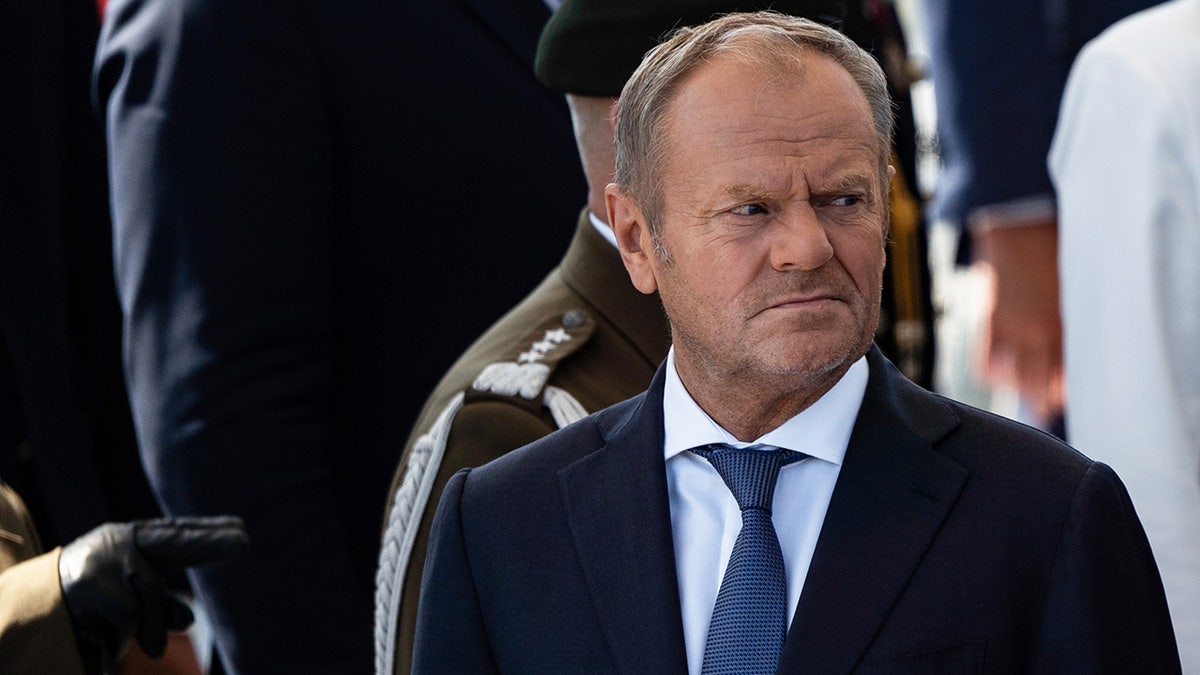
The recent confrontation at Poland’s Constitutional Tribunal has stirred significant political and diplomatic controversy. Riot police and protesters gathered at the scene, prompting President Karol Nawrocki to return to Warsaw. This event has sparked a heated debate over Prime Minister Donald Tusk’s actions, questioning whether he is safeguarding judicial independence or breaching constitutional boundaries.
Concerns arose after the tribunal suspended its president, Bogdan Święczkowski. Supporters of Tusk viewed it as essential for judicial independence, while critics labeled it an unconstitutional move. Marcin Przydacz, of Nawrocki’s office, expressed disapproval on European TV, stating, “Even lawyers aligned with Tusk say there’s no legal basis for this.”
The turmoil has led to diplomatic repercussions. Several Polish ambassadors resigned in response. Poland’s permanent representative to the UN, Krzysztof Szczerski, resigned, following similar actions by ambassadors to China and Romania.
Simone Rodan-Benzaquen from the Foundation for Defense of Democracies noted Poland’s Constitutional Tribunal has been compromised for over a decade. The conflict involves blocked judicial appointments, highlighting an institutional crisis predating Tusk’s government.
The protests intensified following Judge Anna Korwin-Piotrowska’s suspension of Święczkowski, leading to police intervention. Concerns over legality and proportionality have emerged, raising serious questions about recent actions.
While some label these events as a coup, others, like Boštjan Udovič from the University of Ljubljana, argue the government aims to restore judicial order consistent with Poland’s constitution and European standards.
Tusk defended his actions as efforts to uphold the rule of law, accusing the presidency and tribunal of obstructing legally elected judges. He called for acknowledgment of parliament-elected judges, warning against confrontations.
International responses varied. The European Commission supports Poland’s parliamentary authority, while critics like Marine Le Pen accuse Brussels of double standards. U.S. Ambassador Tom Rose expressed America’s support for Poland, stressing stability and democracy.
Beyond the immediate events, Rodan-Benzaquen emphasizes deeper issues, noting institutional disputes in Poland have complicated the situation. With elections approaching, defining the rule of law may impact Poland more than the recent clashes.