
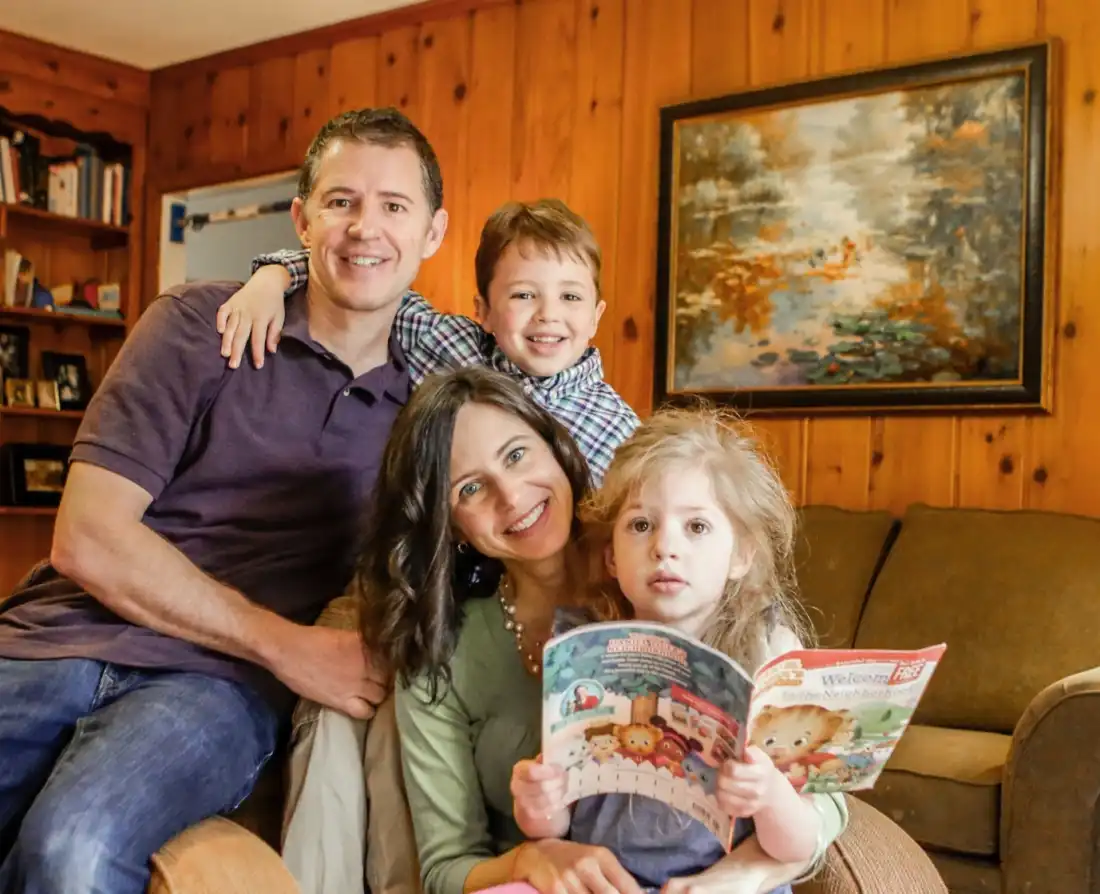
Eliza O’Neill was always one for accessories. Her mother, Cara O’Neill, a pediatrician from Columbia, S.C., recalls Eliza’s early love for dressing up. Despite her playful nature, by age three, Eliza’s developmental progress caused concern. Diagnosed with a pragmatic speech delay, her parents realized she was not interacting typically.
In 2013, a colleague suggested Eliza be tested for metabolic disorders. Results revealed Sanfilippo syndrome, a rare inherited disease. Sanfilippo prevents the breakdown of heparin sulfate, causing severe complications as it accumulates in the body. Children affected often lose the ability to walk and speak and face a significantly shortened lifespan, usually not beyond their teenage years.
Glenn and Cara O’Neill, motivated by their daughter’s diagnosis, founded the Cure Sanfilippo Foundation. Determined to find a solution, they connected with researcher Haiyan Fu at Nationwide Children’s Hospital in Columbus, Ohio. Since the late 1990s, Fu had been developing a gene therapy using a modified virus to deliver a functioning gene to patients’ cells.
Despite challenges, Fu’s work progressed with support from eight patient foundations. This collaboration led to the trial readiness for the first human tests. Yet, the need for funding remained.
“It wasn’t really until I got home that I realized how quickly the degeneration happened,” Glenn O’Neill recalls.
To raise funds for a clinical trial, Glenn O’Neill sought help online. A collaboration with filmmaker Benjamin Von Wong resulted in the “Saving Eliza” viral video. It broke GoFundMe’s record, gathering over $2 million. These funds sustained trials, drawing biotech interest. In 2022, Ultragenyx acquired rights to the therapy, subsequently gaining FDA approval in September for Fayuvi—a one-time $4 million infusion.
Ultragenyx CEO Emil Kakkis emphasizes treating younger patients improves outcomes, acknowledging logistical challenges. Meanwhile, researcher Fu acknowledges the bittersweet triumphs of Fayuvi’s approval.
Now nearly 17, Eliza, the first patient treated in 2016, uses picture cards and devices to communicate. Though her speech hasn’t returned, she actively engages in life, attending school and swimming. Eliza’s father, Glenn O’Neill, reflects on their journey, expressing pride in Eliza’s resilience and acknowledging their fortune amid adversity.