
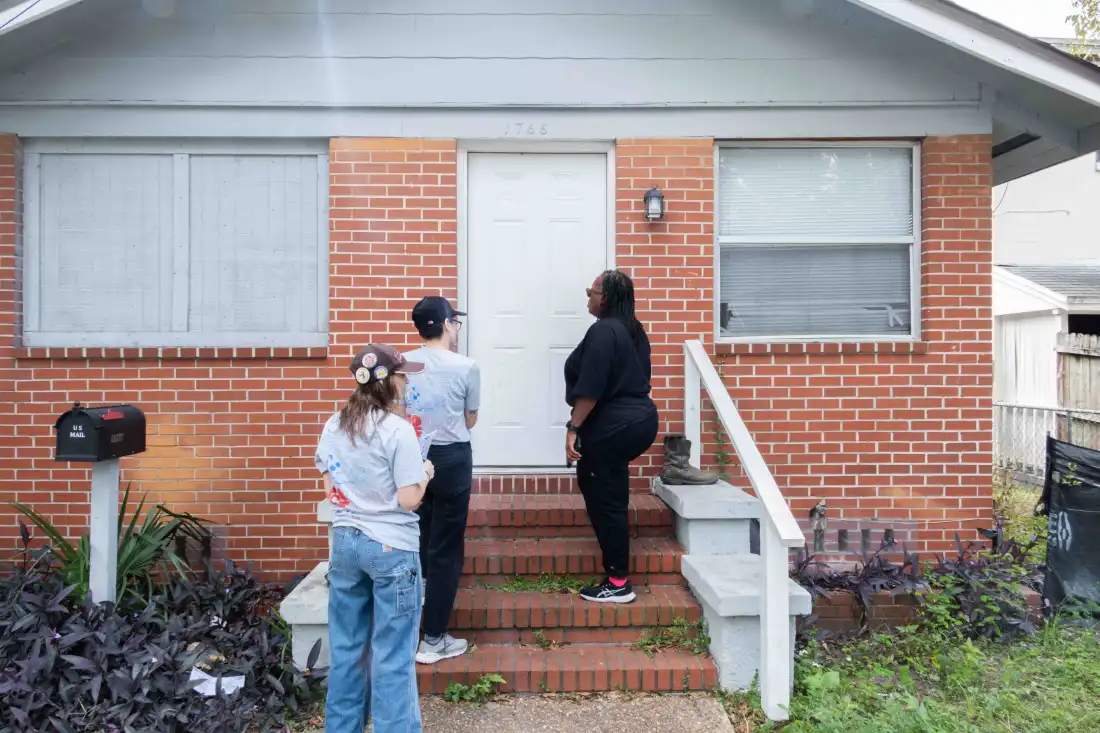
Volunteers with Florida Rising, a progressive nonprofit, are busy in Jacksonville, Fla. They are knocking on doors to urge residents to vote against a proposed amendment that would reduce property taxes.
Rachel Dues, despite steep challenges, was relentless in her effort to get her niece to the polls. Pushing her niece’s wheelchair, she said determinedly, “By any means necessary.” For Dues, the decision to vote was personal. She was concerned about the rising costs of living.
The Amendment
Amendment 3 offers a significant cut in property taxes for homeowners, increasing exemptions from $50,000 to $250,000 over two years. Communities may see their non-school homestead property taxes almost vanish.
Supporters, including Florida’s governor Ron DeSantis and the Florida Realtors association, argue it could save homeowners thousands. Dues and others fear the reduction could harm public services funded by these taxes.
Concerns About Public Services
Critics worry local services, such as libraries, transport, and aid programs, will suffer with reduced funds. According to the state’s Office of Economic and Demographic Research, this amendment could remove nearly $12 billion in local revenue.
Jacksonville might lose $372 million over five years, affecting services like mosquito control, road maintenance, and more. Mike Weinstein, a former legislator, noted that while a section of homeowners benefit, most residents may see no positive impact.
Efforts Against Amendment 3
Volunteers like Maggie Fernandez actively campaign against the amendment. Despite owning a home, Fernandez believes the potential strain on services outweighs personal benefits. Florida Rising members have made thousands of calls, educating voters like a woman Dues reached during a phone campaign.
Personal Stakes
Dues, a disabled veteran, frequently relies on food banks and essential services. Her role as a closing agent for home sales gives her insight into the financial realities of homeownership in Florida. She feels the amendment could pose a long-term disadvantage to communities.
To pass the amendment, a supermajority vote is required. Dues, while waiting at a food bank, emphasizes the importance of voting against the amendment. She worries about the lack of awareness among voters, expressing concern for those relying on community services.