
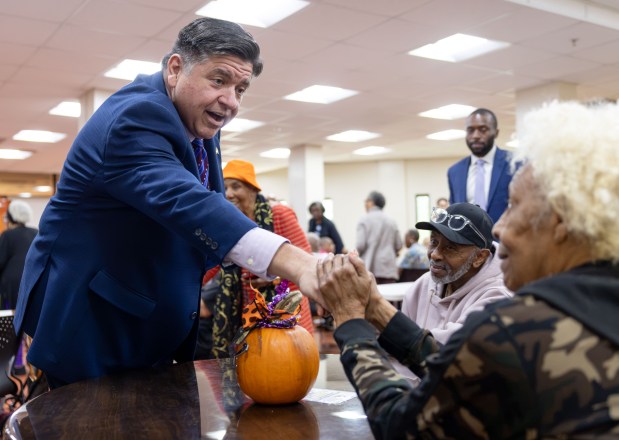
Governor JB Pritzker celebrated his victory against Darren Bailey in the 2022 election and looked forward to four more years in Springfield. Known as the “happy warrior,” Pritzker spent much of his tenure emphasizing resilience, similar to former Vice President Hubert Humphrey. Recently, his presence has been strong on the national scene, particularly as a critic of former President Donald Trump. As early voting started in all Chicago wards, Pritzker showcased his optimism to faith leaders, highlighting the positive outlook he maintains for state and national issues.
“We’ve focused too much on what might go wrong, losing sight of what can go right,” Pritzker told attendees at Evening Star Missionary Baptist Church in Oakland. His campaign emphasizes that working a full-time job should provide enough to cover essentials, health, housing, saving, and occasional vacation. Pritzker greeted voters during an event on October 19, 2026, in Chicago’s Bronzeville neighborhood.
Although his speech lacked a major state-level agenda, Pritzker relied on his record of achievements. His first term saw a minimum wage increase, and his second term introduced a statewide paid leave law. This approach mirrors the strategy he used in his last campaign, relying on his accomplishments instead of focusing on new promises. Political science expert Tabitha Bonilla highlighted Pritzker’s ability to align his campaign with the broader political context.
While Pritzker’s plans predominantly involve completing pending initiatives, his approach to affordability included efforts to lower energy costs, such as encouraging nuclear power developments. He has pushed for expanding state-funded preschool seats, though budget constraints delayed this endeavor. A focus on local governmental responsibilities, especially concerning property taxes, is a recurring theme. Pritzker attributes the high local taxes to uneven school funding but claims that his administration’s policies aid in alleviating these burdens.
Opponent Darren Bailey’s agenda, contrasting Pritzker’s policies, includes a plan to suspend the gas tax temporarily. However, financial challenges within the state might affect Pritzker’s dreams for higher office, though his contributions to stabilizing state finances remain part of his platform. Notably, Pritzker hasn’t proposed new revenue-raising strategies following his failed 2020 graduated tax proposal but focuses on yearly budget balancing.
With affordability concerns a priority, potential alternatives like taxing retirement income are politically sensitive. While property tax reform remains pending, Pritzker’s actions have aimed at shifting responsibilities onto local levels, entrusting them with the duty to lessen taxes. Political efforts continue to navigate these longstanding challenges.
Pritzker’s approach attracts diverse endorsements, including from the Illinois Retail Merchants Association, marking significant support despite previous disagreements, and former adversary Jim Durkin, highlighting a shared disapproval of Trump and Bailey’s leadership.
The stance against Trump’s policies, showcased during episodes like Operation Midway Blitz, consolidates Pritzker’s image as a protector of local interests against federal overreach. This positioning has earned him backing from veterans groups who value steadfast leadership in turbulent times. Pritzker remains committed to opposing efforts that align Illinois with Trump’s policies.