
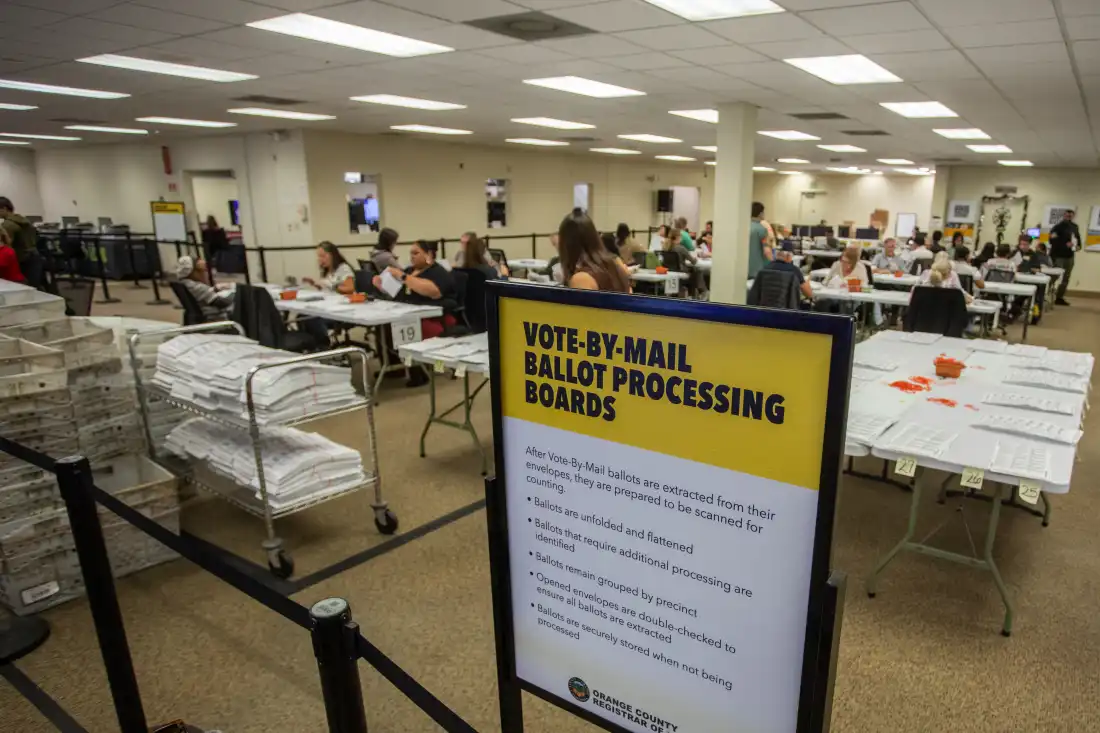
In Santa Ana, California, preparations are underway at the Orange County Registrar of Voters Facility as ballots are extracted from envelopes for counting. Yet, an unprecedented legal challenge has surfaced. On October 28, 2026, a federal judge in California denied an urgent request from the Department of Justice. The DOJ sought to separate thousands of ballots from the upcoming midterm elections, suspecting these involved noncitizens.
California’s state and local officials argue against the reliability of the DOJ’s claims, stating initial analyses show many listed as noncitizens do not hold active voter registrations. Halting the counting process now, they argue, is neither lawful nor practical and risks excluding eligible voters.
Judge David Carter, appointed by President Clinton, issued a 26-page ruling rejecting the DOJ’s call for immediate action. He wrote, “Never before in American history has the federal government, on the eve of an election, sought to coerce a state and local government to abandon their own Constitutional elections procedures.” Carter emphasized the risk of disenfranchising voters and creating disorder. “Once a vote is segregated, lasting harm has occurred,” he stated.
As an alternative, the judge proposed that the federal government continue to charge individuals found to have illegally voted. Recent months have seen the DOJ indict numerous people for voting without U.S. citizenship. The DOJ filed the lawsuit in California on October 15, part of a series of actions intended to address alleged election issues across states.
In Washington state, federal prosecutors asked election officials to examine a list of 400 voters they suspect are noncitizens. Additionally, the DOJ filed a controversial lawsuit in Alaska, aiming to halt the certification of Senate race results if the incumbent Republican loses.
California’s attorney general, Rob Bonta, criticized the DOJ’s efforts as disruptive. “This litigation is a precursor to further interference here in California,” Bonta asserted. He urged Judge Carter to reject the DOJ’s case, maintaining democratic values.
The DOJ is likely to appeal Carter’s decision, potentially elevating the matter to the U.S. Supreme Court. Their urgency stems from the ongoing ballot counting process. Once voter signatures are confirmed on mail ballot envelopes, the ballots are anonymized, complicating the retrieval of any ineligible ballots.
Federal prosecutors claim noncitizen votes dilute U.S. citizens’ votes, though such occurrences are rare according to audits. The DOJ’s list of “likely” noncitizens remains disputed. Los Angeles County’s analysis found many people on the list claimed U.S. birth, conflicting with U.S. Citizenship and Immigration Services (USCIS) findings. USCIS senior official Nicolas Bartell noted their investigation identified a few individuals who might hold U.S. citizenship. Bartell further detailed the federal government’s method for compiling the list, yet questions about its accuracy persist.
Political scientist Kassra Oskooi from the University of Delaware, serving as an expert witness for voting rights groups, questioned the reliability of USCIS’s protocol in his court declaration.