
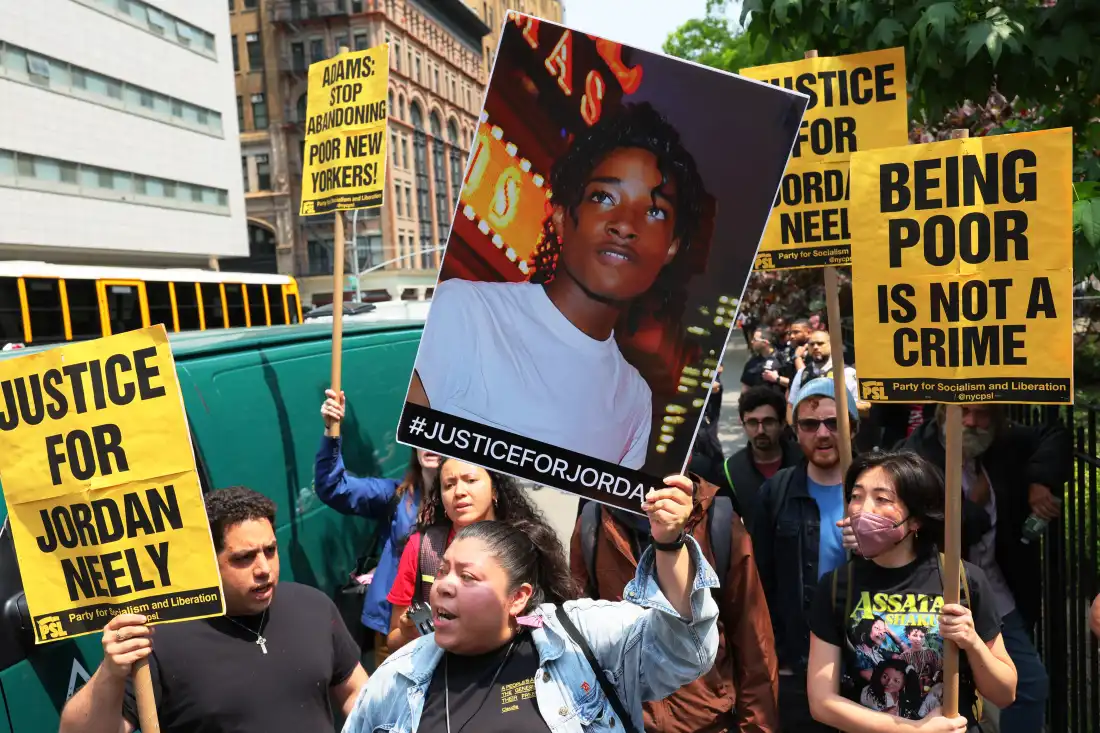
On May 1, 2023, Jordan Neely, a homeless Black man, entered a subway in New York City. Known for his Michael Jackson impersonations, Neely appeared distressed, shouting threats and causing alarm among passengers. Daniel Penny, a white ex-Marine, intervened, applying a chokehold for six minutes, resulting in Neely’s death. The incident, captured on video, ignited national debate. Some saw Penny as stepping in where police were absent, while others viewed Neely as a victim reflecting societal neglect of Black lives.
Journalist Anand Giridharadas delved into this case over two years, seeking to uncover what the video didn’t show. His goal was to explore what it means to live in America today and how individuals are reduced to caricatures within social media narratives. In December 2024, Penny was acquitted of criminally negligent homicide despite a hung jury on manslaughter charges. Soon after, he was invited by Vice President-elect JD Vance to the Army-Navy game with President-elect Trump and was offered a job by a Silicon Valley venture capital firm.
In his book, Man in the Mirror: Hope, Struggle, and Belonging in an American City, Giridharadas argues that both Neely and Penny felt abandoned by systems meant to protect them. Neely, he suggests, was let down by mental health and social support systems. Penny claimed he felt unsupported by law enforcement, left to handle a situation alone that might have been prevented.
I think Jordan Neely had felt abandoned for a very long time, and had reason to feel that way,says Giridharadas.
This sense of abandonment, the author posits, often leads to tragic outcomes when individuals feel compelled to take matters into their own hands.
Neely’s Criminal Record and Rehabilitation Efforts
Neely’s interactions with law enforcement spanned a decade, beginning with minor offenses linked to homelessness, like fare evasion and sleeping rough. In recent years, his actions became more violent, including assaults, leading to stints at Rikers. Instead of incarceration, Neely entered a rehabilitation program in the Bronx, aimed at addressing substance and behavioral issues. However, he left the facility, avoiding arrest because outreach workers didn’t recognize him and did not realize there was an active warrant.
Penny’s Long Island Roots
Penny hailed from West Islip, Long Island, a region with complex ties to New York City. Many residents commuted to the city for work, and the area had historically seen a significant white flight. These communities possessed a mix of middle-class escapees from city life and complex sentiments towards urban environments.
Penny and Public Opinion
Giridharadas, reflecting on Penny’s public demeanor, notes a lack of visible remorse or curiosity about Neely’s fate. Despite engaging with right-leaning figures and ideology post-verdict, Penny seemed ideologically vacant initially. He later embraced the public persona projected on him, accepting accolades and opportunities, notably a venture capital role with Andreessen Horowitz.
Case Politics and Broader Implications
The incident highlights political divides. Giridharadas notes parallels to cases like Luigi Mangione, where arguments of systemic failure were made. Hawk Newsome of Black Lives Matter advocated for community self-sufficiency in response, reflecting broader societal sentiments of abandonment and systemic disenchantment.
The sense of being left behind drives calls for action across political spectrums, underscoring an urgent need for systemic solutions.
Anna Bauman and Thea Chaloner produced and edited this interview for broadcast. Bridget Bentz, Molly Seavy-Nesper, and Beth Novey adapted it for the web.