
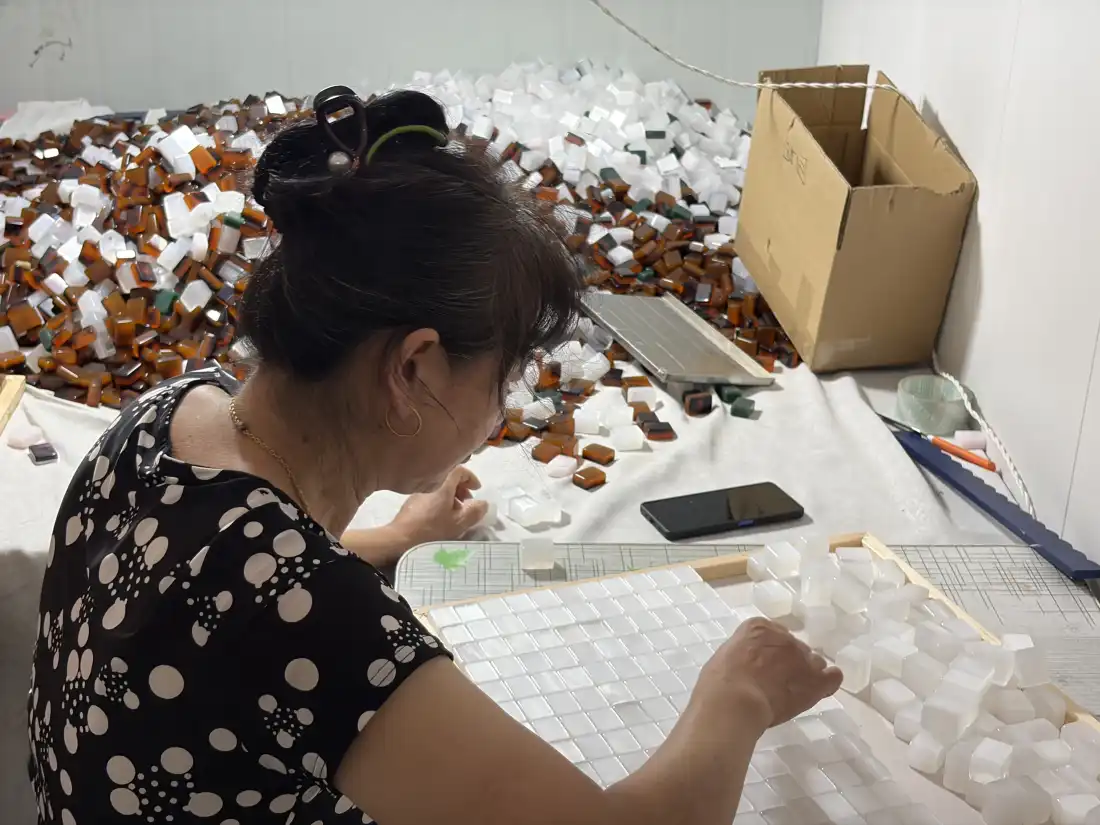
Taixing, China — In the eastern city of Taixing, a village home serves as a workshop for making mahjong tiles. This ancient Chinese game has captured attention in the United States. Three workers at Taixing Senju Cultural Entertainment Supplies inspect burnt-orange and pearl-white tiles carefully, checking for imperfections. Flawed tiles drop into a milk crate to ensure only perfect tiles are shipped to the U.S.
According to Wang Hao, co-owner of the workshop, clients sell mahjong sets for $300 to $400, while production costs are about 200 yuan ($30) per set. Despite high profit margins, U.S. tariffs and shipping costs from global conflicts don’t bother their clients, primarily Amazon vendors.
Mahjong’s U.S. Revival
Mahjong originated in China in the late 1800s and spread to the U.S. in the 1920s. It has seen renewed interest via social media. Wang Hao noticed a dramatic increase in mahjong searches late last year while at Alibaba.com. He left his job to distribute mahjong to the U.S., adapting to the American style which features smaller, colorful tiles made from acrylic.
U.S. geopolitical tensions and supply chain issues have limited profits for many exporters, but the mahjong craze has been beneficial for Taixing’s tile makers. Local producers are overwhelmed with orders, prompting Wang to move into direct manufacturing.
“When I started selling last year, the supply of mahjong was tight. Paying the factory way in advance didn’t guarantee on-time shipments,” Wang explained.
Shifting Production Methods
Meeting American demand necessitates a change in craftsmanship. Traditional mahjong uses melamine, offering weight and a smooth shuffle sound. However, American consumers prefer acrylic tiles, needing new production techniques. Early adopter Zhu Xingyao shifted his family business from domestic sales to international markets, focusing on bright designs like sparkly red and seafoam green with unique engravings.
Despite domestic demand decreasing post-COVID lockdowns, Zhu transitioned successfully, with almost all products now aimed at overseas buyers. Domestic retail sales have barely increased, marking a shift away from the local market.
Effects of Intense Competition
The domestic market for mahjong is experiencing ‘involution’ or intense competition as more manufacturers enter. “The competition comes from former co-workers,” Zhu observed, as they start their own factories in regions with lower labor costs.
However, American clients prioritize quality over price, according to Wang Hao. With a focus on premium presentation, including packaging, the mahjong tiles should be perfectly wrapped, not leaving any air gaps.
“It ruins the unboxing experience if packaging isn’t tight,” Wang noted. Product promotion on social media heavily relies on these aspects.
Prospective clients, like Ju Jiaojuan, are interested in original designs for export. She believes the opportunity will last for another two to three years before competition heightens and profits reduce. The immediate aim is delivering high-quality products to meet U.S. demand.
The opportunity lies in the next two to three years; competition will increase after that,” Ju said.
Jasmine Ling contributed to this reporting.