
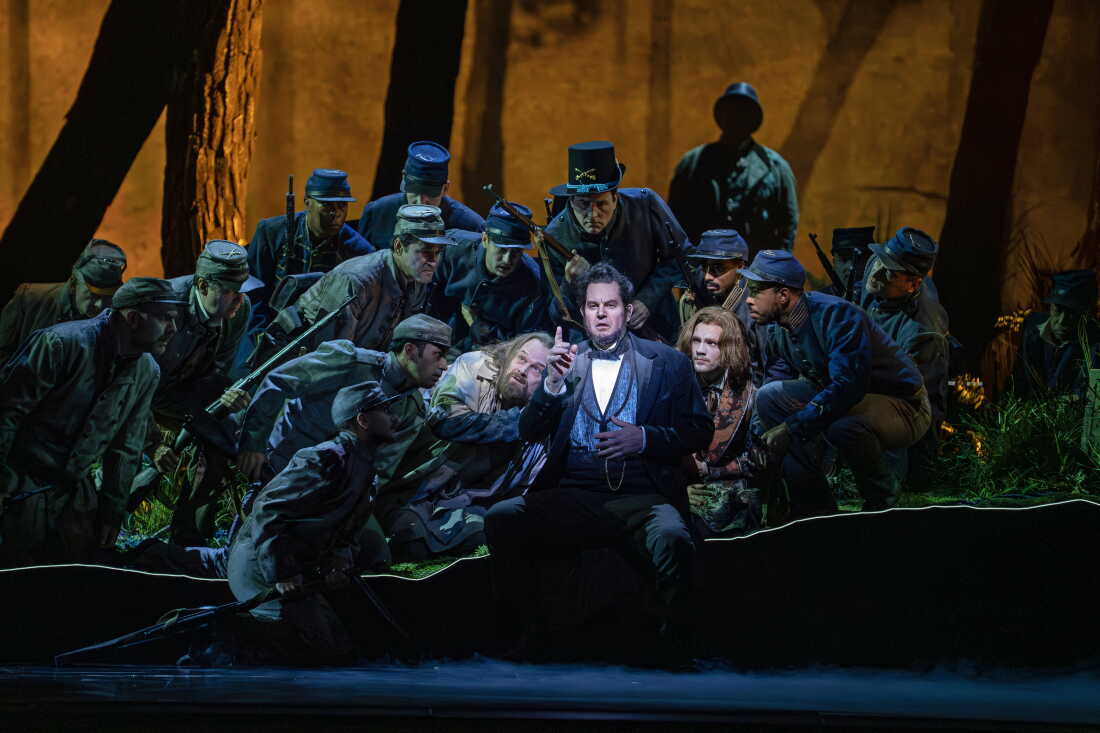
The Metropolitan Opera has unveiled a new opera based on George Saunders’ Booker Prize-winning novel, Lincoln in the Bardo. The show, which premiered at the Met in New York, explores a supernatural realm — a place between life and the afterlife — presenting unique challenges in adaptation.
Before the curtain rises, eerie signs are apparent. The Met’s chandeliers and lights flicker unexpectedly, hinting at an unusual experience. As the curtain opens, the stage reveals a graveyard at night; a child walks through it, and suddenly, ghosts emerge, playing kazoos. Composer Missy Mazzoli, the first female composer to have a world premiere at the Met, wanted to differentiate the sound, guiding listeners into a realm beyond everyday reality.
“Sixty-five brilliant, trained opera singers playing the kazoo,” Mazzoli notes, emphasizing the unconventional opera start.
Adapted from Saunders’ novel, narrated by 166 different characters, the story follows Abraham Lincoln’s son Willie, trapped in a liminal space among spirits yet to move on. A grieving Lincoln visits his son’s body in the graveyard, unaware of the spirits watching.
Librettist Royce Vavrek, Mazzoli’s collaborator, focused the narrative on five characters to maintain Saunders’ imaginative essence. This simplified arc features The Reverend, portrayed by soprano Christine Goerke. Known for Wagner and Strauss roles, Goerke unveils this specially tailored role.
Director Lileana Blain-Cruz integrates innovative staging techniques for a story filled with pain and hope. Strategies include puppets, pyrotechnics, and stage magic. Mazzoli’s orchestration enhances these elements, illustrating the surreal transitions of spirits via explosive orchestral moments.
“Matterlightblooming” describes the explosive transition into the afterlife, supported by the orchestration.
Lincoln grapples with personal grief for his lost son and broader reflections on Civil War casualties. The graveyard experience deepens his empathy and commitment to national healing.
Despite themes of death and transition, the creators present a vision of hope and light within the dark narrative. Blain-Cruz describes an inviting universe that balances life, joy, and grief.