
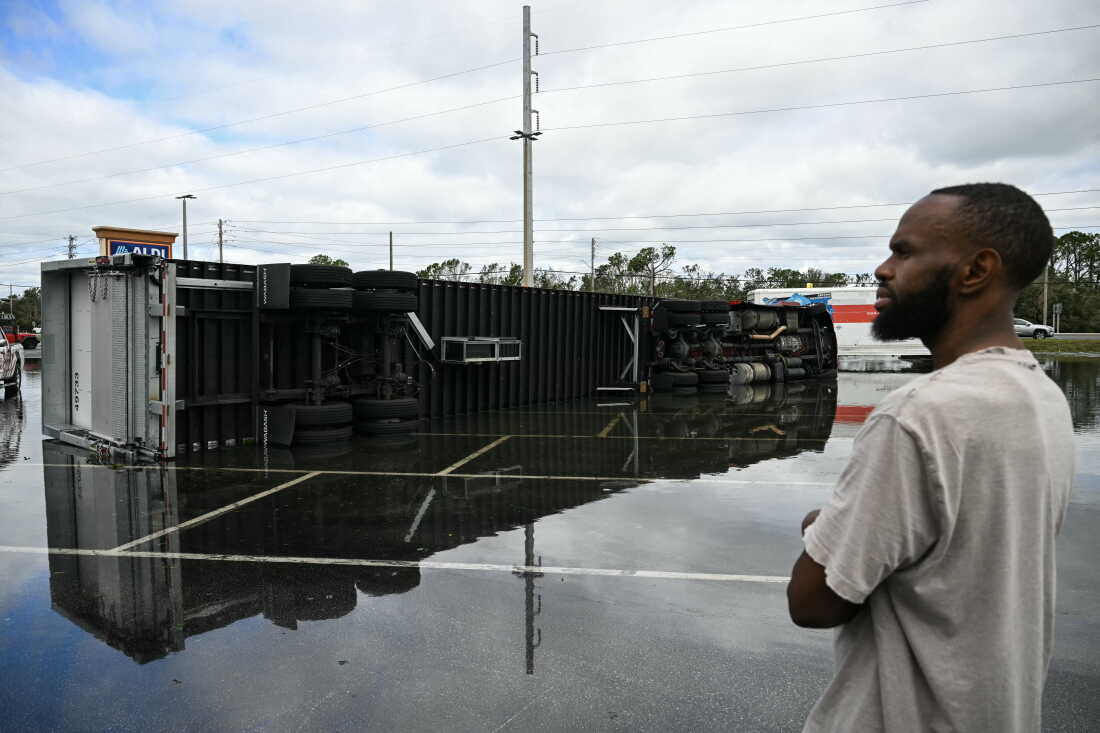
Emergency crews are assessing the damage left by Hurricane Isaias in Florida and Alabama after it hit the Gulf Coast as a Category 2 storm. The storm made landfall on Friday night and caused at least two fatalities, as confirmed by NPR. Isaias brought strong winds of up to 105 mph, toppling trees and causing widespread power outages. Flash flood risks are still present, especially further inland.
Fatalities and Damage
In Escambia County, located in the western Florida Panhandle, one person died after being trapped under a large tree, according to Sgt. Melony Peterson of the Escambia County Sheriff’s Office. A second fatality occurred in Jefferson County, Alabama, where a tree fell on a home, as reported by Jim Coker, Director of the Jefferson County Emergency Management Agency. The fallen trees were a common issue, blocking roads and causing destruction.
Infrastructure and Power Outages
By late Saturday morning, about 780,000 customers were still without electricity in Florida, Alabama, and Georgia, reports Poweroutage.us. Initially, the power outages affected close to 900,000 customers. Santa Rosa, Holmes, Washington, and Walton counties in Florida experienced the worst outages, with over 80% of residents affected. Florida Governor Ron DeSantis stated that 16,000 utility workers were working to restore power and clear roads.
Both I-10 and Route 98 remained open on Saturday morning, along with all state bridges. Efforts were underway to clear trees that blocked main roads to ensure accessibility.
Storm Path and Ongoing Threats
Isaias made landfall near Destin, Florida, at around 8:30 p.m. local time as a Category 2 hurricane. The National Hurricane Center reported wind speeds of 105 mph and a storm surge of about five feet. It was downgraded to a post-tropical storm early Saturday, with sustained winds dropping to 35 mph as it moved through Alabama.
The storm’s reach extended across the southeast, affecting regions far from the Gulf Coast. By 9:30 a.m. Saturday, Georgia experienced a series of strong thunderstorms. According to the Florida Public Radio Emergency Network, tornadoes might still develop from Isaias, threatening areas beyond the immediate impact zone.