
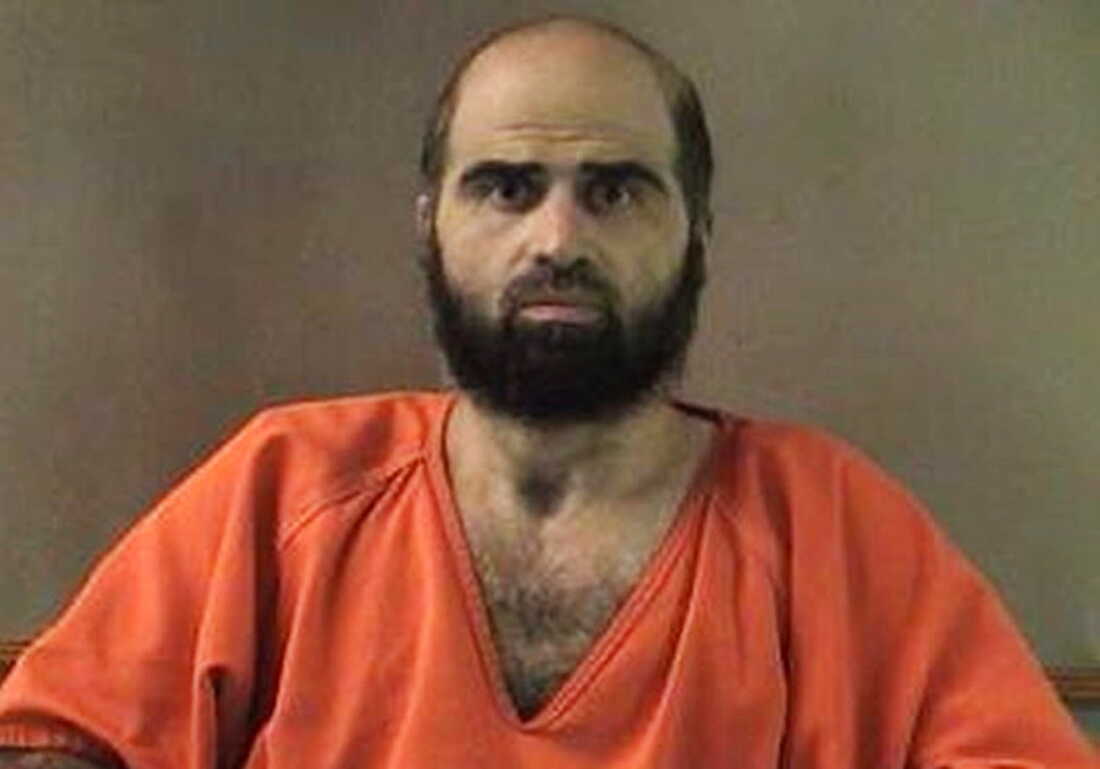
The Pentagon announced plans to livestream the execution of Nidal Malik Hasan, the Fort Hood shooter, marking the first military execution in over 65 years. Defense Secretary Pete Hegseth described the execution as ‘public’ and scheduled for December 3 at Fort Hood.
Hasan, a former Army psychiatrist, was convicted for the 2009 shooting that left 13 dead and 32 wounded. The announcement has sparked discussions on the handling of military executions in the U.S., particularly considering the recent issue with Christa Pike’s lethal injection in Tennessee.
‘Firing squads can be a quicker, cleaner, more precise way to execute a prisoner,’ said Brenner Fissell, a professor at Villanova Law and vice president of the National Institute of Military Justice.
The firing squad method, some experts argue, is being revisited as a viable alternative due to challenges with lethal injections.
Reaction from Experts and Legal Concerns
Experts express mixed reactions to livestreaming the execution. Deborah Denno, a law professor at Fordham University, believes it could enhance transparency and public understanding. However, Elisabeth Semel from UC Berkeley Law raised legal and policy concerns about the dignity of the defendant and the administration’s motives.
Hasan may choose to challenge the execution through a habeas petition, which could delay proceedings. He previously dismissed his legal team and did not defend himself during his trial.
Background and Legal Challenge Options
On November 5, 2009, Hasan attacked a medical building at Fort Hood. Barred from justifying his actions as opposition to U.S. military actions in Afghanistan, he was convicted without calling witnesses or making a closing argument. Hasan hinted his desire to be a ‘martyr’ if executed.
Attorney John Galligan, not involved in Hasan’s criminal case, expressed concerns about the lack of legal counsel during execution notifications. The Army claims they made efforts to ensure legal representation was available.
Rare Occurrence and Historical Context
The military last executed a service member by firing squad during World War II. The most recent military execution, by hanging, occurred in 1961. Recent international reports by Amnesty International note 17 public executions, including those in Iran and Afghanistan.
Secretary Hegseth mentioned that this case emphasizes the ‘lethality culture,’ hinting at implications of military tradition and public spectacle.