
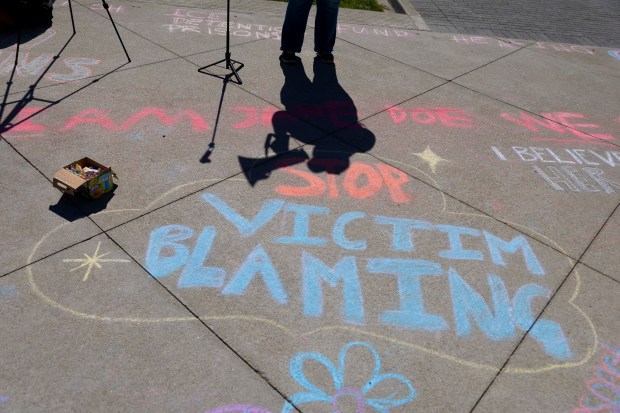
By noon on Thursday, approximately three dozen students gathered at the University of Illinois Chicago’s quad, displaying protest signs and distributing flyers against sexual violence. A vibrant chalk mural on the sidewalk outside the Lecture Center Building B featured messages such as “We are Jane Doe” and “Stop Victim Blaming.” The university is one of several campuses in Chicago and across the state where students are protesting following the resurfacing of a two-year-old sexual violence case at Cornell University last month.
A woman, known as “Jane Doe,” filed a civil lawsuit after a prosecutor chose not to pursue criminal charges against seven men she accused of raping her in 2024, while she was intoxicated at a fraternity party at Cornell’s Ithaca, New York, campus. The reopening of a criminal investigation and the appointment of a special prosecutor have renewed scrutiny on how Cornell and law enforcement handled the case, attracting national attention and sparking dialogue and outrage over campus sexual violence.
This outcry has led schools nationwide to enhance advocacy, resources, and support for students and sexual assault survivors coping with the aftermath. This month, Illinois students, in particular, have seized the opportunity to raise awareness about sexual assault and the response of authorities.
National Day of Action
On the “National Day of Action,” hundreds of Lincoln Park High School students walked out of class at midday in solidarity with “Stop Sexual Violence” protests at UIC and Southern Illinois University Edwardsville. Between chants at UIC’s quad, student speakers used a megaphone to discuss the importance of accountability and demand justice in the Cornell case.
Nova Mohiuddin, a 23-year-old economics major and an organizing member of the UIC student chapter of Chicago Socialist Alternative, emphasized the importance of resisting sexism. “It’s now, more than ever, the time to speak out,” declared Mohiuddin. Emily Via, of the Grad Employee Organization, also spoke during a rally.
While women formed the majority of protesters, male students also joined the demonstration. Jacob Belencion, a fourth-year mechanical engineering student at UIC, highlighted the need for men to support these movements and challenge misogynistic behavior.
Support from Other Campuses
Nearly 300 miles away, Southern Illinois University Edwardsville students also protested against sexual violence. After learning about the National Day of Action online, Isabel Montano, a junior in philosophy and economics, took action at SIUE. She emphasized channeling emotions into positive change.
Montano expressed hope that discussing and addressing issues like sexual violence could lead to change. “Even if I’m just one person with a sign, one voice makes a difference,” she remarked.
High School Support
Lincoln Park High School students joined the movement, leaving class and marching with a banner displaying “#EndSexualViolence.” Their chants included “No means no,” and “My voice, my choice.” The demonstration concluded at the Lincoln Park Zoo’s administrative office, where students took the megaphone.
Isabella Scaffai, a junior and walkout organizer, explained the importance of the protest. She discussed the disheartening realization that abuse threats persist despite the independence and freedom associated with college life. Scaffai emphasized standing up for herself, her friends, and the women who raised her.
Senior Chloe Woodall helped spread awareness through posters and social media. She highlighted the educational aspect of the rally, helping students understand consent and sexual assault more clearly.
Resources and Support
Chicago campuses, including Northwestern University’s Center for Student Advocacy and Wellness and UIC’s Women’s Leadership and Resource Center, offer ongoing support. Sarah Layden from the nonprofit Resilience recommended utilizing resources like the 24-hour Chicago Rape Crisis Hotline.
While the Cornell case has gained significant attention, survivors respond differently. Layden emphasized creating communities with other survivors and speaking out as potentially healing. However, she noted that not all survivors are ready to report immediately, and delayed reporting does not invalidate their experiences.