
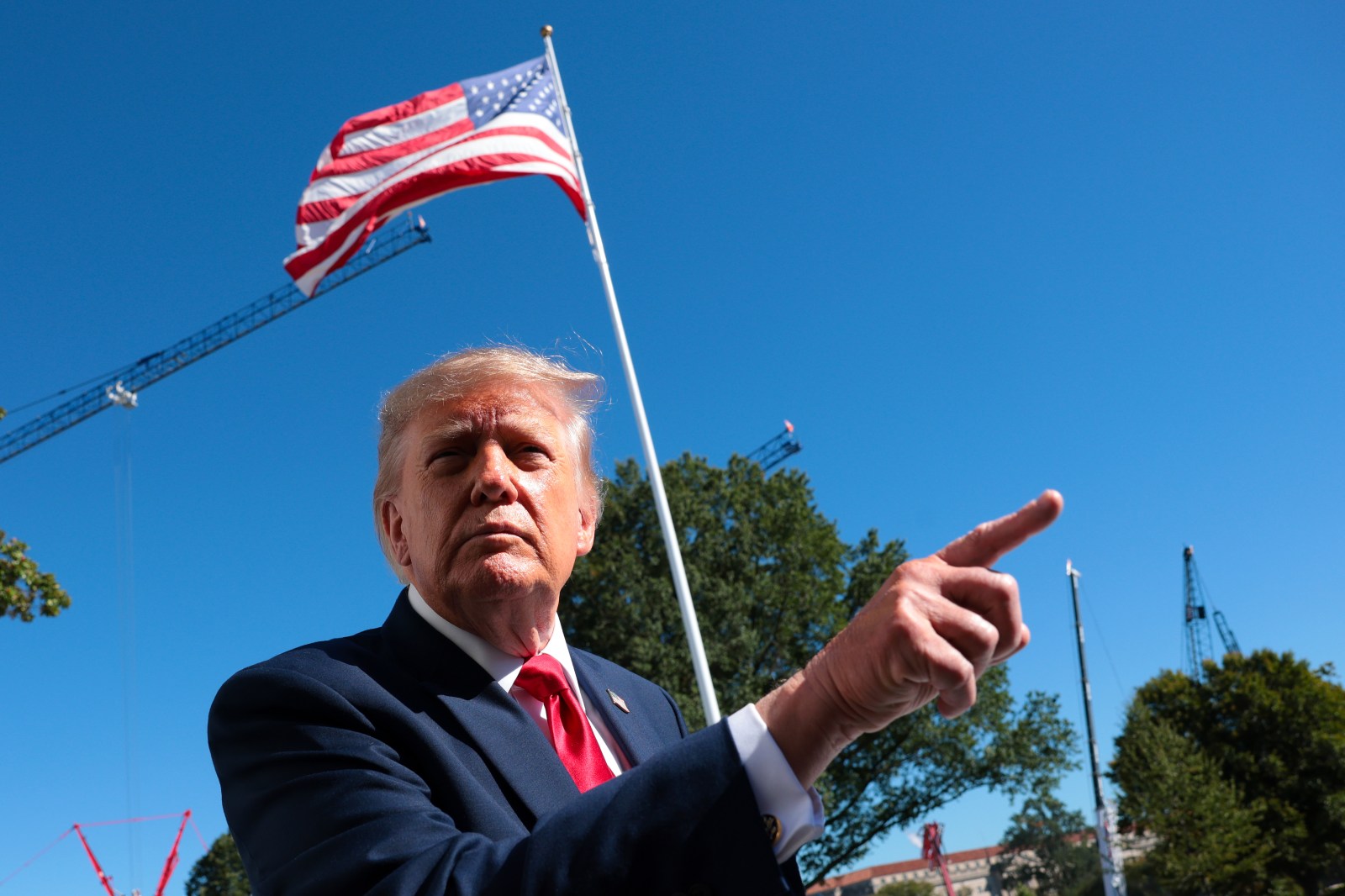
The White House addressed concerns about President Donald Trump’s public service announcements, clarifying he did not intend to reimburse taxpayers, despite a social media post suggesting otherwise. Trump had shared on Truth Social that he would cover the costs personally, after receiving criticism over the ads, one of which coincided with his 2024 presidential campaign.
In his social media message, Trump stated, “The Radical Left is upset with the fact that I am taking Ads, which I consider to be a positive promotion for our Great U.S.A., and paying for them with U.S.A. money.” He added that instead of following the usual practice, he would fund the Patriotic Ads with money raised for MAGA, Inc. A White House official confirmed to Newsweek that the post did not imply reimbursement, though no further clarification was provided.
The Trump administration cited previous administrations’ similar campaigns, such as wartime messages and healthcare public service announcements, as a point of comparison. However, when a reporter asked Trump about reimbursing taxpayers, he replied, “We’ll decide.”
Trump Admin TV Ads: Details
The ads faced backlash due to their use of taxpayer funds. The first ad highlighted Trump’s policies with messages like “largest tax cuts in history” and “defend law and order and police.” Featured music, “Love Me” by JMSN, was reportedly used without permission. Another ad covered Trump’s intentions to “demolish the deep state” and usher in a “golden age of America.” A notification stating “paid for by the U.S. government” accompanied the visuals, leading to criticism from Democrats and some Republicans. Reportedly, the ads cost over $443,000 and $300,000 respectively to air.
Responses from Lawmakers
Both Democrats and Republicans voiced concerns over the ads’ funding. GOP Senate Majority Leader John Thune emphasized the message should not hinge on taxpayer dollars. Senators John Cornyn, John Kennedy, and Thom Tillis joined in dissent.
Democrat Jamie Raskin described the campaign as state-like propaganda rather than a legitimate PSA, asserting it violated laws against using government resources for political aims. His warning pointed to elapsed legislation like the Hatch Act, prohibiting government workers from campaign involvement during office hours.
Trump’s Defense of the Ads
In defending the ads, Trump and the White House argued they highlighted administrative policies, not the president. “The announcements are very clearly not campaign ads; President Donald Trump is not on the ballot and there is no call to action,” the White House stated in a press release. They aimed to inspire Americans to appreciate and defend their nation. Vice President JD Vance iterated this, emphasizing their role in maintaining transparency with the public.
In prior comments, Trump reiterated that the ads were intended for the nation’s benefit, not for electoral advantage. He maintained that if found inappropriate, he would be willing to cover the costs, highlighting a focus on promoting national interests over individual agendas.
These developments continue to generate debate about the overlap between government communication and electoral politics.