
As the school year begins, students and parents face a return to the ‘new normal.’ Parents offer support and guidance amid the evolving challenges of the back-to-school season. Navigating the school year resembles a ‘Choose Your Own Adventure’ book: a simple decision might lead to significant consequences.
Among Black and Brown families, a crucial conversation known as ‘the talk’ remains vital. This discussion, passed down through generations, educates children on systemic racism and racial profiling. The goal is to prepare them for encounters that could quickly turn dangerous. These interactions can happen during routine activities and involve law enforcement or others.
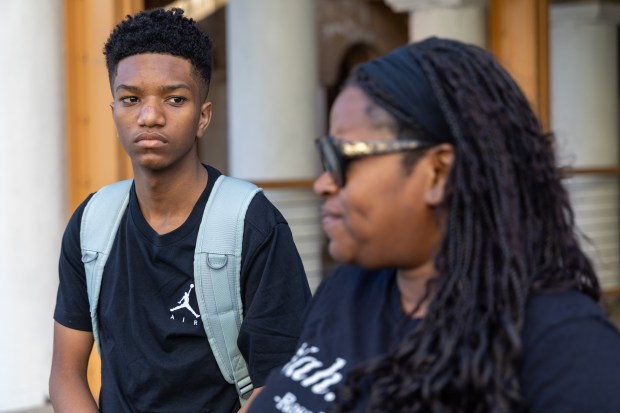
Joy Sapp, a resident of Chatham, recalled ‘the talk’ with her children, Robert Wise III, now 17, and Elliott Donaldson Jr., now 13. She emphasizes revisiting this conversation, expanding it to include friends, to ensure safety and self-awareness.
This discussion gained renewed importance following the death of Nolan Wells. The Black teen disappeared during a July Fourth trip to Mississippi’s Gulf Coast with friends, all white. His body was found days later, prompting questions about the investigation’s speed and thoroughness. An independent autopsy labeled his cause of death ‘undetermined.’ No indictments resulted from a Mississippi grand jury inquiry.
Sapp stresses, ‘You have to keep a watchful eye. I tell my kids often: stay clear of trouble and know your company.’
Langston Golden, 16, faced law enforcement during his commute. He shares, ‘I didn’t feel threatened for my life. I was irritated.’
This summer, Chicago’s Jamie Nesbitt Golden learned about her son Langston’s interaction with plainclothes officers at a bus stop. Concerned, she shared the incident on Facebook. Langston, a high school junior, recounts a brief interaction with officers checking his well-being. He reflects on errors made, such as approaching perceived officers and interacting without a parent present.
Jamie Nesbitt Golden worries about law enforcement impersonation and teaches her son to maintain distance. Following this incident, he took precautions like using Uber for work commutes. She considers filing a complaint with the police.
Riana Elyse Anderson, a licensed clinical psychologist, focuses on proactive coping strategies against race-related stress. Her organization, RACE Space Inc., developed a mental health app, Teens Navigating the Talk, improving teens’ ability to discuss, confront, and cope with racism. Anderson views the Wells case as complex, acknowledging racial elements while recognizing typical adolescent behavior.
Nesbitt Golden’s son attends TMH Mancave, a weekly program promoting mental health and boxing for Black men. Participants, including Langston, discussed the Wells case, highlighting youth resilience despite ongoing racial conversations.
‘We’ve been having these conversations since he was young,’ Jamie Nesbitt Golden notes. Yet, in tense situations, learned responses can falter.
Anderson explains that having ‘the talk’ enhances young people’s psychological well-being. It prepares them for calmer responses to potential racial crises, offering better emotional regulation. Both Sapp and Nesbitt Golden affirm the talk’s ongoing necessity as their boys mature.
Jamie Nesbitt Golden stresses ongoing discussions about safety in varied contexts, from police encounters to social settings. Sapp agrees: ‘Too many Black and brown kids aren’t making it home.’ She remains vigilant with a college-bound son, emphasizing awareness at parties and social gatherings.
Anderson advocates initiating ‘the talk’ at any age. Using developmentally appropriate literature, adults can guide conversations on racial issues. ‘Kids understand discrimination,’ Anderson suggests. Her program aids families in addressing feelings and fostering open dialogue with young teens.
Encourage kids to express emotions and reassure them of family support. ‘Saying ‘I love you and I want to make sure that you’re OK’ can spark these important family conversations.’