
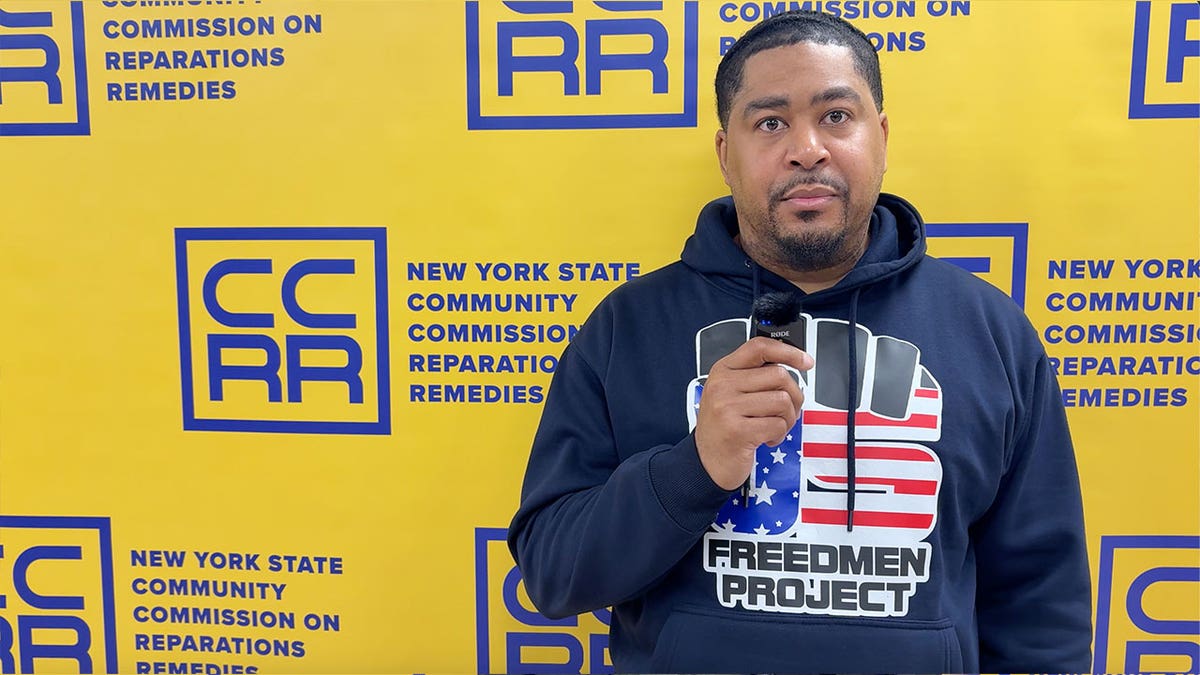
Reparations advocates are calling on the federal government to provide direct cash payments to Black descendants of American slavery. They argue that expanding eligibility could weaken the movement amid rising opposition from conservatives and the Trump administration.
Rev. Phyllis Coachman’s Statement
Rev. Phyllis Coachman, a supporter of the U.S. Freedmen Project, highlighted the importance of cash payments. She explained that while cash payments are a part of the solution, they represent significant reparations because of the historical injustices that Black Americans have endured.
“Cash payments — that’s just a little solution to it, but it’s a big solution because without cash payments, there’s no reparations,” Coachman said.
She cited several historical events, such as the collapse of Reconstruction, Jim Crow laws, and racial terror, which contributed to long-standing inequalities. These include housing discrimination, redlining, discriminatory lending, and mass incarceration.
Cash Reparations Demand
Black New Yorkers demand monetary reparations as state officials explore ways to address slavery’s legacy and other racial injustices. The U.S. Freedmen Project aims to educate the public on the distinctions between Black Americans descended from enslaved people in the U.S. and those who immigrated voluntarily. The organization seeks to revive the missions of the 19th-century Freedmen’s Bureau and the Freedmen’s Savings and Trust Company.
Supporters contend that broader reparations bills could infringe on constitutional principles and emphasize that eligibility should be lineage-based. Several local and state governments are considering reparations initiatives for Black residents. Evanston, Illinois, was the first U.S. city to offer direct remedies with homeownership grants and cash payments to address housing discrimination.
Annette Wilcox’s Argument
Annette Wilcox, a reparations advocate, criticized the use of the term ‘handouts’ for cash payments. She pointed out that the government has provided reparations to other groups in the past. She emphasized that the U.S. government bears responsibility for its historical actions against Black citizens, similar to how it addressed its actions against Native Americans and Japanese Americans.
Broader Implications of Reparations
Reparations groups see this as part of a broader effort to tackle structural issues like the racial wealth gap, policing, incarceration, environmental racism, and underfunded schools. In New York, the establishment of a commission by Governor Kathy Hochul in December 2023 aims to examine slavery’s legacy and explore potential remedies.
During testimony in Long Island, U.S. Freedmen movement supporter Aubrey Muhammad proposed a direct payout of $800,000 per eligible individual. He argued that such an amount aligns with the cost of living and addresses financial duress.
Devine Prince, president of the U.S. Freedmen Project, acknowledged these efforts aim to address the wealth gap. Nonetheless, he emphasized that monetary compensation is essential and non-negotiable. He insisted that true Americans should accept direct monetary compensation for historical harm.
Contact Information
Reporter Joshua Q. Nelson covers cultural trends, education, and public policy for Fox News Digital. He can be contacted at [email protected] and followed on Instagram, Twitter, and LinkedIn.