
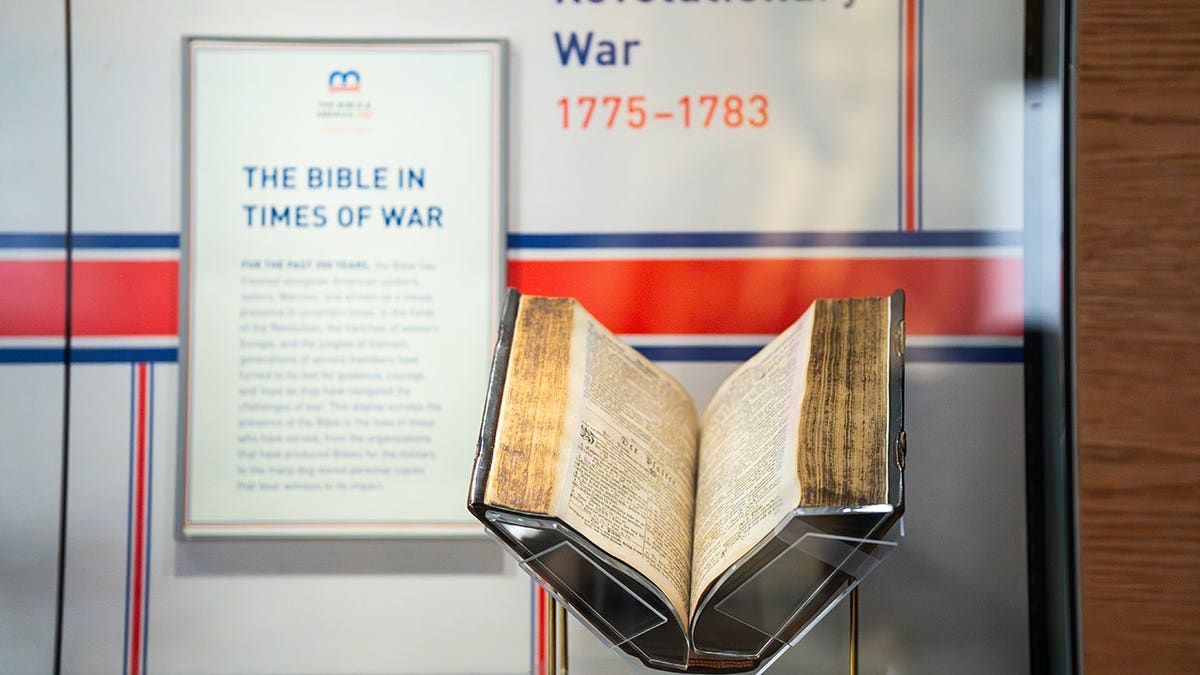
For generations, American service members have carried Bibles during times of war. These Bibles were essential items tucked into uniform pockets as soldiers headed into uncertain futures. Some came back from war damaged, while others featured heartfelt prayers from family members hoping for the safe return of their loved ones. One unique type of Bible was encased in metal and worn over a soldier’s heart.
As the U.S. commemorates 250 years since the Declaration of Independence, the Museum of the Bible’s exhibit, “Bible in Times of War,” showcases artifacts to explore how soldiers have turned to Scripture for strength and hope during various conflicts.
“Whether the books stopped bullets may obscure what they represented,” said Wesley Viner, a curator at the Museum of the Bible.
Viner emphasized that many moving stories within the collection belong to ordinary Americans, not famous generals. One notable artifact is the “Heart Shield Bible,” a small, pocket-sized Bible with a thin metal cover, carried by some soldiers during World War II and the Korean War. These were often purchased by relatives, designed to be worn over the heart, and sometimes believed to stop bullets.
Viner noted that while tales of Bibles stopping bullets are likely exaggerated, their symbolic significance remained powerful. They acted as a source of protection and strength for families sending sons, husbands, and brothers to war.
Significant messages were written inside the covers, such as “To my dear boy, may God keep you safe,” demonstrating the emotional weight these Bibles carried.
An older Bible, carried by Union soldier John Weissenheimer, provides insight into his life during the Civil War. Though detailed records of Weissenheimer’s experiences are lacking, his preserved Bible tells part of his story. It illustrates how these artifacts help historians reveal the lives of soldiers otherwise lost to history.
Not every Bible saw combat. In the 1950s, a Bible accompanied sailors in Operation Deep Freeze in Antarctica. A Navy chaplain gave the Bible to a team member, conveying well-wishes and prayers for a safe return, reflecting the Bible’s ongoing role in uncertain ventures.
The exhibit also includes the “Gun-Wad Bible,” printed by Christoph Sauer in 1776, with legends surrounding its involvement in the American Revolution. These stories, though likely fictional, emphasize how people viewed Biblical texts as critical symbols during that era.
Smaller and more durable editions became more accessible over time, with many containing handwritten notes. Some service members used blank pages to document their journeys and experiences—capturing vital personal histories.
The collection at the Museum of the Bible illustrates how soldiers have consistently turned to Scripture for strength and hope amid war’s challenges. Many stories and prayers from these Bibles remain familiar, echoing the continued longing for protection and safe returns during times of conflict.
The “Bible in Times of War” exhibit can be found on the second floor of the Museum of the Bible, part of the Bible in America section.