
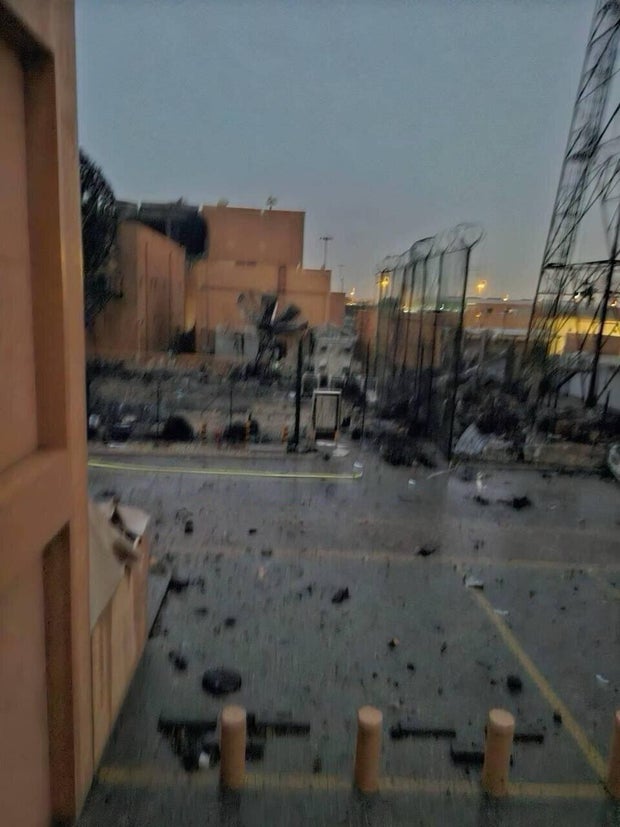
On the first day of the conflict, September 21, 2026, Iran targeted the U.S. Navy’s Middle East headquarters in Bahrain. This occurred before the evacuation of military families stationed there, causing delays for some families who waited a week or more for safe passage.
According to military spouses, the missile attacks were frequent and intense. Many families experienced fear as they awoke and slept to the sound of ballistic missiles. These attacks persisted for several days, catching the U.S. government off-guard as evacuations had not been mandated before the war’s onset.
The military had prepared for some retaliation, leading to the evacuation of base buildings. However, the scale of the attacks was unexpected. One U.S. official mentioned they did not forecast the magnitude of the situation. Families living near the base could witness missile contrails and hear explosions from the attacks.
No military personnel fatalities occurred, yet images circulating on social media highlighted significant damage to the base. A notable attack on the first day damaged a crucial radar system. The Pentagon has not disclosed cost estimates for the damages, stating uncertainty over what infrastructure will be rebuilt.
The Navy’s Fifth Fleet, headquartered at Naval Support Activity Bahrain since the 1990s, acts as a logistics hub for Middle East operations. The base accommodates approximately 8,300 military personnel, civilian employees, and their families.
The destruction affected naval logistics. The USS Abraham Lincoln aircraft carrier faced food shortages as resupply routes shifted away from Bahrain. Supplies now arrive from distant locations like Diego Garcia, extending logistics cycles from 5-7 days to 14-18 days.
Admiral Daryl Caudle, Chief of Naval Operations, acknowledged the need to restructure logistics in the region during a town hall meeting. He confirmed that there are no immediate plans to return to Bahrain at previous capacity. Service members can arrange for the shipment of personal goods, either in person or through representatives.
Since the conflict began, about 1,450 military members and their families have been evacuated from Bahrain. Financial stress has affected many, managing dual households in Bahrain and the U.S. The Pentagon offers reimbursement for housing costs in both locations, but processing delays create additional strain.
A Navy spokesperson indicated ongoing communication and support for those affected. Families have a deadline until the end of November to transition to designated residences for continued support entitlements.
Non-profit Blue Star Families has aided evacuees in Tampa, assisting them with essential supplies as families adapt to temporary accommodations. Despite frustrations with the situation, military families attribute their challenges to unexpected circumstances rather than military negligence.