
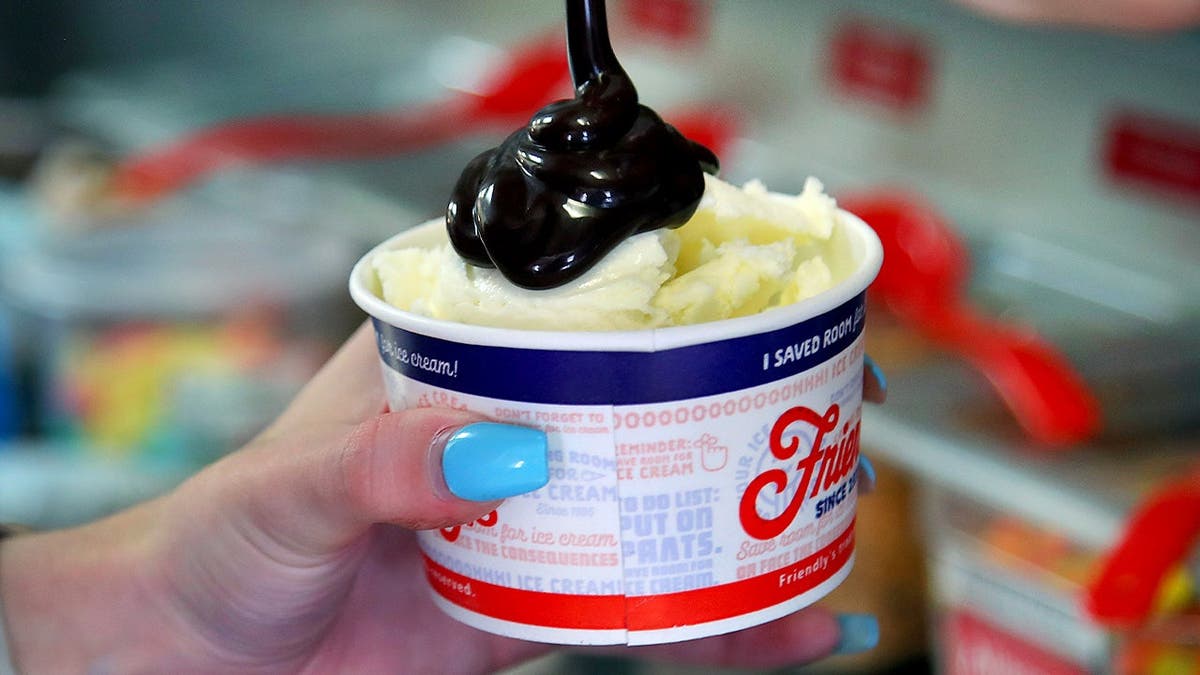
A well-known casual dining chain, Friendly’s, has seen a significant reduction in its locations over the years. Originally operating nearly 850 restaurants, Friendly’s now has fewer than 100 locations across 11 states.
Friendly’s was established as a simple ice-cream shop named ‘Friendly’ in Springfield, Massachusetts. The founding brothers, Prestley and Curtis Blake, launched the business in 1935 during the Great Depression. With Prestley at 20 and Curtis at 18 years old, they attracted customers by selling double-dip ice-cream cones for just 5 cents.
By 1940, Friendly’s expanded to include a second location and introduced food to the menu, notably hamburgers. The brand continued to grow over the years, boasting 10 restaurants in Massachusetts and Connecticut by 1951. By 1974, Friendly’s had reached 500 restaurants throughout the Northeast and Mid-Atlantic, becoming famous for its ice-cream desserts and family atmosphere.
Throughout its history, Friendly’s introduced various menu items and distributed its ice cream to supermarkets. The company even set a Guinness World Record in 1980 for the largest sundae. Friendly’s name officially changed in 1989 with the addition of an apostrophe and ‘s’.
The chain saw several ownership changes and filed for bankruptcy twice. Hershey’s acquired Friendly’s in 1979 and later sold it to the Tennessee Restaurant Company. By the mid-1990s, Friendly’s had expanded to approximately 850 restaurants.
In 2011, Friendly’s filed for bankruptcy for the first time. Following the impact of COVID-19, Friendly’s faced another bankruptcy in November 2020, as dine-in operations were severely affected.
In 2021, Amici Partners Group, LLC acquired Friendly’s, aiming to rejuvenate the chain, which had dwindled to around 130 locations. Currently, Friendly’s operates 87 locations across 11 Eastern states, with Massachusetts hosting 22 restaurants, accounting for nearly 25% of the current operations.
Critics have noted some Friendly’s restaurants appear outdated, struggling to keep up with contemporary trends. However, Barbara E. Kahn, a marketing professor at the University of Pennsylvania, emphasized that Friendly’s has ‘positive DNA’ and potential for a comeback. She remarked on the nostalgic appeal of the brand, which could be leveraged to attract visitors.
To remain relevant, Kahn suggests Friendly’s should embrace consumer trends, such as offering non-meat items, healthy grains, and salads. She compares Friendly’s potential evolution to McDonald’s success in adapting to changing tastes.