
In April, five weeks into a difficult and unpopular conflict, an American fighter jet was downed over Iran. This incident left two aviators stranded on enemy soil. The pilot and a weapons systems officer, identified by call signs Alpha and Bravo, ejected from their F-15E jet, named Dude 44, after Iranian forces hit it with a missile. The two found themselves separated by miles in a mountainous desert area, targeted by Iranian bounties. This event led to one of the most intricate rescue operations in U.S. military history.
Survival Amid Crisis
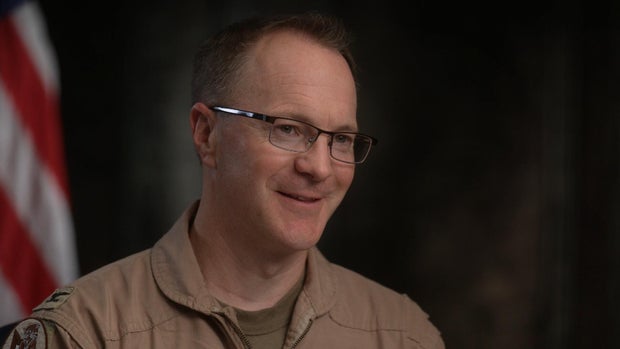
In an interview with 60 Minutes, Bravo shared with correspondent Norah O’Donnell the details of their harrowing experience and the rescue mission. Bravo credited Alpha for saving their lives by acting quickly when the missile struck, describing the impact as feeling like a “freight train.” Realizing the aircraft could not be salvaged, they ejected, descending into the heart of Iran.
Explaining the critical moment, Bravo said, “It was evident the aircraft wasn’t going to make it, and we ejected, floating over Iran.” O’Donnell questioned the speed of their decision to eject, to which Bravo replied, “I will always be grateful to Alpha for saving our lives.” The F-15E was designed to create a delay between ejections to distance the crew upon landing, enhancing safety.
Acknowledging the Team
Bravo praised the airmen responsible for maintaining the aircraft, their equipment, and survival gear. Despite the damages, the equipment functioned exceptionally. “The airmen did an incredible job,” Bravo noted. The missile inflicted damage on the aircraft and even his ejection seat, but it exceeded expected performance standards, showcasing the team’s professionalism.
A Terrifying Fall
Bravo faced further peril as his parachute was damaged, leaving him momentarily without it. “Initially, seeing no parachute was the most terrifying moment,” he recalled. Despite not knowing his exact falling speed, he and military debriefers estimated between 70-100 mph. He focused on resolving issues and trying to unfurl parts of the parachute, emphasizing their training to solve problems under such circumstances.
Despite severe injuries, including broken bones, Bravo survived the fall, attributing it to divine intervention. “I see it as God’s provision to prevent catastrophic injuries,” he expressed, feeling eternally grateful.
Evasion and Rescue
Surviving the ejection was just the start. Bravo then needed to evade Iranian forces attempting to capture him. U.S. military reports indicated enemies approached within a few hundred meters. Bravo concentrated on escaping and communicating safely.
He had communication gear but deemed it safer initially to focus on distancing himself from potential captors. Climbing a 7,000-foot ridgeline, despite injuries, he persevered. “The terrain posed challenges, but I pushed through due to our warrior ethos,” Bravo stated.
The Rescue Mission
After 48 stressful hours, U.S. forces rescued him. “Seeing them was one of the greatest moments of my life,” Bravo said, expressing gratitude to the rescuers. Though he chose to keep their interactions private, he shared his first words to them: “Let’s go.”
Final Escape
Back at the makeshift airstrip, the rescue plane’s landing gear became stuck in the desert sand. A U.S. Air Force unit was involved in getting Bravo and the 90-plus special operators out of Iran. To prevent the aircraft from falling into Iranian hands, the U.S. military destroyed it. Bravo maintained faith in his rescuers, saying, “We always come for our own.” He held strong belief in both the divine and his fellow military personnel.