
Overview of the Situation
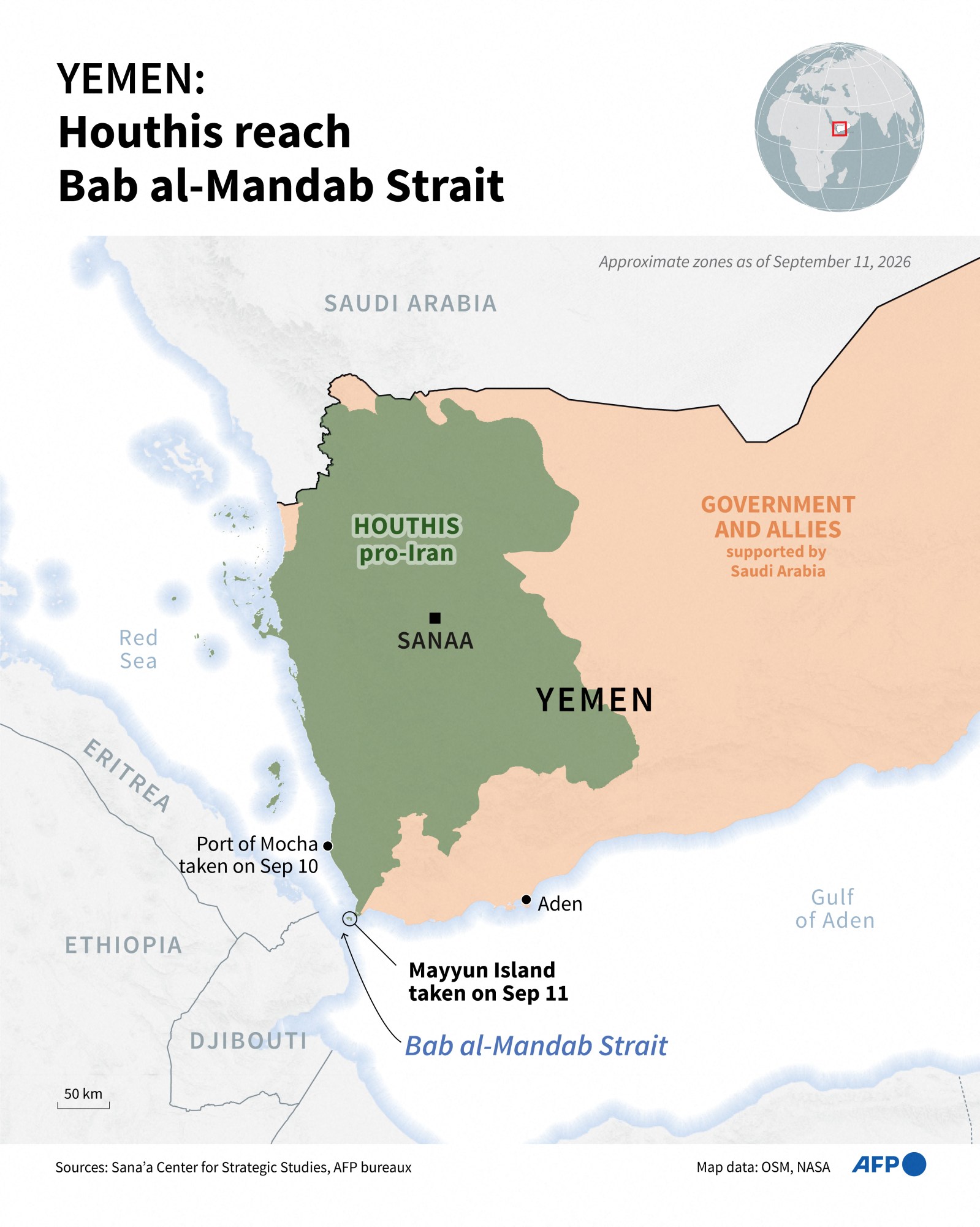
The Yemeni Ansar Allah movement, also known as the Houthis, has rapidly taken control of the nation’s Red Sea coast. This control presents a strategic advantage for the Axis of Resistance by jeopardizing a critical maritime corridor. The Bab el-Mandeb strait connects Yemen and Djibouti, forming a vital link from the Gulf of Aden to the Red Sea. This passage narrows to just 16 miles, and Ansar Allah is known for disrupting global shipping from considerable distances.
Impact on Global Trade
With Saudi-backed Yemeni government forces retreating, the risk of a new blockade looms. Ansar Allah, armed with missiles and drones, threatens the flow of approximately 8.1 million barrels of crude oil daily, accounting for about 10 percent of global maritime oil trade. The Bab el-Mandeb’s significance escalates as an alternative route after Iran curbed shipping through the Strait of Hormuz, a consequence of the conflict initiated by the United States and Israel.
“If the Houthis consolidate control, this becomes much more than a Yemeni issue,” stated Hisham al-Omeisy, a Yemeni analyst.
Omeisy noted that Ansar Allah’s fighters don’t necessarily need to close the strait entirely. Making it threatening enough would discourage shipping companies due to high risk, resulting in increased insurance costs, alternative routes around Africa, longer delivery times, and higher prices.
Strategic Risks and Challenges
This situation is compounded by developments around the Strait of Hormuz. If Iran pressures Hormuz while Houthis threaten Bab el-Mandeb, there would be simultaneous pressure on both flanks of the Arabian Peninsula. The Bab el-Mandeb handles 10 percent of global oil and 8 percent of gas sea trade. It also accommodated about 30 percent of global container traffic prior to the conflict, as stated by Nitya Labh of Chatham House.
Saudi Arabia has rerouted some oil exports from the Gulf to the Red Sea via pipelines, underscoring the Red Sea’s increasing relevance in global energy markets. However, reports suggest Ansar Allah has also targeted overland routes, damaging Saudi pipelines leading from Abqaiq to Yanbu.
Consequences of Upheaval
Ansar Allah’s actions threaten the Suez Canal too, labeled by Labh as “the last viable shipping pathway through the Middle East region.” Since their campaign responded to the October 2023 Middle East crisis and war in Gaza, Red Sea transit has dropped more than two-thirds. Ships had shifted to longer routes around Africa’s Cape of Good Hope, reminiscent of pre-1869 Suez Canal times.
The U.S.-backed ceasefire in October 2025 revived transits temporarily, but future prospects appear bleak. The added transit duration introduces risks: congestion at Mediterranean and African ports disrupts supply chains, piracy, and accidents multiply. Increased costs of fuel, shipping, and insurance inflate consumer prices globally. This burdens small island economies the most.
Strategic Threat to Saudi Arabia
Saudi Arabia faces intensified challenges, surrounded by threats from Iran, Iraq allies, and Ansar Allah. The Yemeni front harbors dire risks as Ansar Allah gears for conflict with Saudi Arabia. Sanaa-based journalist Hussein Albukhaiti warns of further drastic measures if Saudi Arabia or allies intervene. He suggests Ansar Allah might retaliate against Saudi military or commercial shipping by closing the Red Sea, paralleling Iran’s Persian Gulf tactic.
Albukhaiti adds Ansar Allah may escalate beyond maritime responses, attacking Saudi infrastructure like Aramco facilities, airports, ports, or conducting ground offensives in various Saudi provinces.
Ansar Allah has already struck southern Saudi cities, targeting energy infrastructure. Saudi warplanes have retaliated with strikes on western Yemen recently.
Saudi interference in Yemen dates back to 2015 when Ansar Allah seized the capital, forcing Yemen’s government into exile. The Ansar Allah-aligned Supreme Political Council claims Yemen’s legitimate leadership, while the internationally recognized Presidential Leadership Council operates from Aden.
Global Implications and Saudi Strategies
Yemen’s conflict has far-ranging implications. Riyadh earlier salvaged control of Aden following a UAE-backed Southern Transitional Council takeover, leading to separatist faction dissolution and troop withdrawal.
Currently, news of Saudi request for U.S. air support being denied adds complexity. The U.S.-Iran confrontation antibodies munitions reserves, as Sherwan Hindreen Ali of ACLED Monitor noted.
Ali outlined Saudi options: escalating military efforts to dislodge Houthis or conceding to Ansar Allah demands, potentially enhancing Iranian expertise transfer, fortifying Houthis long-term, and risking regional shipping security.
Though energy-strained nations seek de-escalation, Iran and Houthis retain considerable leverage in negotiations. Their strategic positioning implicates global ramifications, urging international pressure for conflict resolution.