
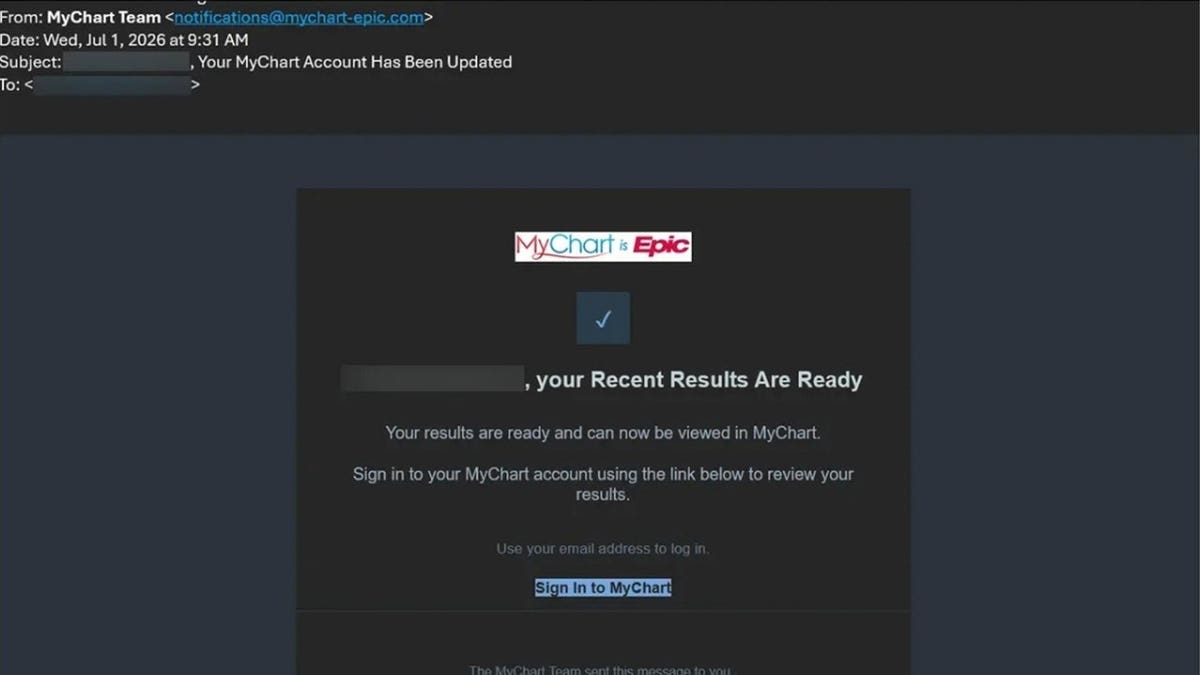
Patient portals like MyChart allow individuals to access health information online, but recent phishing scams have put users on alert. Criminals impersonate MyChart in phishing campaigns without breaching the platform.
Understanding MyChart Phishing Scams
Scammers use fake medical results and bogus Medicare offers through emails that mimic MyChart to steal credentials and install malware. It starts with an email containing a message, such as “Your recent results are ready.” This leads to a fake sign-in page, deceiving users into sharing their login details. Afterward, it displays fabricated medical information, pressuring users to complete a ‘verification’ step that installs malware.
Medicare Kit Scam
Another scam involves fake emails about a “2026 Medicare Health Kit” or “Senior Health Package,” not affiliated with MyChart. Clicking links takes users through unrelated sites before asking for personal and payment details under the pretense of a free kit.
Why These Scams Work
MyChart users often expect emails about health updates, making these scams plausible. Fake emails can appear alongside genuine messages, tricking individuals.
Protecting Yourself from Scams
- Access MyChart directly from its app or your healthcare provider’s site, not via email links.
- Verify sender authenticity by checking email addresses for discrepancies.
- Never follow instructions to run computer commands from unexpected messages.
- Enable two-step verification to secure your MyChart account.
- Use a unique password for MyChart to minimize risk if compromised.
Reacting to a Scam
If you engage with a phishing email:
- If no information was entered, close the page and mark the email as junk.
- If a password was entered, change it immediately using the MyChart app.
- If financial details were given, alert your bank right away.
- If the malware was suspected, disconnect from the internet and run antivirus scans.
Medical identity theft is a potential consequence and should be managed with your healthcare provider and insurer.
Key Takeaway
The key is to always access MyChart directly to verify messages and never let the urgency of fake health warnings drive your actions. If a message is suspicious, consult your healthcare provider directly.