
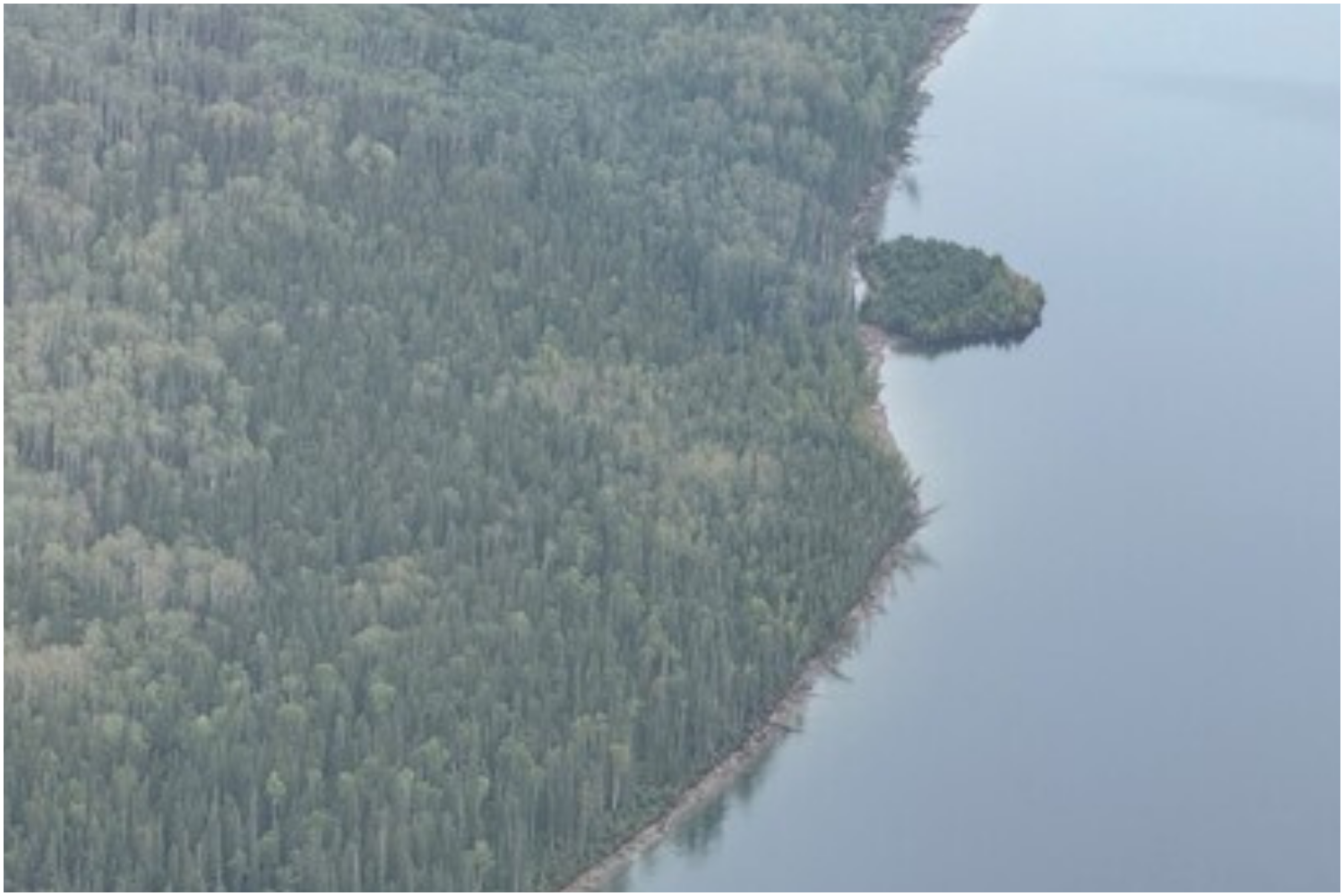
A floating island that puzzled observers by vanishing from one of Canada’s largest reservoirs has been rediscovered. BC Hydro reported that the island in British Columbia’s Williston Reservoir was found after drifting approximately 30 kilometers, or 19 miles, over 15 days. The island, which had drawn international curiosity after appearing near Finlay Bay and then seeming to disappear, was spotted along the reservoir’s Ospika Arm shoreline.
Tracing the Island’s Journey
The disappearance led to no reported sightings for weeks, as BC Hydro spokesperson Bob Gammer informed Newsweek. However, the island was never lost. It had moved across the reservoir, coming to rest against the shoreline after about 15 days. BC Hydro used satellite images, aerial observations, and reports from boaters to confirm the island’s location.
“We found the island,” BC Hydro announced in a social media update. “Turns out it wasn’t missing. Just drifting.”
A Timeline of Events
Satellite images first captured the tree-covered floating island on July 21, positioned west of Finlay Bay in the Williston Reservoir. Local boaters reported the strange landmass to BC Hydro on August 13, but the island had already changed location. Its disappearance gained worldwide attention, leading to various speculations. The mystery was resolved when BC Hydro examined satellite footage from August 15, showing the island on Ospika Arm, 30 kilometers northwest from its initial location. Officials confirmed this finding on August 31, announcing it on September 2.
Understanding Floating Islands
A floating island consists of vegetation, soil, and organic matter floating on a water body’s surface. While small versions are common in lakes, wetlands, and reservoirs globally, larger ones that can support mature trees are rare. The island’s formation is yet unclear. One hypothesis suggests logs and debris built up over the years in a reservoir’s sheltered area, decomposing over time and allowing vegetation to root, ultimately forming a stable floating mass.
This phenomenon intrigues geologists, ecologists, and researchers aiming to understand the formation and movement of large floating vegetated islands.
“When we first received photos and video of a floating island covered in trees, we weren’t entirely convinced,” Gammer stated. “In the age of AI, it’s important to verify unusual reports before drawing conclusions.”
The Island’s Travel Distance
BC Hydro’s review of satellite images and additional observations determined the island traveled about 30 kilometers, or 19 miles, from its original spot. The mystery unraveled when officials viewed satellite imagery from August 15, showing the island near Ospika Arm. Since real-time satellite imagery wasn’t available, the official confirmation took weeks.
The island now sits further from the W.A.C. Bennett Dam, with BC Hydro expecting no operational effects from its new position.
Size and Structure
The island spans approximately 459 feet in length and 230 feet in width, covering about 9,800 square meters— roughly the size of two NFL football fields. It remains intact, supporting mature vegetation and trees.
Images provided by BC Hydro depict a thickly vegetated patch appearing as a conventional island, though it floats freely in the reservoir.
Visitor Advisory
BC Hydro allows individuals to photograph the island from boats or drones but cautions against landing on it. The island mainly comprises logs and decaying debris, making it unstable and unsafe for visitors.
“Finding the island has answered one question but raised several others,” Gammer remarked. “While we’re pleased to have confirmed the island’s location, there is still more to learn about how it formed and drifted across the reservoir.”
The company plans to keep monitoring the island as researchers continue studying this unusual natural event.