
The Ebola outbreak in eastern Congo has surged, reaching over 6,000 cases with 2,911 deaths. Authorities have reported that more than 1,360 individuals have recovered, offering some signs of progress. However, challenging conditions, including insecurity, displacement, health workers’ strike, and population movements, hinder efforts to control the virus.
Displacement sites exacerbate the situation, as residents endure precarious conditions. The virus has spread to two new health zones recently. The World Health Organization has stated that the outbreak remains uncontrolled and may exceed the severity of the 2014-2016 West Africa Ebola outbreak, which resulted in over 11,000 deaths in Guinea, Liberia, and Sierra Leone.
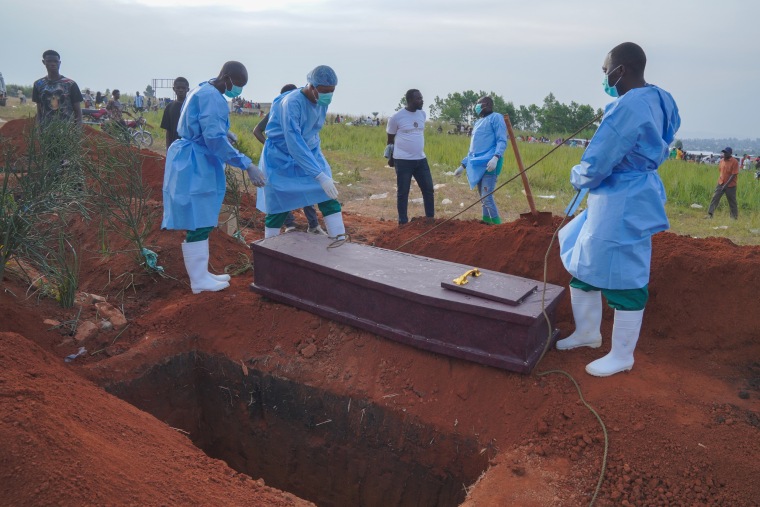
In Bunia, Ituri province, a six-year-old named Baudjo Baraka Jules recently died of Ebola. Protective gear was used to lower his coffin into a grave. An incident occurred on Saturday, when young individuals armed with machetes attacked an Ebola response team in Mambasa, forcing them to flee and injuring one member.
Floribert Magene, a response team member, emphasized the need for enhanced security to ensure that teams can work safely. Bodies of Ebola victims pose a high risk, as the virus can spread during burial preparations and gatherings.
To address the outbreak, Congolese authorities have insisted that burials of suspected Ebola victims be conducted by officials, which sometimes leads to conflicts with families and friends. The outbreak stems from the Bundibugyo virus, a rare Ebola variant lacking an approved vaccine or treatment.