
In California, a Trump administration official voiced criticism over the state’s voter ID regulations, raising concerns about the verification of voters’ citizenship. Bill Essayli, U.S. Attorney for Central California, discussed the issue and claimed that California permits voter registration without concrete citizenship checks. This commentary surfaced as the federal government plans to intensify scrutiny on alleged voter fraud across specific states.
Essayli spoke on a voter fraud case during an interview with Fox News, stating, “The state allows anybody to register to vote on the honor system. There isn’t anybody in government checking to confirm you are a citizen.” The Department of Homeland Security (DHS) is slated to announce thorough investigations into voter fraud in states such as New York, Pennsylvania, and California. These new details are expected on Tuesday, as per CNN’s report.
“While ICE Homeland Security Investigations is not able to comment on any active investigations, HSI is actively rooting out and investigating election fraud wherever it can be found,” a DHS spokesperson said to Newsweek.
Concerns persist that illegal aliens could participate in elections. Under the Trump administration, Homeland Security Investigations (HSI) aims to restore election integrity, ensuring only American citizens cast votes.
A number of states, both Democrat and Republican, do not demand documentary proof of citizenship when registering to vote. They typically cross-check statuses with the Social Security Administration. At polling stations or for mail voting, diverse systems exist to verify voter identification.
Charles Stewart III, director of the MIT Election Data and Science Lab, commented, “Obviously, the administration is very concerned about noncitizen registrations, but noncitizens registering, much less voting, is rare.” Most states prefer to focus on other pressing electoral challenges rather than prioritize noncitizen registration issues.
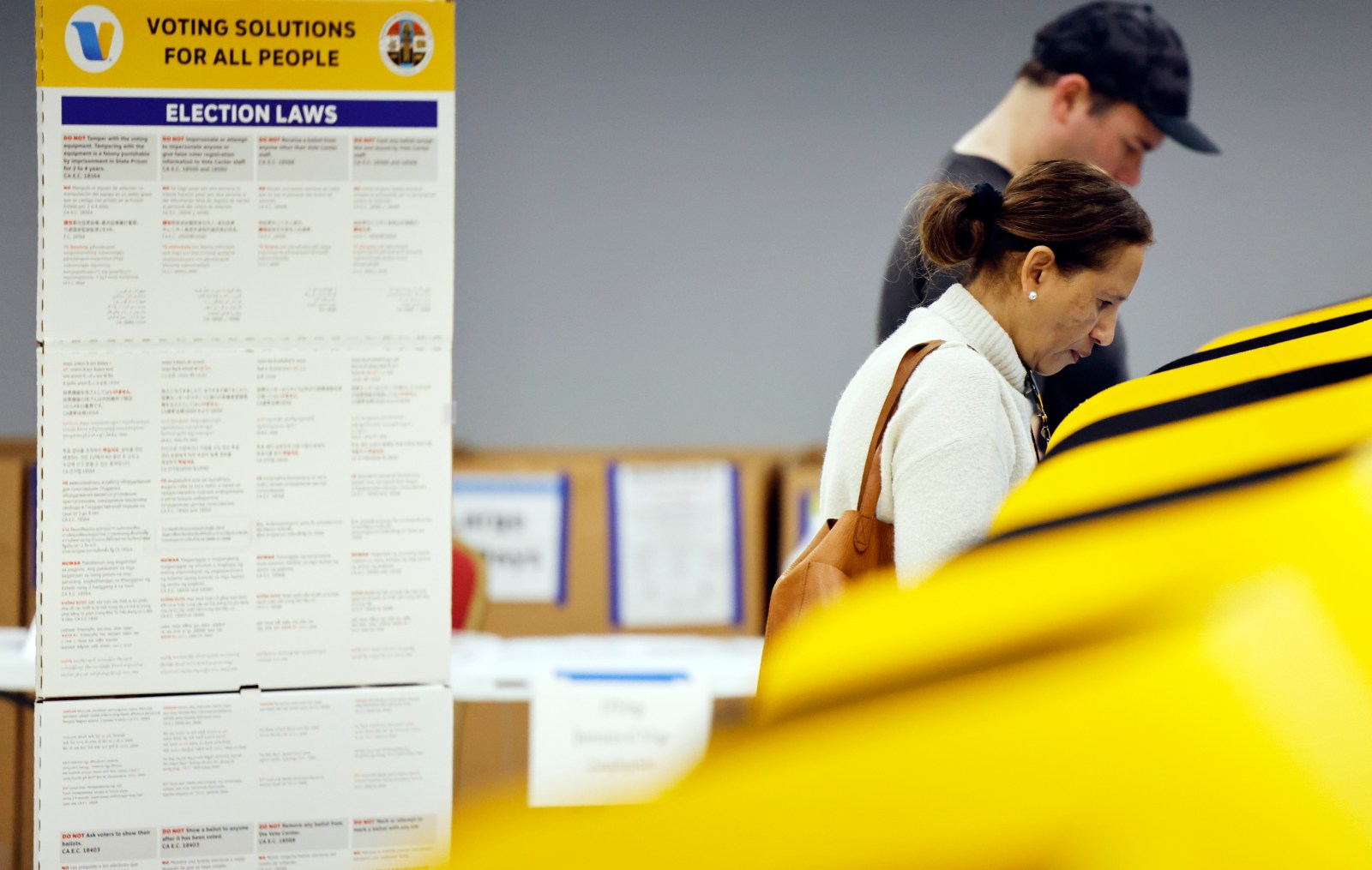
Current California law requires registrants to assert their U.S. citizenship on the voter registration form. Failing to check the citizenship box results in application rejection. Instead of demanding documentary evidence like passports, registrants can supply a California driver’s license or state ID number, or the last four digits of their Social Security number. Unique identifiers are assigned when such documents aren’t available. All submitted data is verified against government records to affirm status and residency.
Voter ID Rules Comparison Across the U.S.
The Trump administration’s push for national uniformity in election processes highlights concerns over voter ID rules. Some states are adopting laws for documentary proof of citizenship, especially in scenarios where voter status faces queries.
The National Conference of State Legislatures (NCSL) notes varying state approaches to voter ID. While states differ in how strict those requirements are—ranging from photo identification mandates to alternative verification methods—the result is a mix of rules nationwide.
Essayli mentioned that 400,000 individuals had registered without identification over a non-specific period. Whether these registrants participated in elections remains unclear.
California voters will soon decide on Proposition 39, a proposal targeting voter ID and enhancing citizenship verification. Proponents argue that California’s current measures fall short, emphasizing the potential benefits of aligning with other states, increasing public trust, and providing free voter IDs.
Opponents, including voter-rights advocates, caution that voter fraud is rare and that new mandates could negatively impact low-income groups, seniors, and others lacking necessary identification.
National Focus on Voter ID and Citizenship Verification
California’s voter ID debate coincides with national conflicts concerning Republican-led election-integrity proposals. Challenges have arisen around demands for citizenship proof during federal task-election registrations. Advocates argue these steps are vital to safeguard elections.
“Since April 2025, more than 24,000 potential non-U.S. citizen cases have been flagged by SAVE, with further investigation by ICE,” mentioned a DHS spokesperson. “USCIS supports eliminating voter fraud and restoring trust in America’s elections.”
Despite criticism that noncitizen voting is illegal and infrequent, federal judges and courts are assessing Republican proposals. Potential documentation requirements, they worried, could pose economic and procedural hurdles for eligible voters.
Efforts have persisted, including conservative pushes for consistent national standards for voter registration and ID checks, with reform advocates arguing for richer state sovereignty over electoral processes.