
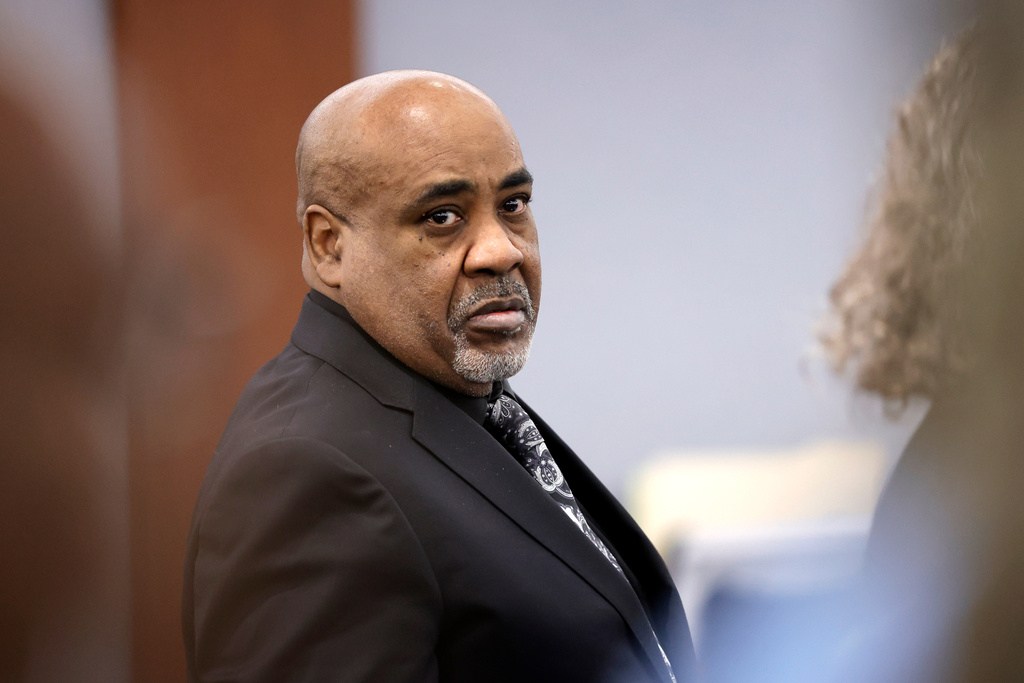
A Las Vegas jury has started its deliberations in the murder trial of Duane “Keffe D” Davis, focusing on the 1996 killing of Tupac Shakur. The prosecution’s case relies almost entirely on Davis’ historical statements, claiming these serve as a confession in the absence of physical evidence.
Statements as Key Evidence
Prosecutors argue that Davis’ admissions in interviews, documentaries, and his memoir constitute a substitute for the missing evidence. If found guilty, Davis, now 63, could face life in prison. The case challenges whether Nevada courts will accept a murder prosecution driven by decades-old accounts and circumstantial evidence.
Prosecutors suggest Davis’ statements remained consistent. In contrast, the defense claims he fabricated them for profit and fame. Prosecutors emphasized Davis’ presence in Las Vegas based on his own repeating admissions through various media, like a 2008 federal proffer and his 2019 memoir.
Prosecutor Binu Palal presented these stories as “textbook admission,” highlighting Davis’ descriptions of obtaining a gun, participating in the MGM Grand fight, and ordering the attack. Former LAPD detective Daryn Dupree supported the prosecution, suggesting that implicating his nephew indicated Davis’ truthfulness.
Challenges to the Narrative
The defense, led by Sanft, worked to dismantle Davis’ narrative. They presented witness testimony contradicting Davis’ descriptions, arguing he did not have the right vantage point to see Tupac from his position. Sanft also questioned the consistency of the timelines.
The defense pointed to alleged inconsistencies, such as Davis’ claim of seeing Shakur at the MGM before the fight, a detail not confirmed by witness Malcolm Greenidge.
2008 Proffer and Gang Retaliation
Significant focus was placed on Davis’ 2008 federal proffer. Prosecutors said Davis avoided a life sentence by telling the truth, implying he corrected investigators with non-public information. The defense saw the proffer as protection for his family under pressure.
The prosecution linked the motive to gang retaliation. Gang expert James “Mob James” McDonald claimed the beating of Orlando Anderson at MGM necessitated revenge, tied to the Lakewood Mall fight. Defense questioned this, citing absence of official documentation.
Missing Evidence and Discrepancies
Sanft argued investigators lacked complete evidence. He stressed missing police records and alleged tampering. Another defense point was no physical evidence placing Davis in Las Vegas on the shooting night. The narrative around the Cadillac used in the shooting remained unresolved.
Prosecutors described Davis as a “shot-caller” in the gang, yet defense witnesses refuted claims of prior orderings of hits, adding to the uncertainty of his level of involvement.
Complex Trial Dynamics
The trial structure presents unique challenges, as prosecutors use Davis’ own statements as the main evidence. This strategy prevents traditional cross-examination, as the accusations derive from recordings rather than live testimony.
Expert Angelo Brown noted jurors’ natural skepticism of revived old cases. He highlighted the prosecution’s reliance on circular evidence. Joseph Tully recognized defendants’ statements as potent evidence, emphasizing how repetition across different contexts solidifies confessions.
Nevada law allows someone aiding a murder to be charged equally as a principal. Despite this, a legal requirement persists for proving intentionality behind the murder.
Potential Outcomes and Appeals
Tully suggested several possible trial outcomes due to the prosecution’s dependence on Davis’ accounts. He pointed to second-degree murder as an overlooked potential verdict, allowing for doubt over premeditation.
If convicted, appellate proceedings could begin immediately, particularly concerning the 2008 statements and jury instructions.
The jurors’ decision will determine the next steps. A conviction could result in a life sentence. In the event of a deadlock, Judge Carli Kierny might ask for further deliberations or declare a mistrial.