
Early Discovery and Initial Challenges
Reagan Hoskin is a rule follower by nature. After finishing high school in 2018, she monitored crops for her father in Pike County, Illinois. Her task was precise: zigzag through soybean fields, scan the crops, and note anomalies. One day, while surveying, Reagan noticed yellow plants on the farm’s edge. Her experience suggested it might be sudden death syndrome, but something was different. The leaves had abnormal yellow patches across the veins. Her find marked the first confirmed appearance of ‘red crown rot’ in the Midwest.
Subsequent investigations revealed the disease could reduce soybean yields by as much as 60% in severe cases, threatening growers amid fluctuating market conditions. It wasn’t until 2024, when the fungus appeared in other parts of Illinois and Midwest states, that serious attention was drawn to it.
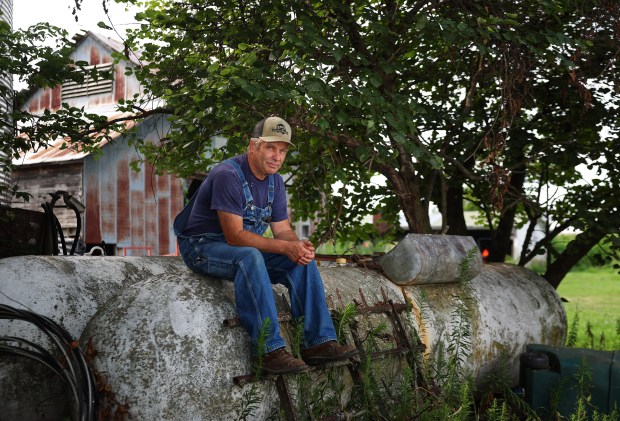
“Nobody cared about the disease initially,” said Ron Hoskin, Reagan’s father, “because Pike County wasn’t seen as crucial.”
Today, Illinois, Missouri, and Indiana report numerous cases. Minnesota and Wisconsin registered their first occurrences in August 2025.
The Role of Experts and Continued Spread
Matt Montgomery, an agronomy expert, began exploring red crown rot when approached by farmers. With his cowboy hat and notepad, he started visiting infected fields, calling Reagan’s discovery site, ‘patient zero.’ He noted how the disease had profoundly affected soybeans in unprecedented ways, threatening the livelihoods of farmers throughout the region.
Ron Hoskin looked to a new seed treatment released in the U.S., viewing it as a potential solution. If it failed, his family considered shifting to corn.
Understanding Red Crown Rot’s Origins
Red crown rot had infected Southern crops since the 1970s. Genetic research indicates the disease didn’t spread north from the Southeast, leaving origins uncertain. It could spread through air or soil contamination, but research is still ongoing.
Montgomery highlighted the disease’s rapid impacts, reducing soybean yields by significant margins. He noted its expansion beyond initial regions, possibly driven by changing climate conditions. Wisconsin’s professor Damon Smith stated that warming and the timing of rainfall might enhance fungal conditions.
Farmers’ Struggles and Search for Solutions
Reagan and Ron Hoskin faced identification challenges, navigating government layers before experts diagnosed the disease. Ron initially viewed it with curiosity until it significantly impacted soy yields in 2020. The family then sought treatments, achieving limited progress until 2024.
Smith documented Wisconsin’s first case without understanding its origin, underscoring challenges without prior studies in the state.
Implications for the Corn Belt
Montgomery realized the severity of red crown rot five years ago, witnessing its widespread effects on crops. He emphasized the importance of finding treatments and noted strides in research.
Resilience is key, by employing a multi-step approach: seed treatments, identifying resistant soybean varieties, and stress management techniques. This might involve addressing soil fertility or adjusting planting depths.
Understanding transmission is vital, with theories suggesting soil contamination and possibly airborne spread.
Impacts on Farming Practices
Red crown rot requires the Hoskin family to rethink their approach, considering purely corn-based crops. He discussed strip tilling’s potential, weighing its costs against his current practices.
This year, Ron Hoskin utilized Victrato, a seed treatment promising hope against red crown rot. Researchers now use AI and satellite imagery to detect infected fields remotely.
Farmers’ Perspectives and Future Observations
Pike County farmer Calvin Koeller faced increasing challenges as neighboring farms became infected with red crown rot. Koeller planned to use Victrato next season after observing positive trials.
Ron Hoskin found renewed hope upon discovering red crown rot limited to five fields. He speculated continued soybean cultivation next year if conditions persist.
“Every day without disaster brings us closer to the finish line,” he commented optimistically.