
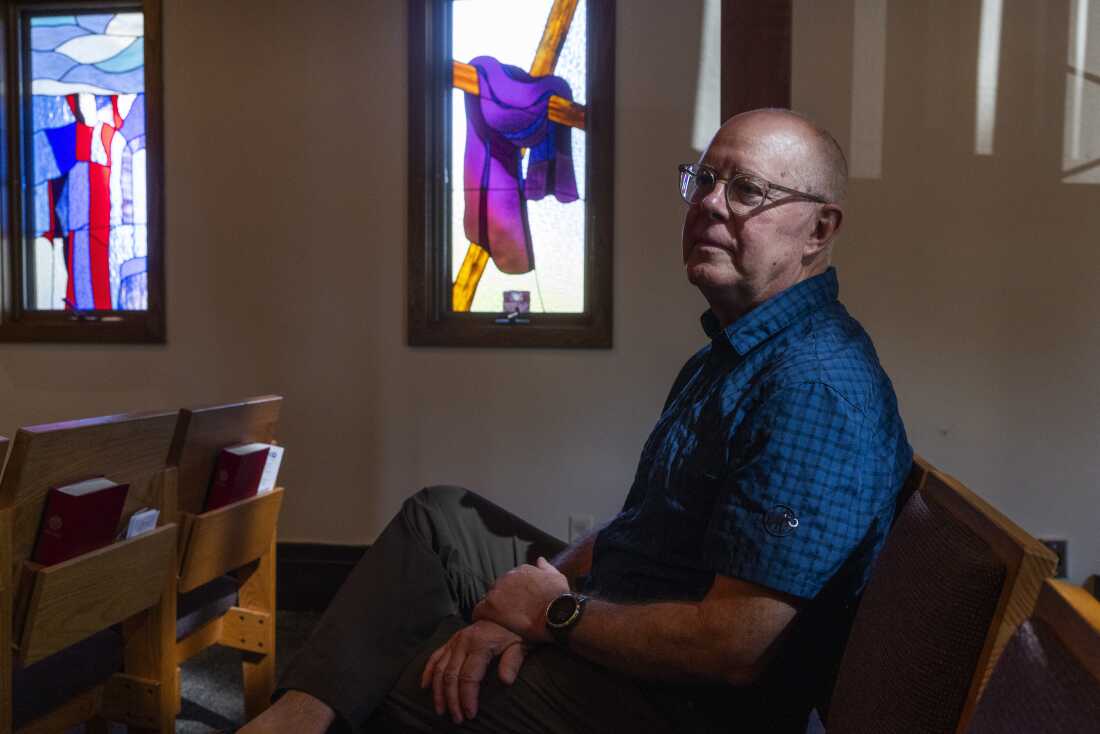
Rev. Steve Sylvester, interim pastor of Prince of Peace Lutheran Church in Roseville, Minnesota, recently informed his congregation that their church was under surveillance by the Department of Homeland Security (DHS) during a federal immigration enforcement surge last winter. This announcement came in light of recent court filings related to an ongoing conspiracy case against ICE protesters.
Government documents reveal that an undercover DHS agent attended a meeting of ICE protesters at Prince of Peace in February. The agent collected license plate numbers and compiled detailed dossiers on attendees, including their personal and professional details. ‘It feels like I’m living in a past time of intense surveillance,’ Sylvester shared. ‘It seems inappropriate.’
Widespread Surveillance at Public Institutions
Federal agents conducted surveillance across various venues, including churches, schools, libraries, and restaurants, gathering information on individuals not suspected of crimes. Rachel Levinson-Waldman from the Brennan Center for Justice noted the surprising extent and depth of these operations.
Cody Sanders, interim pastor at University Baptist Church in Minneapolis, recounted discovering that an agent wore a recording device during a self-defense class at his church. This raised concerns about trust within the community. Similarly, Sergio Manancero of La Doña Cerveceria in Minneapolis expressed his unease about the surveillance but acknowledged the government’s interest in monitoring potential threats.
Privacy and Legal Concerns
Levinson-Waldman highlighted that the government possesses broad authority under the Fourth Amendment but noted a lack of clarity on the legality of the Minnesota surveillance. While the government defended its actions as standard practice targeting specific indictments, Levinson-Waldman emphasized the ethical concerns.
COINTELPRO, a 1950s domestic intelligence operation, was mentioned as a historical reference for these surveillance tactics. The abuses from that period led to stricter guidelines, raising questions about the current actions’ alignment with ethical norms.
Aaron Terr from the Foundation for Individual Rights and Expression expressed First Amendment concerns, pointing out that lawful activity might inadvertently be swept into investigations. Terr questioned the government’s intentions, especially with the infiltration of lawful political gatherings and examination of financial records.
One document showcased a network of organizations labeled as ‘The Conspiracy,’ illustrating the wide scope of the government’s inquiry. AFL-CIO President Bernie Burnham compared the situation to McCarthyism, while the government clarified that the organizations shown in the document were not accused of wrongdoing.
The documents under scrutiny raise essential questions about the balance between national security and personal freedoms, urging Americans to reflect on the potential consequences of associating with advocacy movements.