
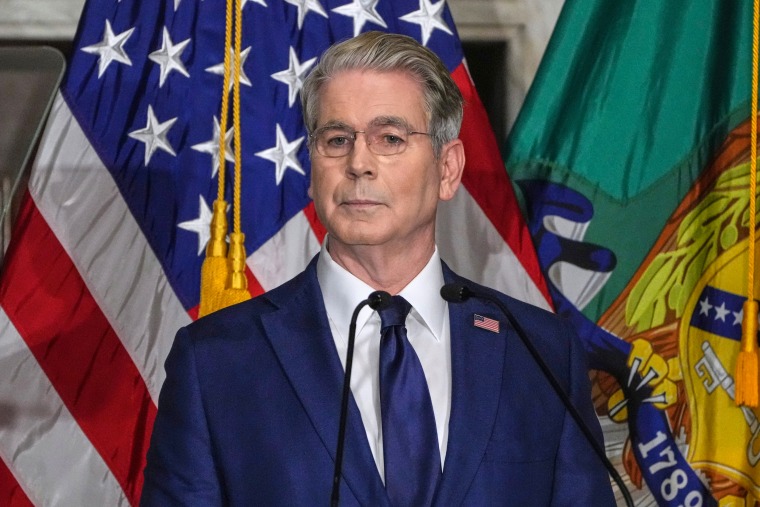
Treasury Secretary Scott Bessent announced a new series of sanctions on Monday, aiming to further isolate Iran. These measures target international entities involved in Iranian trade across shipping, oil, cryptocurrency, gold, and aviation sectors. President Donald Trump has been personally contacting world leaders, urging them to cease all trading activities with Tehran.
The goal is to launch an economic offensive against Iran, cutting its financial connections globally. The U.S. Treasury has already sanctioned nearly 60 corporations, individuals, and vessels in various jurisdictions, including several Chinese nationals. The Chinese government, however, claims it is illegal for its citizens to adhere to unilateral U.S. sanctions.
Quiet diplomacy is being pursued with Iran’s trade partners, warning about the consequences of continued trade with Tehran. Entities engaged in money laundering for Iran will be removed from the U.S. dollar system. Bessent emphasized that no one is immune to U.S. sanctions. A ‘cure period’ has been offered for nations to disengage from targeted relations with Iran. Despite these actions, markets showed minimal reaction to the announcements.
Historically, the U.S. has imposed direct sanctions targeting Iran and businesses involved in forbidden activities, like weapons procurement. Iran often evades these sanctions by establishing new front companies. Bessent vowed to launch a significant financial campaign against Iran, reinforcing this strategy in a Financial Times op-ed.
The global community should recognize our intent to isolate Tehran completely.
The United States plans to target secondary countries with current beneficial trade relationships with Iran. Before the announcement, the United Arab Emirates notably ended all trade relations with Iran.
Some experts stress that the effectiveness of these sanctions depends on the actions of Iran’s prominent trading partners such as China, India, and Russia. Andrew Gawthrope, a University of Leiden lecturer specializing in U.S. foreign policy, highlighted the challenges in convincing these countries to restrict their trade relations with Iran.
Recent U.S.-led developments have further complicated conflicts involving Iran. Since an attack aiming to prevent Iran’s nuclear acquisition, the U.S. has faced substantial financial costs. Defense Secretary Pete Hegseth estimated the war has cost the U.S. $37.5 billion, impacting U.S. households with increased energy and grocery costs.
This geopolitical tension has also affected domestic politics, lowering Trump’s approval ratings as midterm elections approach. Economists indicate the bond market turmoil and other economic disruptions result partly from the ongoing conflict. Iran’s challenge to Bessent’s plans is evident. Mohammad Bagher Ghalibaf and other Iranian officials question the efficacy of the U.S. strategies.
Iran anticipated harsh conditions following the war’s onset, stockpiling foreign currencies to hedge against economic sanctions. The Iranian government has maintained assurances to meet essential goods and medicine needs. Meanwhile, economic pressures continue to mount domestically, with the falling value of the Iranian Rial causing dissatisfaction. Security measures have intensified, amidst concerns over potential unrest.