
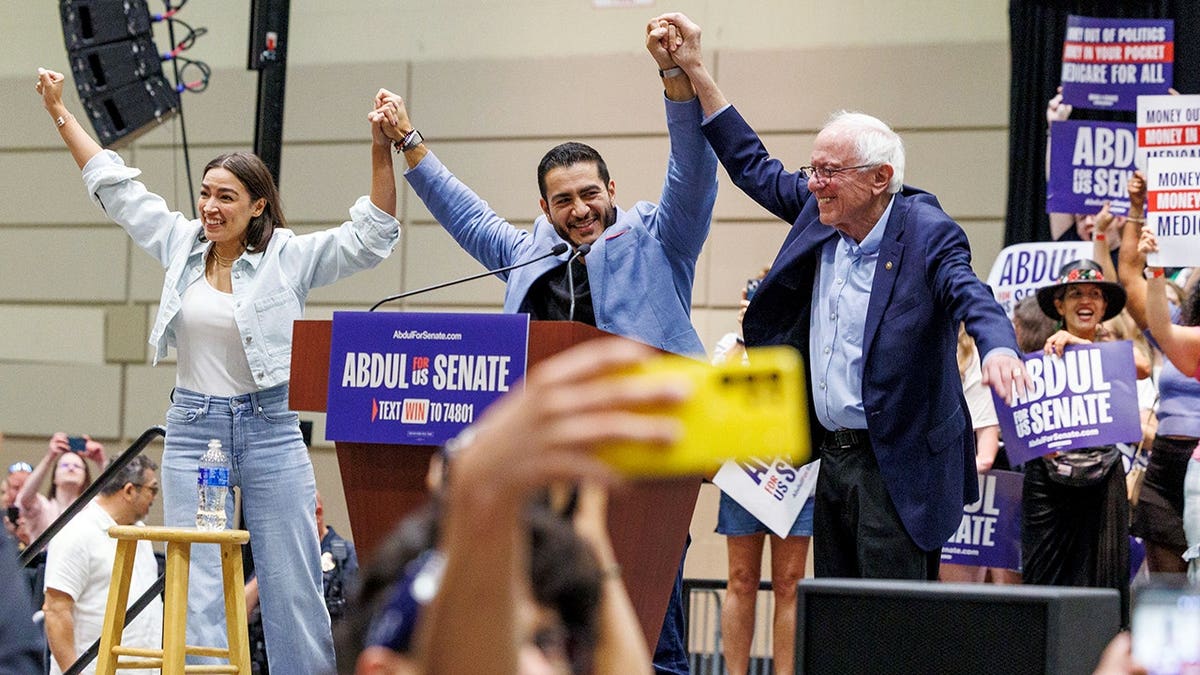
This summer, as Americans enjoyed seasonal festivities, the Democratic Senate candidate in Michigan encountered a political challenge. Abdul el-Sayed’s campaign faced scrutiny for past comments criticizing fireworks and comparing football to slavery. While attempting to amend these statements, el-Sayed opted to express support for ‘Michigan football on Saturdays.’
El-Sayed’s situation highlights the complexity candidates face when past opinions collide with campaign goals. He aims to appeal to Michigan voters, a state that supported President Donald Trump in the past decade.
El-Sayed is not alone in facing such challenges. In Wisconsin, Democratic Socialist candidate Francesca Hong faced hurdles in her gubernatorial primary due to her social media history. Her past comments included controversial remarks about Thanksgiving. Despite this, she nearly secured the nomination in a politically mixed state.
These scenarios illustrate a broader trend where candidates with leftist viewpoints engage with mainstream political realities. Prominent figures like Alexandria Ocasio-Cortez have addressed past ‘crazy’ views as part of this dynamic political environment.
Three key factors explain why these candidates gain attention:
- Activism surge: Activist movements are influencing the Democratic Party, prompting new ideas and leadership.
- Digital age experience: Candidates like el-Sayed and Hong grew up with social media, shaping their public presence.
- Socialist principles: Many align with socialist ideologies questioning traditional American values and promoting income redistribution.
These policies often promise free healthcare and education, while proposing taxation of the wealthy.
The Republican Party faces challenges in upcoming elections due to shifting political landscapes and President Trump’s approval ratings. Yet, past social media content continues to influence perceptions, particularly regarding socialist philosophies.
Republican strategist Colin Reed emphasizes the lingering nature of certain political viewpoints, noting their persistence despite attempts to revise public narratives. Reed suggests that understanding these undercurrents offers insights into current political debates.