
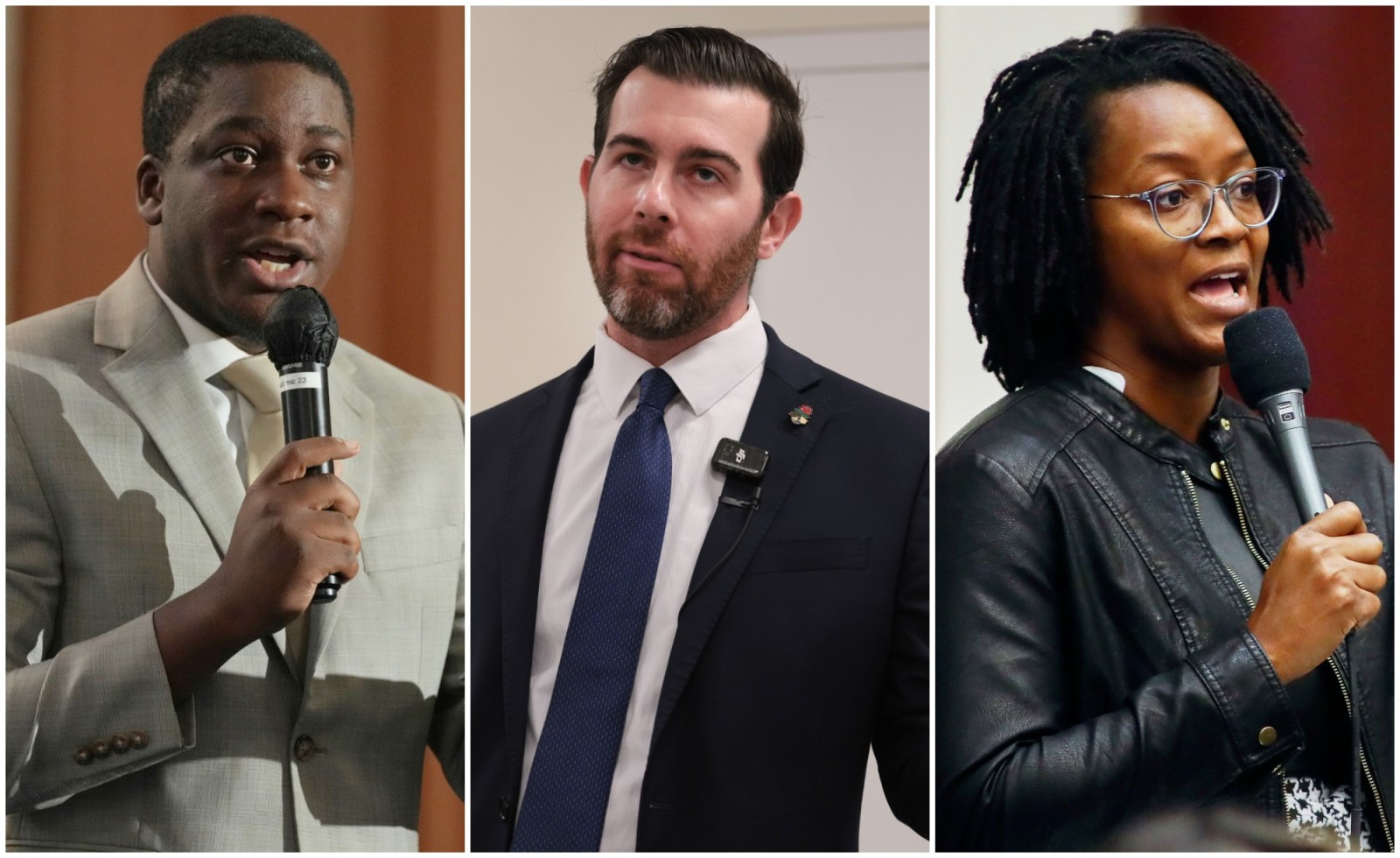
With the November midterms approaching, Democrats are confronting internal conflicts in Florida, the new home state of ex-President Donald Trump. Florida’s August 18 primary features three insurgent candidates challenging well-funded establishment Democrats. These contenders argue that ‘electability’ is being used to predetermine candidate viability, sidelining voter choice.
Oliver Larkin is up against U.S. Representative Jared Moskowitz in the 25th Congressional District. Elijah Manley vies for a seat in the redrawn 20th District against U.S. Representative Debbie Wasserman Schultz. Florida state Representative Angie Nixon runs for the U.S. Senate Democratic nomination, facing Alexander Vindman, a retired U.S. Army Lieutenant Colonel.
The candidates’ support was evident in a recent rally in Fort Lauderdale, where Michigan Representative Rashida Tlaib, a Democratic Socialists of America member, backed Larkin, Manley, and Nixon. The event, initially canceled due to local opposition, was hosted by Miami DSA and other groups after relocating.
Republican Representative Randy Fine criticized Tlaib’s involvement, remarking on her presence as the only Palestinian American in Congress opposing two Jewish Democrats.
The candidates take varied self-identifications with Larkin as a democratic socialist, while Manley labels himself a progressive and economic populist. His endorsements stem from figures like California Representative Ro Khanna and organizations like the Progressive Change Campaign Committee.
The Electability Debate
Larkin and Manley, in separate interviews, challenge the party’s electability standard.
Larkin questions the importance placed on corporate PAC contributions and moderate stance, regarding them as irrelevant post-2024 elections. Notably, Kamala Harris lost key swing states.
Manley critiques the electability and viability criteria as mechanisms excluding progressive candidates, asserting that real electability is determined through elections.
He believes these standards disproportionately affect candidates of color and women. Manley dismisses conventional approaches, focusing on energizing voters rather than appealing to moderates.
Larkin agrees electorally, prioritizing coalition-building over appeasement.
Polling and Prediction Market Trends
Despite their criticisms, numeric odds don’t favor these challengers. Prediction markets give largescale advantages to incumbents like Moskowitz and Wasserman Schultz.
Surveys, like one by Wasserman Schultz’s campaign, show her leading but predict opposing narratives as voters become informed. Manley remains skeptical of early polls’ long-term accuracy.
Similarly, Larkin sees improvements through extensive voter outreach despite funding gaps, highlighting his underdog status.
Nixon’s race exemplifies the complexities of electability. A University of North Florida survey indicated Nixon trails Republican Senator Ashley Moody. However, Nixon fared slightly better than Vindman.
Vindman outspends Nixon substantially, but she emphasizes grassroots support and dismisses conventional political strategies.
The National Impact
The Florida primary unfolds amid a successful ‘DSA summer’ with progressive victories across several states. Democratic Socialist candidates have won significant primaries, unseating prominent incumbents in places like New York.
However, the streak saw a pause in Wisconsin when Francesca Hong narrowly lost, illustrating potential limits of democratic socialism.
Manley insists opposition often mislabels electability rejecting singular race outcomes as defining narratives.
Florida represents a unique challenge due to its large Latino demographic, many wary of socialist associations. Research indicates a significant portion of Latino voters oppose perceived socialist shifts.
Gallup finds declining positive views on capitalism, yet stable perspectives on socialism.
Larkin critiques national misinterpretations of Florida’s political landscape, advocating broader inclusivity. He highlights Andrew Gillum’s past performance as indicative of progressive potential.
On the national level, Republicans exploit DSA’s growing influence as a strategic electoral threat. Centrist Democrats argue progressives have limited appeal outside strongholds.
Larkin deflects extreme comparisons by addressing immediate economic concerns, while Manley and others emphasize unresolved racial representation issues.
As early voting closes Sunday and polls on Tuesday, the election questions party identity and strategy on a national scale.