
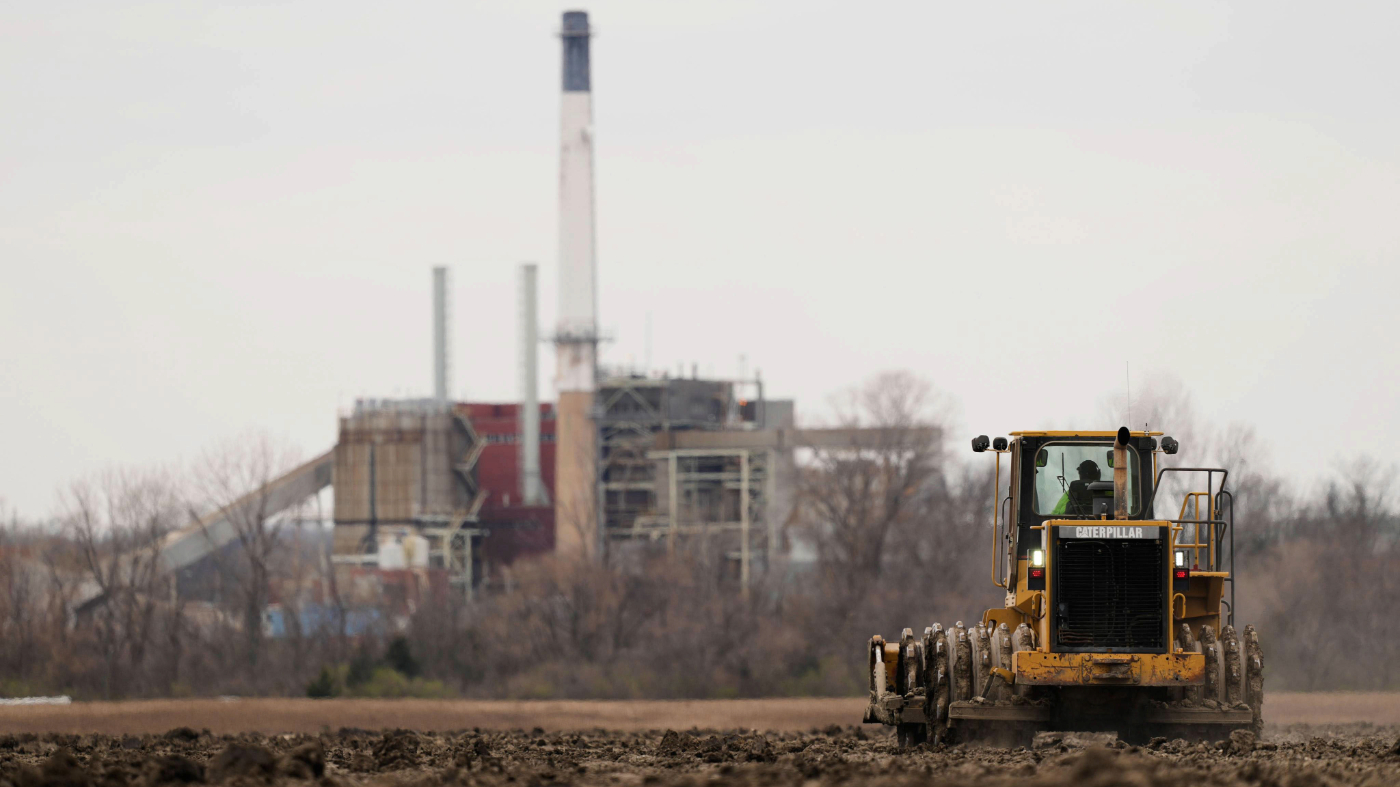
A worker prepares a plot of land for an AI data center, with a retired power plant being refurbished to provide electricity for the facility, rising in the distance, Tuesday, March 24, 2026, in Independence, Mo. (AP Photo/Charlie Riedel)
America has always taken on the task of constructing essential infrastructure for economic growth. Railroads, interstate highways, and the internet are examples of foundational technologies. They required vision, materials, and skilled labor to build, leading to decades of prosperity and security. The next significant foundation under construction involves data centers and the energy to power them. These components form the backbone of artificial intelligence, which will shape the future of American security and prosperity.
Despite the potential benefits, many communities and states are considering halting these projects. They are implementing moratoriums and bans that may hinder progress. While not every project is flawless, and concerns about electricity, water, and site location are valid, a complete prohibition could have long-term negative consequences. Local residents, including the workforce, have vested interests in these areas.
Blanket bans on AI infrastructure development could undermine growth and investment. The U.S. currently leads the world in data center investment, with thousands of facilities operational and more under construction. In central Ohio, data center projects account for a significant portion of construction work hours.
These statistics represent real jobs and opportunities. Electricians, pipefitters, engineers, laborers, and other tradespeople benefit from good wages, healthcare, and pension plans. Apprenticeships provide younger generations with debt-free paths to middle-class prosperity. Communities across the nation are seeing economic renewal through data center projects, providing long-awaited investments and job creation.
The impact stretches beyond construction. These initiatives generate significant tax revenue for education, infrastructure, and emergency services. Local businesses, suppliers, and eateries also gain from these developments. Critics of data centers raise valid concerns. Discussions around responsible development, oversight, infrastructure planning, and smart site choices are essential. Communities deserve input in these decisions. However, there’s a vast difference between oversight and a total ban.
Existing governmental tools at various levels allow careful regulation of these projects. Local zoning boards, state authorities, and utility regulators evaluate and regulate project development. Legislators can tailor rules to address specific issues. A complete moratorium undermines thoughtful decision-making, imposing a blanket refusal.
If America halts progress, global advancements in AI won’t cease. Countries like China continue their AI initiatives. By hesitating, the U.S. risks losing jobs, talent, and leadership. Regions that tackle challenges while continuing to build will attract new investments. Conversely, those that succumb to indecision may lag behind.
Choosing which nation sets the pace for future development is crucial. Historically, America has embraced building and innovation. Now is not the time to withdraw from that tradition.
Austin Keyser serves as the International Vice President of the 4th District of the International Brotherhood of Electrical Workers, representing members in Ohio, Kentucky, Maryland, Virginia, West Virginia, and the District of Columbia. Copyright 2026 Nexstar Media Inc. All rights reserved.