
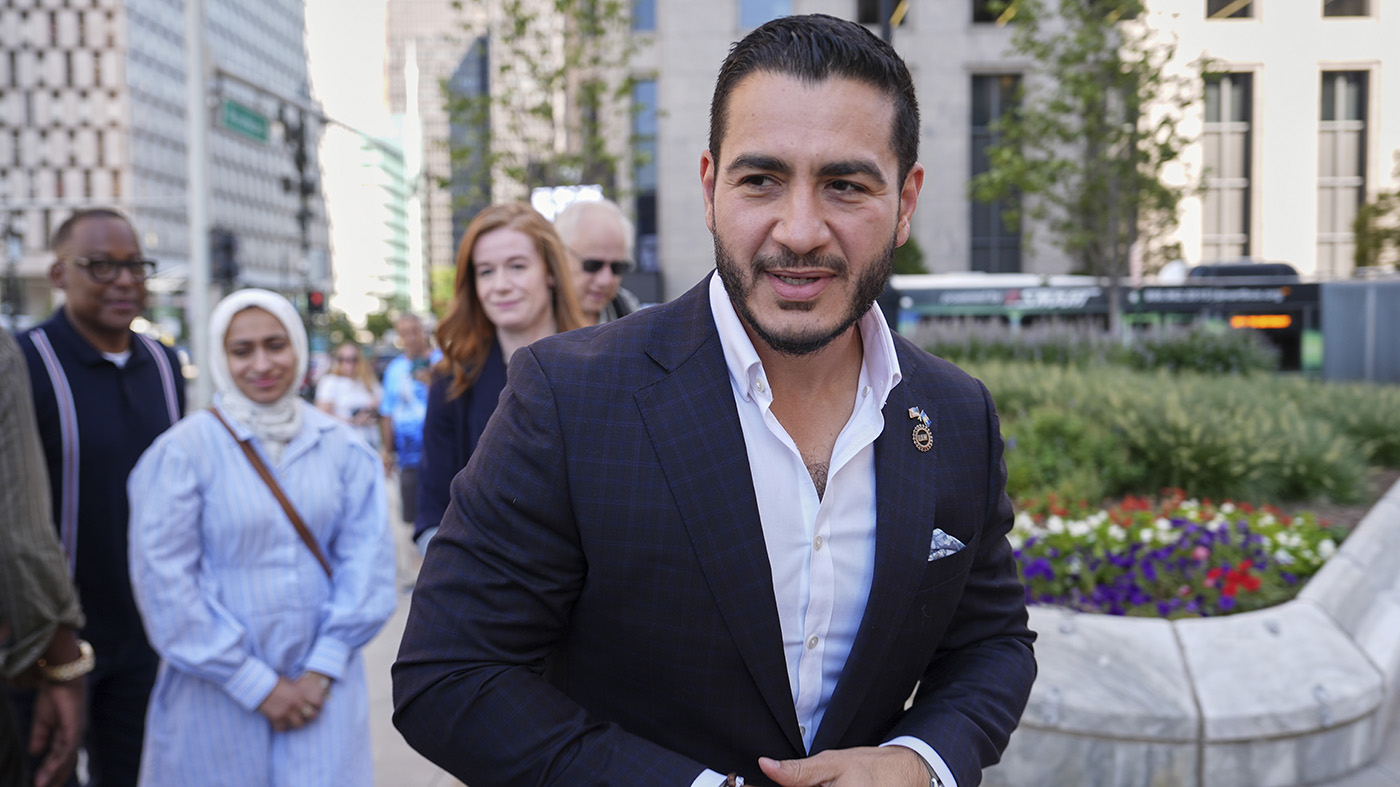
Abdul El-Sayed attended a news conference at the Spirit of Detroit after securing the Democratic nomination for the U.S. Senate in Michigan on August 5, 2026, in Detroit.
President Trump’s approval rating has fallen to 34 percent, which could offer Democrats an opportunity to regain control of Congress. Despite this potential advantage, the Democratic establishment appears focused on spending millions on attack ads against their own party members.
Jonathan Cowan, head of the centrist Democratic group Third Way, has announced plans to spend $15 million to oppose the spread of democratic socialism. However, Cowan and others often avoid clearly defining the term. Instead, they point to individuals such as Dr. Abdul El-Sayed, a Michigan Senate candidate who is not a democratic socialist, and New York City Mayor Zohran Mamdani, who is.
Centrists struggle to define democratic socialism because it involves opposing popular economic policies favored by many Democratic voters. Currently, around one-third of the Democratic base identify as democratic socialists.
For those who promote popularism as a counter to progressive politics, resisting the party’s shift to the left is unpopular. Consequently, groups like Third Way focus on discrediting individuals rather than engaging in debates over policy.
I am not a democratic socialist, but I believe the Democratic Party must be democratic to regain Congress and the White House. This means listening to voters and prioritizing their most pressing issues. A history of electoral defeats has weakened the credibility of established Democratic leaders like Senator Chuck Schumer, groups like Third Way, and pundits like James Carville.
Centrists have failed to dissuade voters from supporting progressive politicians by misleading them about candidates’ positions. Despite a significant spending disadvantage, El-Sayed won his primary against heavy attack ads. Mamdani unseated the political stronghold of former New York Governor Andrew Cuomo despite discriminatory ads.
The Democratic establishment’s error is framing the races as progressive versus centrist instead of outsider versus establishment. Progressives have succeeded in primaries by concentrating on core issues like affordability and employment.
Economy-focused progressives, according to David C. Barker from the Brookings Institution, gain traction with swing voters. They focus less on cultural issues and more on economic matters, resembling candidates like Texas’ State Rep. James Talarico, who is not a democratic socialist.
Despite substantial funding from centrists, voters view candidates like El-Sayed as rational rather than extreme. Barker’s findings show that voters assess Democrats on their connection to the working class. Progressives like Mamdani achieve success not due to their ideological labels, but because they genuinely engage with voters on difficult policy topics.
Centrist Democrats are seen as stalling change, waiting for an ideal moment that never arrives. Americans want immediate action from the Democratic Party and see little of it from centrist candidates.
Max Burns is the founder and chief strategist at the Democratic firm Third Degree Strategies.