
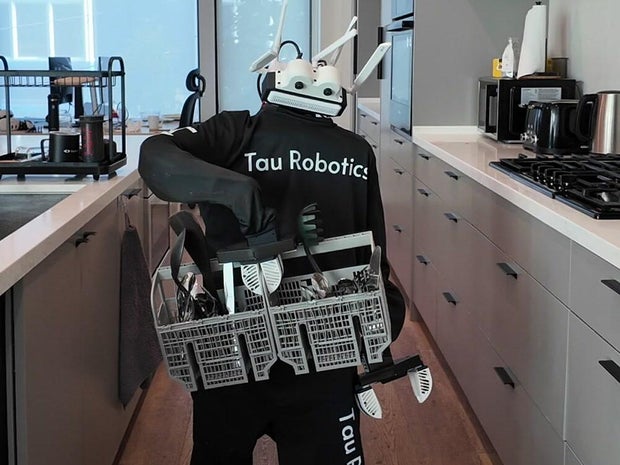
By August 11, 2026, a new cleaning solution has emerged in San Francisco. Tau Robotics is offering a service that involves humanoid robots performing household chores for $30 an hour. This pilot program, available to 1,000 households, represents a pivotal move in AI-powered robotics.
The robots are engineered by Tau Robotics, each costing $50,000 to make. They are tasked with household duties such as vacuuming, cleaning kitchen counters, and taking out the trash. Tau Robotics has equipped these robots with artificial intelligence to replicate, and eventually exceed, human capabilities.
Alexander Koch, the co-founder and CEO of Tau Robotics, stated, “Initially, they will be trained to imitate human performance.” Over time, they aim to enhance these capabilities.
Currently, the service operates on an invite-only basis. Tau plans to expand its operations to 1,000 cleanings weekly in San Francisco by 2027 and reach other cities by 2028. Although other companies are launching similar technologies, industry experts believe it may take 5 to 10 years for robots to reliably perform household tasks.
Remote Human Supervision
While the robots are working, human technicians remotely control and monitor them. They use VR goggles to view spaces through the robots’ perspective. If complications arise, technicians intervene.
Koch explained, “It cannot do everything on its own. It doesn’t know how to walk upstairs, for example.” Implementing human oversight ensures safety and efficiency as the technology progresses.
Safety Concerns
“You wouldn’t want this thing anywhere near a child or a baby,” stated Ken Goldberg, an engineering professor at UC Berkeley.
Humanoid robots can lose balance or mistakenly extend their grippers, leading to potential hazards. Currently, human technicians manage these risks by deploying safety protocols to mitigate any issues.
Koch anticipates phasing out direct human supervision by 2028 or 2029 when robots become more self-sufficient. Until that milestone, Tau is exploring the boundaries of robotic capabilities.
Privacy and Security
Equipped with dual cameras, the robots record data to enhance AI functionality. Although this is beneficial for development, it raises concerns about home privacy.
Goldberg warns that cameras may inadvertently capture personal data. Koch confirmed that Tau has complete control over data collection processes, reassuring users of their security measures.
Industry Growth Projections
As investment in AI escalates, the humanoid robot sector is expected to grow significantly. Barclays Investment Bank forecasts it could reach $200 billion by 2035.
Morgan Stanley Research predicts that nearly 1 billion humanoid robots might exist by 2050. However, costs will need to reduce, and societal acceptance must increase for widespread home use.
Currently, most humanoid robots serve in industrial settings. Analyst Zornitsa Todorova anticipates slow, steady progress in their adoption for residential purposes.
Despite being optimistic about the future, Goldberg remains cautious. He emphasized the need for scientific advancement before humanoid robots can reliably serve as home helpers.