
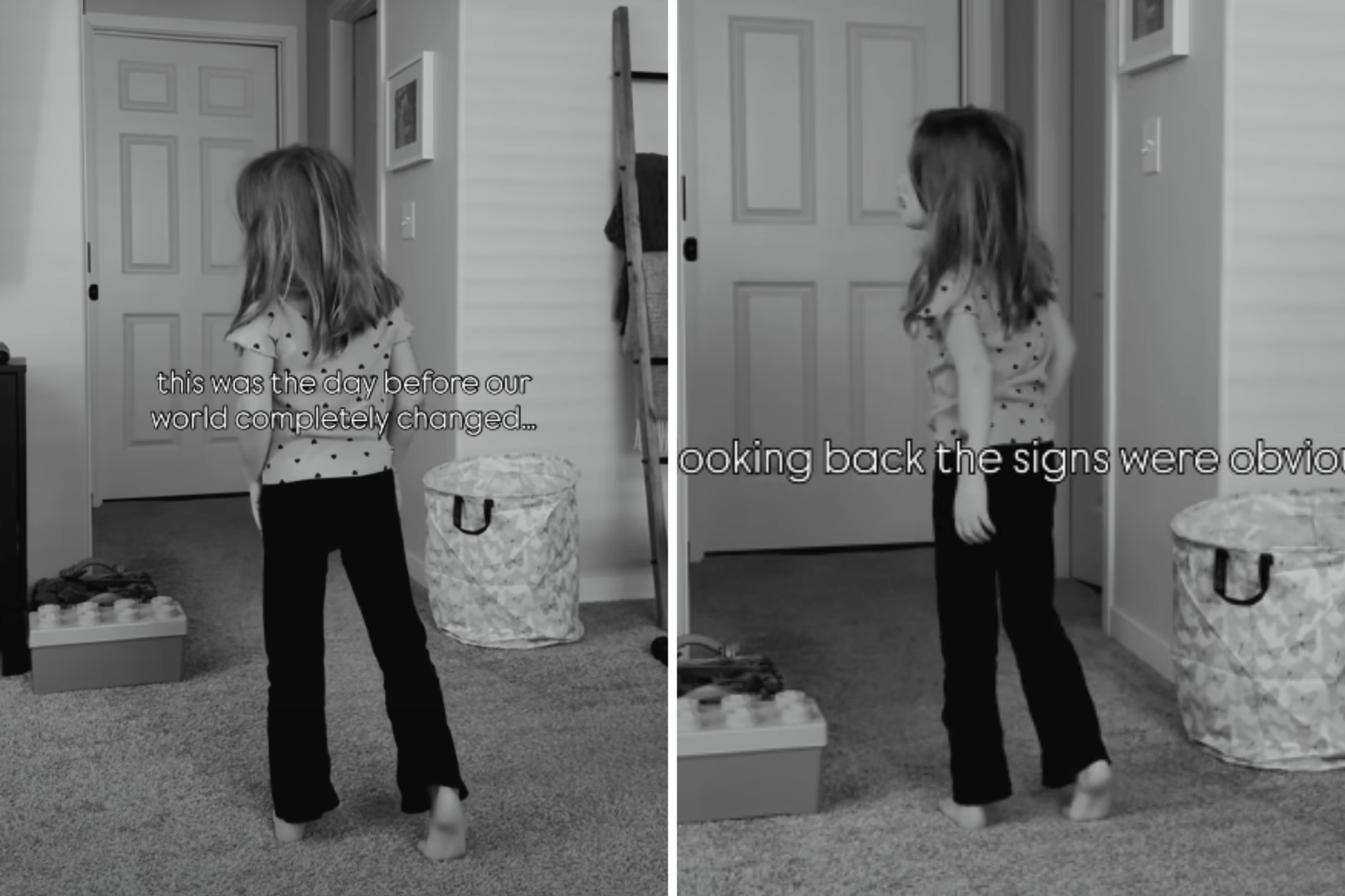
Emily Koska, the mother of a seven-year-old diagnosed with stage 4 cancer, shares critical advice for other parents. After her daughter Miriam’s diagnosis, Emily felt there were warning signs she missed.
Residing in North Dakota, Emily and her husband Michael have three children: Abram (11), Ruthie (five months), and Miriam (seven). Miriam was diagnosed with stage 4 nodular ganglioneuroblastoma in October 2025. This aggressive childhood cancer commonly affects those aged two to four, impacting nerve tissue with rapidly growing tumors.
Typical symptoms include noticeable lumps in the abdomen or other areas like the neck, legs, or chest cavity. In Miriam’s case, Emily now sees signs she wishes she had recognized earlier. A video shared on Instagram shows Miriam walking with a limp the day before her diagnosis. Reflecting, Emily said, “Looking back, the signs were obvious. I have to live with that forever.”
Initial symptoms for Miriam began when she was six, with occasional leg pain considered as growing pains. As weeks passed, the pain grew severe and a limp developed. Emily detailed how Miriam also had “unexplained fevers, drenching night sweats, abdominal pain, and increasing fatigue” in messages to friends and Newsweek.
Consultations with clinics and specialists suggested benign causes, from viruses to constipation. However, a diligent pediatrician considered Miriam’s symptoms collectively and directed the family to the emergency department, where cancer was diagnosed within hours. Days later, high-risk ganglioneuroblastoma was confirmed.
Neuroblastoma can manifest through diverse symptoms like trouble eating, body swelling, or balance issues. Additional symptoms can include swollen lymph nodes, bone pain, and visual changes, per the Cleveland Clinic. While such symptoms often have non-cancerous origins, Emily stresses that “rare does not mean impossible.” Persistent and worsening symptoms warrant further investigation.
Emily’s motivation to share her story is to prevent other parents from overlooking ongoing symptoms. She urges parents in similar situations to continue “asking questions, advocating, and searching until someone listens.”
Optimistically, Emily reported positive news about Miriam’s health: recent scans show minimal disease in her bone marrow, and treatments continue through 2027. Emily praises Miriam’s bravery and resilience, stating, “It’s an honor to be her mom and walk alongside her. She inspires us every day.”