
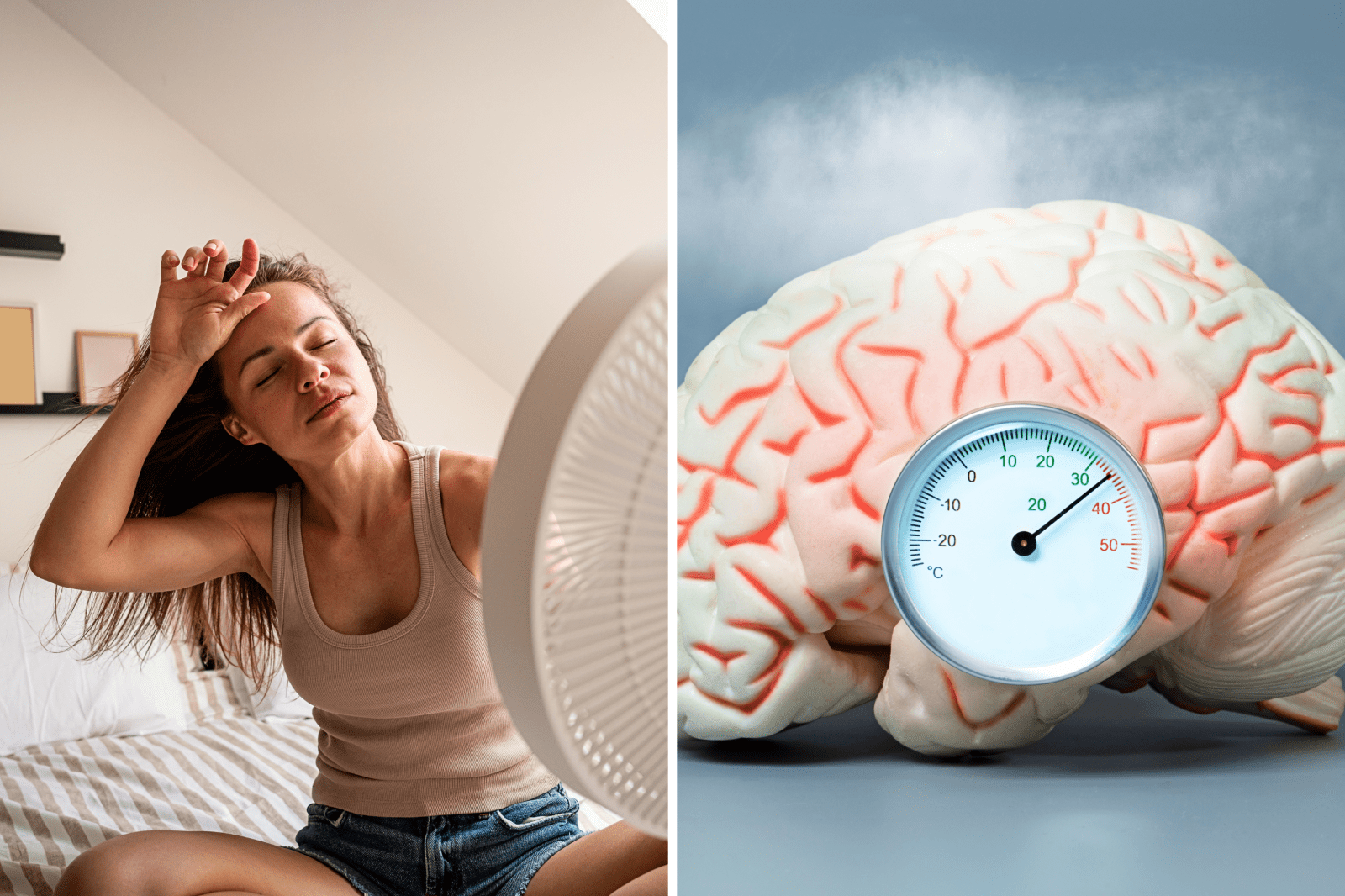
The space where many people spend about a third of their lives might be causing significant harm, according to sleep and air-quality experts. In 2015, researchers examined airtight, naturally ventilated homes in Scotland during winter. They found that in over 80% of these homes, CO2 levels exceeded safe limits throughout the night. Despite this, more than 90% of occupants believed the air quality in their bedrooms was acceptable. Experts in 2026 note this issue as a rising concern during summer, as heatwaves affect homes not built for high temperatures, alongside increasing global temperatures.
“Global warming leads to sudden and dramatic temperature changes,” said Devjoy Dev, a biomedical engineer with expertise in sleep circuitry, in an interview with Newsweek. He highlighted that extreme heat waves in Europe are troublesome where air conditioning is scarce. Dev, who also trained at Harvard Medical School, pointed out that bedroom materials like curtains and carpets can trap heat and moisture overnight.
Dr. Ayesha Bryant, a clinical adviser at Alpas Wellness, informed Newsweek that the study revealed nighttime carbon dioxide levels often surpassing 1,520 parts per million (ppm) in bedrooms. High CO2 levels indicate stale air, measured by parts per million (ppm). Dr. Bryant explained that while a room might have a comfortable temperature, trapped CO2 and accumulating moisture can worsen sleep quality well before noticeable problems occur.
A Room With No Thermostat
Experts attribute the problem not to the room itself, but to the absence of self-correction when occupants are asleep. While awake, individuals adjust by opening windows when the air feels stale or closing them when too cold. This instinctive action stops once asleep, enabling CO2 and moisture accumulation. Dr. Bryant noted that CO2 at these levels isn’t inherently dangerous but indicates poor air exchange, which is linked to reduced sleep quality and next-day performance.
A 2022 study of 40 Danish bedrooms showed that cognitive performance declined when CO2 reached 1,800 ppm, with sleep quality deteriorating even before reaching this point, potentially causing health issues over time.
Dev emphasized controlling the sleep environment and its ‘zeitgebers,’ referring to environmental cues like light and temperature that regulate circadian rhythm. Controlling these factors in the bedroom is crucial to maintaining sleep quality, as they can degrade when CO2 and moisture levels rise.
Clearing the Air
Poor airflow, closed doors, weak insulation, and west-facing windows all contribute to heat retention in bedrooms. Amerisleep research from June indicates that 52% of Americans consider themselves hot sleepers, and 94% wake weekly due to heat, compared with 58% of cold sleepers. Women are more likely than men to wake frequently from heat. The most preferred bedroom temperature is between 65–67°F, while the common actual temperature is 68–70°F.
Bryant advises keeping trickle vents clear and airing rooms when possible. The German practice of ‘Lüften,’ or ‘house burping,’ involves opening windows fully for 10 to 15 minutes each morning to refresh the air. Dehumidifiers, priced between £90 to £300, can help maintain humidity around 60%. For persistently hot rooms, consider fixing HVAC systems or adding air conditioning. Address any mold or condensation issues at the source, rather than merely cleaning the surface.
Reference: Fan, X., et al. (2022). A field intervention study of the effects of window and door opening on bedroom IAQ, sleep quality, and next-day cognitive performance. Building and Environment. https://doi.org/10.1016/j.buildenv.2022.109630. Sharpe, T., et al. (2015). Occupant Interactions and Effectiveness of Natural Ventilation Strategies in Contemporary New Housing in Scotland, UK. International Journal of Environmental Research and Public Health. https://doi.org/10.3390/ijerph120708480.