
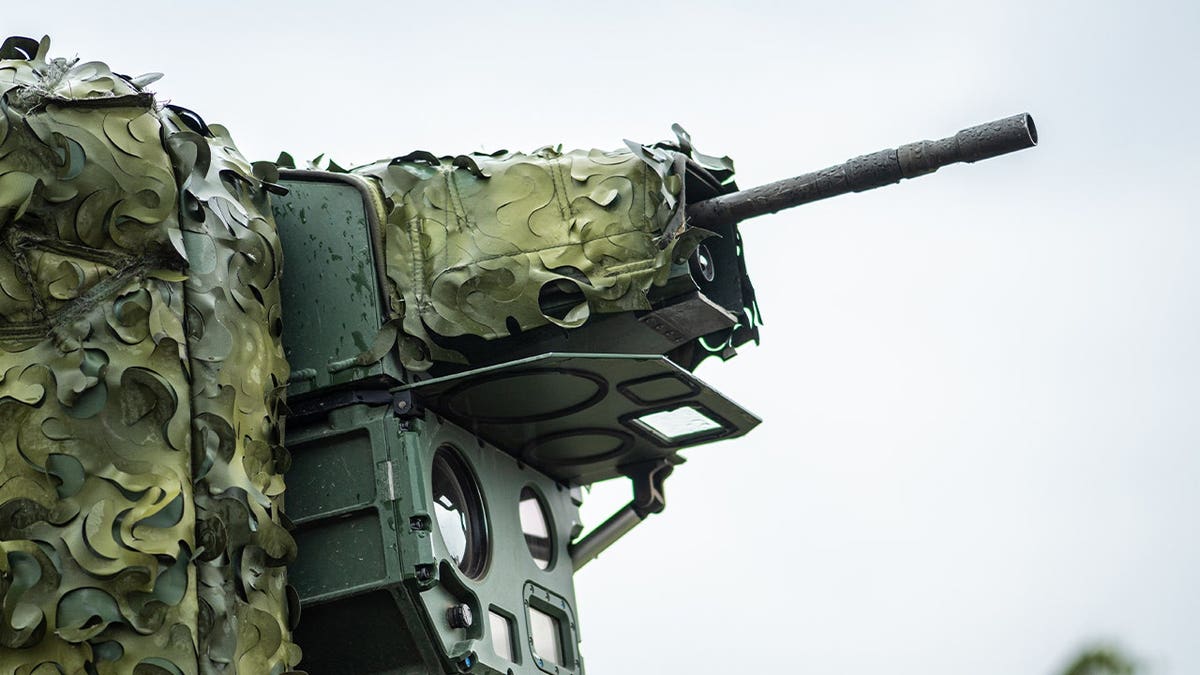
Laser weapons, once only concepts in military labs, are now moving towards practical use. Expert Tom Karako from the Center for Strategic and International Studies explains recent changes, capabilities, and limitations of this technology. Lasers promise to disable drones and missiles instantly, potentially saving costs on traditional interceptors.
The Army nears awarding a contract for the Enduring High Energy Laser (E-HEL), a pivotal step in integrating laser weapons into active duty. This move comes as inexpensive drones challenge existing air defenses, often requiring costly missile responses. The E-HEL could provide a cost-effective alternative, reducing dependence on traditional kinetic weapons.
The Army is not acting alone.
The Air Force and Navy are also advancing laser systems to augment defense strategies overseas and at sea. These lasers aim to counter modern threats more effectively, showing that the Pentagon is entering a new phase for directed-energy weapons.
The U.S. isn’t alone in these efforts. Israel and China are also progressing with military laser systems focused on countering rockets, drones, and similar threats. Despite decades of challenges with power and reliability, advancements are proving laser systems’ potential on the battlefield.
While promising, lasers won’t replace missiles. Lasers are line-of-sight, limiting their range compared to long-distance missiles. Experts expect them to complement, not replace, existing defenses. Their role will likely focus on neutralizing drones and close-range threats.
The Army is exploring additional counter-drone technologies, including a new missile system costing less than $150,000 per interceptor. High-powered microwaves and radio-frequency technologies also support this broader directed-energy initiative to enhance battlefield capabilities against drone swarms.
These technologies, together, demonstrate a shift in defense strategies, highlighting lasers and directed-energy systems as essential components of modern military operations.